


To Bristol Township Solicitor Randy Flager, there is no case-law that will win a battle against the township’s roughly 90 recovery homes. Yet Council Vice President Amber Longhitano took a stand Wednesday evening to try to prove him wrong.
Advertisements
The renovated council chambers, outfitted with a designation for late president Bob Lewis and donned with the latest in cosmetic changes, were packed Wednesday evening as nearly 100 township residents, most from Levittown’s Goldenridge section, arrived to speak about the growing number of recovery homes.
Longhitano, who has been conducting research on the recovery house industry and related case law for more than 3 years, revealed her latest updates on her quest for balance in the township.
“We are inundated to the point that it is institutionalizing this community,” said Longhitano.
Advertisements
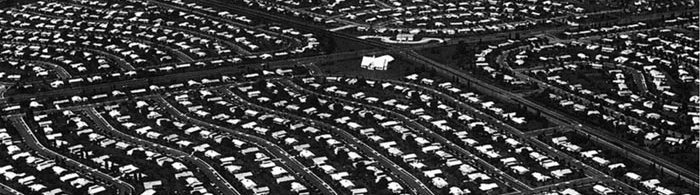
The township of 17-square-miles reported nearly 90 documented recovery homes as of last month. Longhitano has estimated, by ways of research, that approximately 70 more rogue homes, or unlicensed flop houses, also exist within the confines of the area. The five homes per square mile are spread out across Levittown, where four sit on a single street, and eight and nine in one section. To date, the sections of Blue Ridge, Indian Creek and Red Cedar have the most.
For Longhitano, the recovery process for those that are addicted is already a difficult one and Bristol Township’s inundation is only impeding that.
Advertisements
“The whole structure of recovery is based on coming in and supporting the whole group within the home, then to rehabilitate and get them on their way to being a functioning part of society again,” she said. “What kind of community are we releasing them into if we are inundated and institutionalized?”
Longhitano reported that within the last month she met with several owners of licensed homes associated within the Bucks County Recovery House Association (BCRHA). The group is made up of probation and parole officers, mental health professionals, and drug and alcohol treatment professionals who have worked together to provide private self-funded housing to recovering addicts. The group, obvious to problems contained within rogue homes, enacted their own bylaws, rules, regulations and oversight. “As a state we have zero [of that],” said Longhitano.
In an attempt to issue oversight into the recovery community, requiring that even homes not associated with the BCRHA abide, Longhitano made a motion to enact a moratorium on future group homes during the council meeting. The temporary hold, according to Longhitano, would have allowed the township time to conduct an impact study and determine the influence of so many recovery homes in a single area.
Advertisements
“Part of our research with Councilman Murray Bailey has been [studying] the correlation between the amount of drug dealers moving to our area and the amount of recovery homes we have,” she said. “State Representative Tina Davis is working on those licensing laws and the criteria to put this together on a state legislation level, which is going to take a little bit of time, but we need that time. This is not one person’s problem, it is the whole community’s problem.”
While Longhitano was introducing a motion for a moratorium, Councilman Troy Brennan, who is not on the ballot for Tuesday’s election race, said it’s something he “would love to” do. Brennan later voted against the motion along with three other members of council. Councilman Bailey as well as Councilman John Monahan vocally supported the motion.
Advertisements
“This is the most important subject on Bristol Townships table at the moment. Before we as a community become institutionalized, we needed to take a real hard-line,” said Longhitano following Wednesday’s tension filled council meeting. “It is an injustice to the recovery system and the whole community at large. We must stand up, take charge and fight on behalf of all parties involved. It’s all about balance and I’m very disappointed.”
Majority of the council voted against the motion in fear of future litigation, citing the Fair Housing Amendments Act ( FHAA) of 1988. The law, which Solicitor Flager noted is “good law”, safeguards addicts under the protected class, not allowing them to be discriminated against in regards to housing choices. Read the FHAA of 1988 here.
“The Act as it applies to people with disabilities has three purposes: (1) to end segregation of the housing available to people with disabilities, (2) to give people with disabilities the right to choose where they wish to live, and (3) to require reasonable accommodation to their needs in securing and enjoying appropriate housing,”
-The FHAA of 1988
Advertisements
The average Levittown jubilee is measured at 1,250 square feet, allowing 14 residents inside per township ordinance. While not all recovery homes within Levittown are as large, or as filled to capacity, that accounts for roughly 1,246 recovering addicts within the township borders, while another 1,000 could be lurking in undocumented residences. For Longhitano, that’s the true definition of reasonable accommodation.
“I do believe some things are worth standing up for. I do believe the recovery community is worth standing up for. I do believe the residents of this community are worth standing up for. So together we must make a stand. It is so pertinent that I don’t even know what to say to make it that obvious to all of us,” she told Wednesday’s crowd.
Advertisements
Flager noted that he’s gone back to minutes of township meetings from 20 years ago where the same discussion regarding recovery houses occurred.
“I think there is a way to do this, but [enacting a moratorium] opens us up to exposure to lawsuits, civil rights lawsuits, and the rights of the disabled. I understand and agree with the problem,” he said. “We are all on the same side here, and the truth is sometimes painful. But the truth is that federal law trumps everything.”
As residents out cried and stressed their dismay, Council President Craig Bowen had to call the meeting back to order. “This isn’t an argument session, we’re trying to figure out what to do here. We’re not happy with this situation, we’re getting overwhelmed with them. Bristol Township is a dumping ground once again,” he said.
Advertisements
“If you want, you can just sit there with a resolution that just throws out want you want our state legislators to do, in the mean time, we’re going to lose our community, we’re already losing it,” said Longhitano.
She further noted that when she asked Flager to look into the recovery house issue over two years ago he handed her one piece of paper entitled ‘What Happens After A Complaint Investigation’.
Advertisements
“As a Realtor I know HUD law, FHAA law, I have to follow those laws, I know every fine associated with them. To me, this [paper] is fear tactic, and I’m not afraid of anything,” she said to a roaring crowd.
For longtime resident Joe Fleming, the two recovery homes outside his window will severely impact his feat to sell his home. “I could just turn it into a recovery house, make about $8,000 a month, which is probably more than I’d end up making if I just sold it,” he said. “Who would buy it anyway? A young family? I can’t in good conscience not tell them the area is home to recovery houses.”
Another Goldenridge resident spoke out against Flager. “I don’t like the idea of not fighting it because no one’s ever won. If our forefathers thought like that we’d still be part of England,” he said. “I don’t want to leave [Bristol Township] but I feel I’m being forced to.”
Advertisements
Fleming noted that the crowd of 90 was just from three women in Goldenridge handing out flyers and that the township council can expect an even larger crowd at next month’s meeting. “I’ve lived here for 35 years and just the last seven or eight I’ve seen a big change in the neighborhoods,” he said. “I think the next seven years is going to be worse for the township than the last seven years were; and in seven years you’re not going to have us all coming to meetings to fight for this, cause we will all be gone.”
Longhitano noted that in roughly four weeks time, the recovery houses in the township jumped from 72 to 89. Numbers were half that just three years ago.
Related:

