


Credit: Tom Sofield/LevittownNow.com
The Pennsylvania House Health and Human Services Committee heard testimony Tuesday morning in Middletown about a proposed measure by Langhorne-based State Rep. Frank Farry,which seeks to seeks to establish statewide standards to govern the health and safety environment of recovery based housing.
Testimony for HB 1289 got under way at the Middletown Township Municipal Building shortly after 10 a.m as a number of state and local officials looked on.
Advertisements
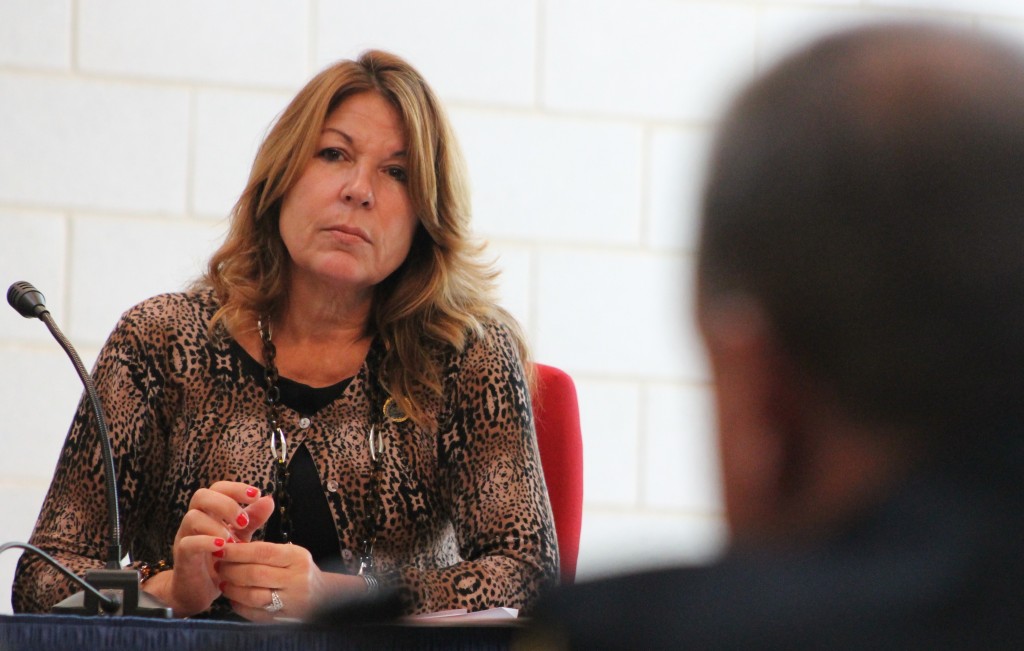
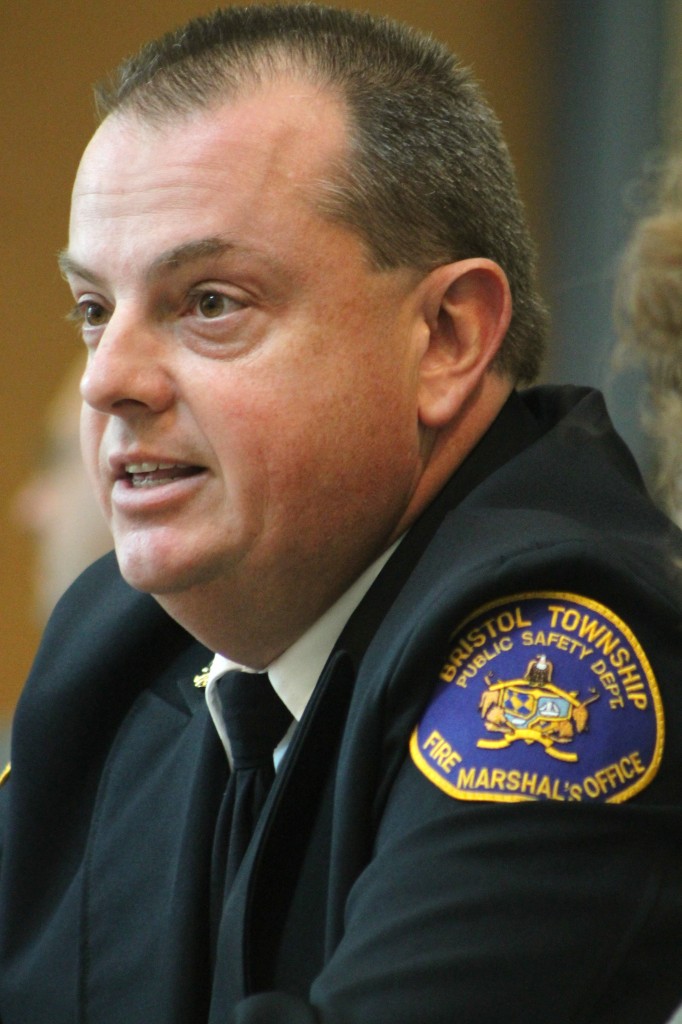
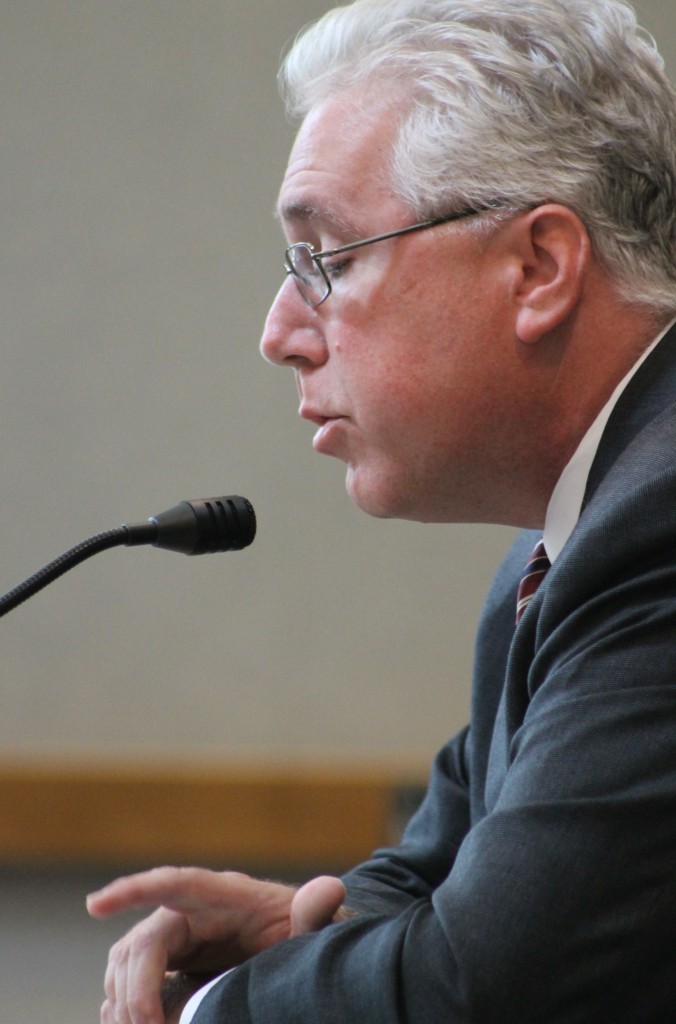
Among those testifying were Secretary Gary Tennis, Department of Drug and Alcohol; Ted Millard, executive director of Good Friends Inc.; Fred Way, executive director, Philadelphia Association of Recovery Residences; Kevin Dippolito, Bristol Township fire marshal and emergency management director; Bristol Township Councilwoman Amber Longhitano; and Joseph Pizzo, solicitor for Middletown.
Tennis’ testimony was read into the record, since he could not be available for hearing. In short, he said that the Department of Drug and Alcohol lists recovery housing among many of the important issues the department thinks requires careful review and analysis from his viewpoint.
Credit: Tom Sofield/LevittownNow.com
“The appropriateness and reach of governmental regulation on whether there are public funds involved ” in that of a landlord rents to a recovering person (or people) and is paid by those renting, it is is the purview of that kind of relationship to fall under licenses and inspections, he offered.
Advertisements
One of the main issues brought up throughout testimony was in reference to the potential for safety risks for those owning the recovery homes and their tenants because of the potential of fire.
“These homes should have extensive fire alarms, smoke detection and connect to a central station,” Bristol Township Fire Marshal said. When asked how much a system such as the one Dippolito identified would cost for a single dwelling home, he told the panel “about $2,000.”
Advertisements
State Rep. Bernie O’Neil of Warminster said he goes through a yearly inspections of his office and didn’t quite understand, at the time, how local officials could have no authority to ensure minimal safety requirements of those in a given locality. He said he was at a “lost of words” after finding out how little control local government had over recovery houses.
Credit: Tom Sofield/LevittownNow.com
Fire officials from at least two Levittown-area township’s have pointed out in the past that some recovery homes have turned living rooms into subdivided bedrooms to fit more people.
Dippolito, and others, also pointed out that there have been times where first responders have no idea what they are facing in terms of rescuing and saving lives if a fire occurs at one of the 42 reported to exist in Bristol Township because no one actually knows how many people are living there.
Advertisements
Firefighters faced a similar situation in when a fire ripped through a recovery home in the 300 block of Frosty Hollow Road in Middletown in 2012. At least 14 men were living in the Levittown home.
These comments and other similar to them brought the nexus of the issues for localities because of for example of federal laws such as The Fair Housing Act and The American with Disabilities Act, supersede local laws on a constitutional level, Pizzo said.
Advertisements
“They have all but rendered local municipalities powerless, in theory and in fact” according to Pizzo.
Another issues clarified at the hearing is the difference between halfway houses and recovery homes. There are many, according to the testimony Tuesday, but most importantly pointed out Sec. Tennis and Millard is with respect to licensing by the state and the oversight.
Credit: Tom Sofield/LevittownNow.com
Advertisements
“In Pennsylvania there is one stark difference. The term halfway house is based on substance abuse legislation … by law … they must be a licensed non-hospital residential treatment and rehabilitation facility that provides a home like atmosphere within the local community,” he said.
Longhitano, who at a recent council meeting brought up the issue of recovery homes said she believes in second chances for everyone, “but our community is being inundated and we as elected officials have to respond to the concerns of those we serve.”
Advertisements
Farry, after the hearing, characterized the testimony as informative and productive. The Levittown-area representative and local fire chief has heard from recent months from constituents after problems with several recovery houses in Middletown came to light last fall.
“The committee has six meetings left in Harrisburg, he said, “and hopefully we’ll be able to get out on to the floor for a vote before the session is over,” he said.

