


The controversial proposed guidelines that have brought national attention to Neshaminy School District are headed back to the school board’s Policies Committee.
Credit: Tom Sofield/LevittownNow.com
Proposed revisions to Neshaminy School District Policy 600, which was introduced after the high school newspaper’s student editors made a pledge not a print the word ‘Redskin,’ will be discussed at the committee’s meeting next Tuesday in the district administration building.
Advertisements
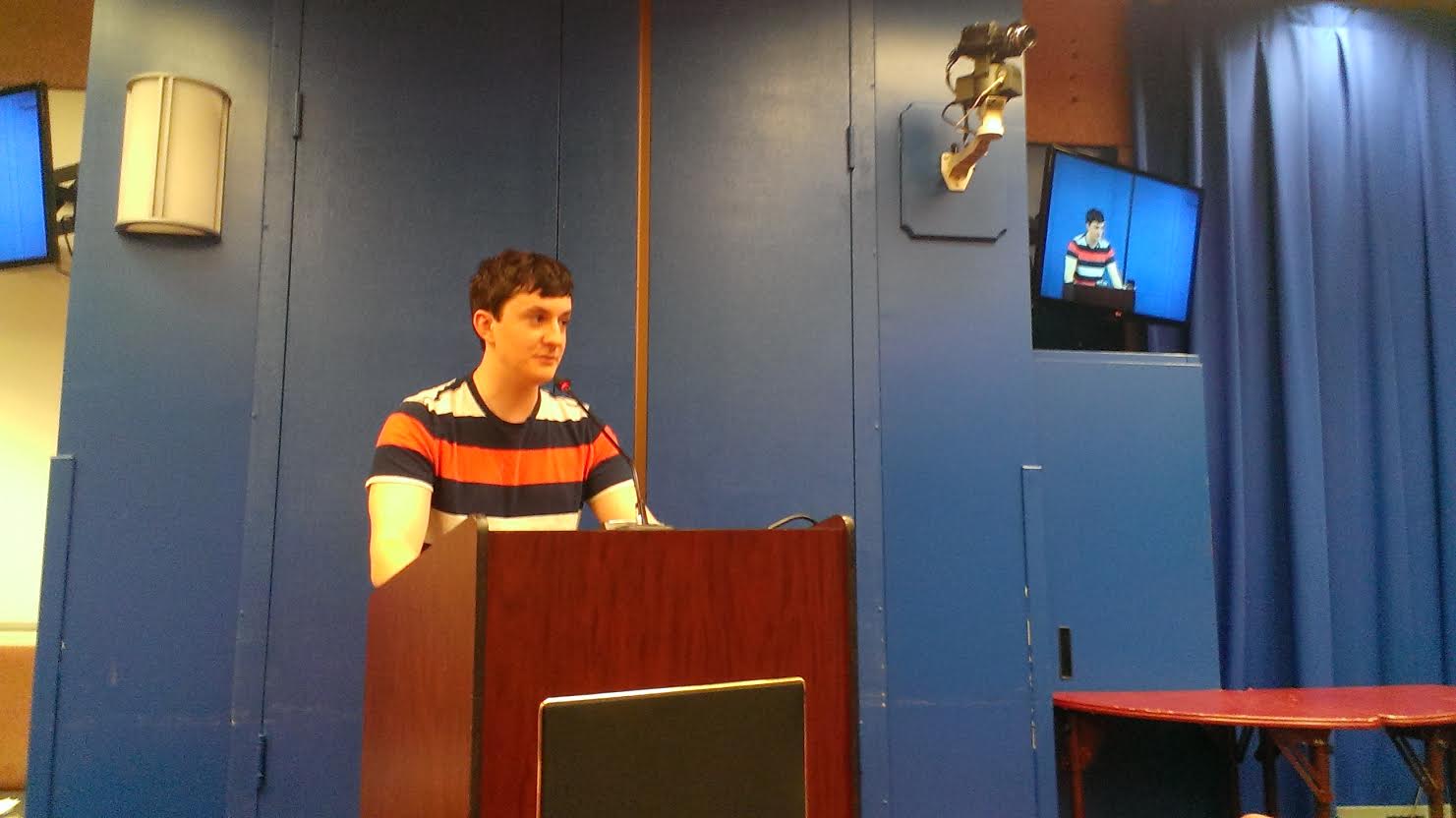
At Tuesday night’s school board meeting, The Playwickian sports editor Reed Henessy said the revised policy had “a lot of contradictions” and he felt “it may not have been made in accordance with the most up-to-date media law.” He asked the school board for a chance to sit down and negotiate, which went unanswered.
Gillian McGoldrick, the editor-in-chief of the award-winning student newspaper, thanked the board for putting the policy back into committee to be discussed.
The policy says the the student editors of the high school school’s newspaper, literary magazine and yearbook would not be able to ban the publication of the word “Redskin,” which some deem a racial slur against Native Americans.
Advertisements
District officials say the word has to be printed by the school paper. District lawyer Mike Levin said the revised policy blocks newspaper staff from editing the word. He said the staff can only prohibit the use of the word when it is used in a offensive way, which district officials have the legal authority to determine. On that note, the writers and editors could print disclaimers near articles where the word was used and they could also editorialize about the word.
The students also raised concerns that the newspaper’s website, which is powered by WordPress, would have to be taken down. District officials said the students would be able to post their content on the district website.
Advertisements
Several teachers raised questions about a section of the policy that would limit student interactions with teacher’s via social media.
The school board recently presented an updated Policy 600 to the public. Feedback from residents, lawyers and district staff was used to make the changes.
President of the Society of Professional Journalists (SPJ) David Cuillier wrote a letter this week to School Board President Scott Congdon.
Advertisements
“By creating policies with such harsh restrictions, you’re failing your students,” wrote Cuillier. “Putting students under the tightest possible levels of control will only leave them unprepared for college and uncompetitive in the workforce.”
The letter was sent Wednesday and says the SPJ sees the policy is a threat to the future of democracy.
Advertisements
“A free press has been known to expose unethical businesses, corrupt political leaders and dangerous criminals,” Cuillier said. “If the nation’s educators teach young student journalists to accept being silenced or swayed by authority, they will not gain the skills or instincts to provide this service to the American people. Furthermore, they will not understand their freedom of speech rights given to them by the First Amendment.”
The organization offered to work with the Neshaminy to “craft a publications policy that is both respectful of the school district and appropriate for your journalism students to learn in a safe environment.”
Advertisements
Policy 600 would need to be approved by the Policies Committee and the school board before becoming official.
Here’s a draft Policy 600:
Advertisements
Here’s a copy of the letter Cuillier sent to Congdon:
Dear Mr. Congdon:
The Society of Professional Journalists disagrees with your attempts to censor student publications in the Neshaminy School District and thanks you for postponing the current version of your publications policy in this week’s school board meeting. Our organization — which represents 8,000 journalists throughout the nation — is hoping that you’ll reconsider enacting such a policy.
The publications policy and subsequent updates that the district has released doesn’t even attempt to comply with the First Amendment or with Pennsylvania’s excellent student press rights law. By creating policies with such harsh restrictions, you’re failing your students. Putting students under the tightest possible levels of control will only leave them unprepared for college and uncompetitive in the workforce.
Restrictive policies such as these are a threat to the survival of democracy. A free press has been known to expose unethical businesses, corrupt political leaders and dangerous criminals. If the nation’s educators teach young student journalists to accept being silenced or swayed by authority, they will not gain the skills or instincts to provide this service to the American people. Furthermore, they will not understand their freedom of speech rights given to them by the First Amendment.
We would be delighted to work with the school board to craft a publications policy that is both respectful of the school district and appropriate for your journalism students to learn in a safe environment. If you’re interested in collaborating with us in these efforts, please contact me with the information below.
Sincerely,
David Cuiller, Ph.D.
President
Society of Professional Journalists
Related:
- Neshaminy Board Hears Public Comment on Revised Policy
- Neshaminy Board Moves ‘Redskin’ Policy Vote on Heels of Letter from Lawyer Representing Students
- Neshaminy Lawyer: Editors Can’t Stop Students from Using Redskin Name
- Neshaminy Mulls Blocking Student Paper Ban on ‘Redskins’ Name
- Neshaminy Board Prez: Redskins Name Not a Slur
- Dump the Redskins Nickname, Neshaminy Student Newspaper Says
- School Paper Editors Win Award for ‘Redskins’ Op-Ed
- Webb Reacts to Being Named Among ‘Worst Persons in the Sports World’

