
By Peter Hall | Pennsylvania Capital-Star
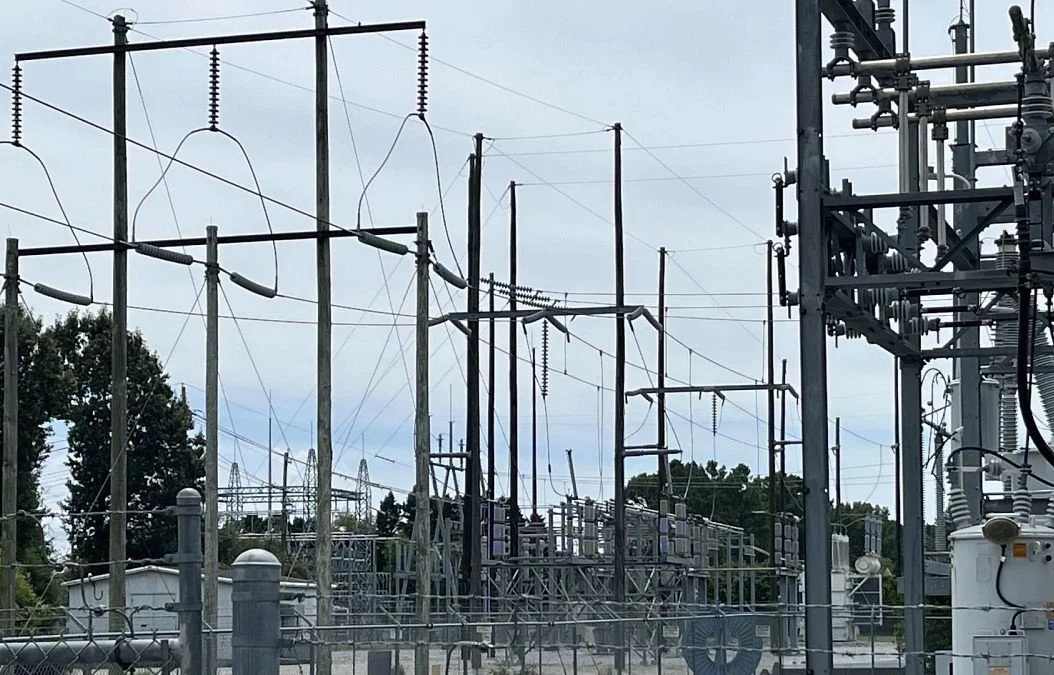
Credit: Alan Wooten/The Center Square
Electricity prices will remain elevated in PJM Interconnection’s 13-state service area, including Pennsylvania, following an auction setting prices for future generating capacity.
Advertisements
PJM, a Valley Forge-based nonprofit that manages the supply on the largest electricity grid in the nation, announced the results Tuesday of the auction held from late June to mid July.
The $325-per-megawatt-day price for generating capacity in 2028 and 2029 is at the maximum price under a cap initially negotiated by the Shapiro administration last year after the 2024 auction closed at a record price of $269.92 per megawatt-day.
The cap was extended by PJM at the request of a coalition of PJM-state governors and the Trump administration to cover the latest auction and one to be held in December for 2030 and 2031.
Advertisements
“These auction results show that demand for electricity continues to grow faster than electricity supply,” PJM President and CEO David Mills said. “At the same time, PJM recognizes how this supply-and-demand imbalance impacts the reliability of the system and costs for consumers. We are working with government and industry leaders on multiple fronts to restore that balance by bringing on new generation as fast as possible and managing the growth of new load on the grid.”
A combination of retiring fossil fuel power plants, increased electrification of transportation and industry and proposed data center development has caused peak forecasts to increase by 66,000 megawatts by 2036. That’s nearly 80 times the output of the Three Mile Island nuclear power plant, which is set to reopen next year exclusively to power data centers.
Advertisements
“Demand growth is not going away. That is the driving story here,” said Patrick Cicero, the former Pennsylvania consumer advocate who now works with the Pennsylvania Utility Law Project.
PJM also announced Tuesday that the auction fell 6,831 megawatts short of the grid manager’s capacity goal, which is a larger deficit than in last year’s auction.
“Data center load growth is degrading grid reliability, and it’s raising prices to the Governor Shapiro-negotiated cap,” said Robert Routh, Pennsylvania state lead for climate and energy policy at the Natural Resources Defense Council. “So, unless PJM and states take action, this picture will continue to worsen for the foreseeable future.”
Advertisements
But Todd Snitchler, president and CEO of the Electric Power Supply Association, said the price reflects the competitive electricity generating industry’s willingness to invest to meet the increased demand. Recent year-over-year record lows had discouraged investment in power supply, he said in a statement.
“Competitive power suppliers are already responding,” Snitchler added. “New supply is coming; the issue now is to address getting it connected to the system as quickly as possible.
Advertisements
Among PJM’s responsibilities is vetting proposals for new power plants, transmission lines and other electric infrastructure and approving their connections to the grid. It has faced intense criticism for allowing a years-long backlog of projects to linger, causing some to drop out of the market. PJM notes it has made significant progress in reducing the backlog by prioritizing shovel-ready projects.
PJM’s primary role in managing the grid is to ensure that each of its 67 million customers has the least expensive electricity available for their location at any given time. But it also must ensure the supply is reliable.
Advertisements
To do that, it holds auctions for power plant operators to bid to set the price to keep their generators standing by for the peak electricity demand that comes on the hottest and coldest days of the year.
Cicero, who spoke to reporters Tuesday, ahead of PJM’s announcement, said market dynamics indicated this month’s auction would close at or near the cap.
Advertisements
The last two auctions have added around $16 billion to the cost of ensuring reliability, he said. And any additional generating capacity added in the last year have not been enough to appreciably increase capacity. As a result, the increased cost will remain in place into 2028 and 2029, he said.
“These are flat prices that are going to remain high. It’s not necessarily another spike, but it’s really, really high prices remaining,” Cicero said.
While the relationship between the auction price and what consumers see on their electric bill is not direct, some Pennsylvania utilities have increased the rate they charge people who don’t shop for their electric rates – some by up to 20%.
Advertisements
“This has cost the average residential consumer in Pennsylvania somewhere in the neighborhood of $220 to $320 per year in additional costs on their bill,” he said.
In addition to extending the price cap, PJM and its members from the electricity industry have been working on additional steps to isolate residential and small business customers from the demand brought by data centers, Routh said.
Advertisements
One, sought by the PJM governors and the Trump administration, is another auction to fund increases in capacity and reliability by getting data center operators and other large load customers to purchase long-term commitments for electricity.
Routh described it as a matchmaking venue for data centers and suppliers to meet and arrange to pay for new power supplies to be built “without raising prices for everyone else.”
That process faces the same challenges blocking new electricity supplies for everyone. Those include supply chain delays, long timelines for building new infrastructure and siting and permitting hurdles. A lack of money is not among the problems, Routh noted.
Advertisements
“Tech companies, data center customers that have a need for power have deep pockets,” he said. “Any power plant that can get built these days should have no problem finding buyers and arranging financing.”
Pennsylvania Capital-Star is part of States Newsroom, a nonprofit news network supported by grants and a coalition of donors as a 501c(3) public charity. Pennsylvania Capital-Star maintains editorial independence. Contact Editor Tim Lambert for questions: info@penncapital-star.com.