
By Whitney Downard | Pennsylvania Capital-Star
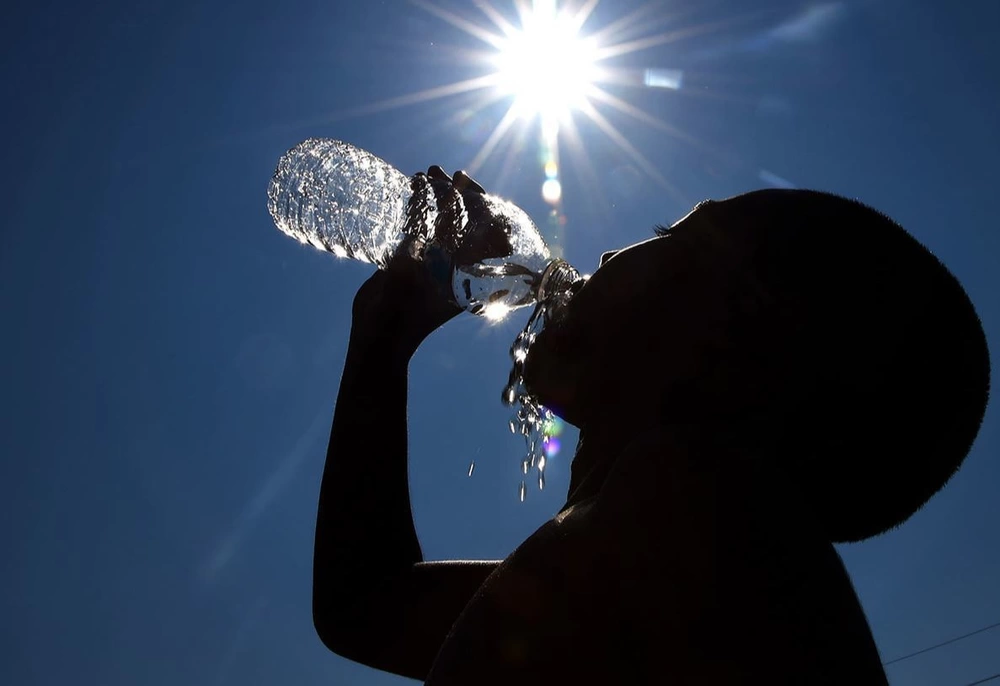
With summer nearly here and hot weather ahead, Pennsylvanians working outdoors or in high-temperature settings will be at an increased risk for heat-related illnesses, injuries and even death. With those workers in mind, lawmakers in Harrisburg on Tuesday wrestled with whether the commonwealth should join a growing number of states with heat protections.
Advertisements
State Rep. Elizabeth Fiedler (D-Philadelphia) noted that state law doesn’t currently guarantee employees the right to water breaks, rest breaks or shade.
“And if they feel ill, many of these people do not ask for help because they’re afraid of retaliation. That’s not right,” said Fiedler.
Fiedler’s House Bill 1580, co-sponsored by Rep. Jim Haddock (D-Lackawanna), would require the state’s secretary of labor and industry to propose employer regulations within a year to protect Pennsylvanians during high-heat conditions.Those are defined as a heat index — sometimes called the “feels like temperature” — of 80 degrees or more.
Advertisements
The House Labor and Industry Committee held a hearing on the measure Tuesday, but it ultimately wasn’t called for a vote. Senate Bill 1204, the companion bill, also hasn’t moved.
“Whether (you’re) a restaurant cook, a farm laborer or a lineman, the work you do, the labor of your mind, and the wear and tear of your body is crucial to our state and our economy,” Fiedler said at a press conference. “This bill … is about saving people’s lives, but it’s also important to note that healthy workers are more productive workers.”
Advertisements
Climate change will increase the number of days with high-heat conditions. 2024 was the hottest year on record for Pennsylvania, followed by 2025.
But while the proposal had support from several workers advocacy groups, some legislators hesitated to implement such a rule, noting that the commonwealth doesn’t have a state-level enforcement arm like the U.S. Occupational Safety and Health Administration (OSHA).
“I appreciate the intention behind this bill and the goal of ensuring worker safety conditions,” said Rep. R. Lee James (R-Venango), the ranking Republican member of the committee. “I believe there are several questions that deserve careful examination, including potential OSHA preemptions, and how new requirements might overlap with existing federal standards.”
Advertisements
Select states advance their own rules
House bill supporters were quick to point out places where they thought federal rules fell short, noting that neighboring Maryland passed their own heat protections last year. The AFL-CIO union reports that 530 workers died from heat on the job in 2024.
“Just imagine a warehouse worker near the end of a long shift, already overheated, busy and trying to push through,” said Nicole Fuller, the director of the Philadelphia Area Project on Occupational Safety and Health. “Without water, cooling, rest and a clear plan, that ordinary work day can turn into a medical emergency very quickly … no worker should have to choose between a paycheck and their health.”
Advertisements
Unions may already have heat protections in their contracts, but not all workers fall into that category. And while OSHA has started work to create a national regulation, some people said Pennsylvanians needed help sooner.
“People argue that this will harm businesses or stall projects. It’s the opposite: Unsafe job sites are expensive job sites,” said Mike Ford, the secretary-treasurer of the Pennsylvania State Building and Construction Trades Council. “We have waited for federal agents to finalize a permanent heat standard, but Pennsylvania cannot afford to wait on Washington (D.C.).”
Advertisements
Pennsylvania AFL-CIO President Angela Ferritto added that OSHA only applies to workers in the private sector, though the agency does have a “national emphasis program on outdoor and indoor heat-related hazards.”
Feritto described that policy as “a playbook for inspectors, not a set of rules for employers.”
Advertisements
Advocates noted that while water breaks and shade might add more to the bottom line, inaction does too. If an employee dies due to a heat-related illness or injury, that employer could face administrative costs, legal fees and more.
“We must require employers to take it seriously and safeguard their workers before injury occurs,” said Lisa Wood, the northeast regional field manager of the BlueGreen Alliance. “There aren’t just protections for workers, employers will also reap the benefits by proactively implementing these regulations (with) workers being more productive and less delays from missing work.”
Identifying heat-related illnesses
Employers would be required to have plans for heat protections under the bill but also, importantly, supervisors would need to be educated to recognize signs of heat-related illnesses.
Advertisements
Juanita Constible, a senior advocate with the Natural Resources Defense Council, said she has studied workplace heat protection since 2018 and had one major takeaway: Heat-related illnesses, injuries and deaths are preventable with the right precautions.
“Heat affects every organ in our body, it can make heart disease worse and can make kidney disease worse” Constible said. “Heat-related illnesses … are a wide array.”
Advertisements
The U.S. Environmental Protection Agency breaks down heat-related illnesses into three camps: heat cramps, heat exhaustion and heat stroke. Heat cramps, characterized by heavy sweating and painful muscle cramps or spasms, can initially be treated with rest and water.
If symptoms include fatigue, headaches, dizziness, nausea or fainting, it is categorized as heat exhaustion. Experts recommend lying down, moving to an air-conditioned environment, changing into loose clothing and even taking a cool shower or bath.
At the heat stroke stage, it becomes a medical emergency. With heat stroke, symptoms include very high body temperatures, altered mental states, throbbing headaches, nausea, dizziness, profuse sweating — or even the inability to sweat — and unconsciousness.
Advertisements
Immediately after calling 911 and getting emergency assistance, heat stroke can be treated by cooling a person down with wet cloths, cool baths or a spray of cool hose water — but they should not be given liquids.
Additionally, people should be moved to a cooler place away from any dangerous objects if there is uncontrollable twitching. In the case of vomiting, people should be placed on their side to keep the airway open.
Constible noted that while most research identifies 80 degrees as the breaking point, exertional heat-related illnesses can occur at temperatures as low as 65 degrees “if people are working hard enough.”
“That’s why it’s really critical to have a clear temperature trigger where protections start,” said Constible.
Pennsylvania Capital-Star is part of States Newsroom, a nonprofit news network supported by grants and a coalition of donors as a 501c(3) public charity. Pennsylvania Capital-Star maintains editorial independence. Contact Editor Tim Lambert for questions: info@penncapital-star.com.