


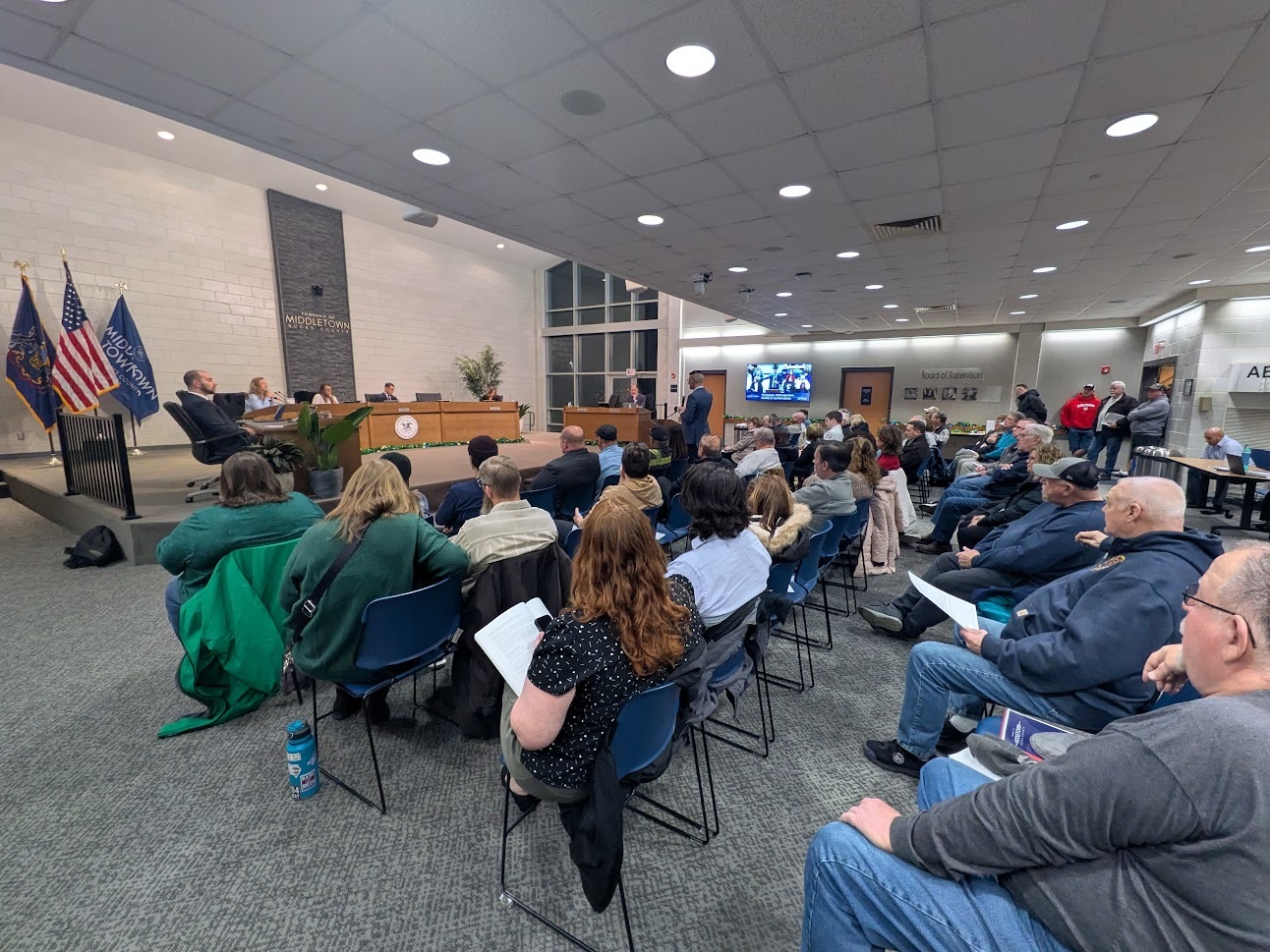
At a special session Wednesday evening, the Middletown Township Board of Supervisors adopted the municipality’s 2026 budget with tax increases, with a property tax rate lower than first proposed.
The supervisors approved the roughly $53.1 million spending plan and $5.1 million in capital projects.
Advertisements
The budget passed 3-1, with Supervisor Dana Kane casting the lone dissenting vote.
The votes Wednesday included doubling the earned income tax from 0.5 percent to 1 percent and raising property taxes by 5.58 mills, a reduction of the original proposal by half a mill.
The average working resident will pay $323 more in EIT. The original property tax increase was estimated to be $179 extra for the average homeowner, but it was not immediately clear how much that number will be lowered with the decrease in millage.
Advertisements
The meeting was a continuation of Monday’s meeting where Kane, a Republican, and Supervisor Bernadette Hannah, a Democrat, voted down the proposal. They both wanted to look at the budget again and offered few details on their plans on Monday.

After hearing of possible cuts to township services from Township Manager Eden Ratliff, the supervisors took a recess to discuss changes to the budget.
Advertisements
Following the break, Hannah proposed reducing the original 6.08-mill property tax increase to 5.58 mills by cutting a quarter mill each from fire protection and parks and recreation funding.
“I needed to caucus with our manager to look at where we could save some money for the taxpayers,” Hannah said, adding she was satisfied with the tax reduction.
Kane said she was looking at items in the budget similar to Hannah.
Advertisements
Ratliff said the cuts to the fire protection tax will still mean the fire services are funded and won’t impact public safety. He added that the township may have to use some money from the general fund to support parks and recreation.
The township faces a $2.8 million structural deficit for 2026 and has not raised taxes in 10 years. Officials aimed to erase the deficit with the tax hikes.
Advertisements
Ratliff explained that approximately 80 percent of the general fund relates to personnel costs tied to collective bargaining agreements, leaving limited room for cuts.
The earned income tax increase affects only working residents, as retirees and those on Social Security do not pay this tax.
Advertisements
Supervisor Chairperson Mike Ksiazek noted that 40 percent of Middletown Township residents already pay a 1 percent earned income tax to municipalities where they work, so their total tax burden remains unchanged while the revenue shifts to their home township.
As part of longstanding township policy, Middletown Township is required to keep at least 25 percent of the annual budget in savings for a rainy day and to maintain a AAA bond rating. They also can only use interest revenue from the $40 million investment account created using money from the 2002 sale of the water system.
Advertisements
Officials described the budget as a “level setting” measure designed to achieve long-term structural balance rather than requiring similar dramatic increases in future years.
The township’s proposed tax hikes drew an outcry from residents amid rising costs from inflation, tariffs, and other price hikes.
“We are at a point where we must raise taxes as much as we don’t want to do it,” said Supervisor Dawn Quirple, who is completing her term. “We’re at the point that if we don’t put money into this township, then we are going to be worse off in the future and it’s going to hurt the taxpayers in our community.”
Advertisements
Ksiazek noted the supervisor’s reluctance to raise taxes, noting all members are township residents who will pay the increases themselves.
“None of us want to raise taxes on ourselves,” he said. “No politician ever wants to raise taxes. We get it. It’s not popular.”

Advertisements
During public comment, several residents asked the supervisors to lower the tax rate and called on them to decrease spending further.
Township officials have said they slashed $1 million from existing operating expenses and another $1 million from department proposals during budget development.
Resident Joe Fitch criticized what he called “wasteful spending” and called for the supervisors to look closer at projects the township takes on.
Advertisements
Resident Deb Harker calculated that her household faces an 82 percent increase in total township taxes when combining the property tax and earned income tax increases.
Andy Warren, a township resident and former Republican Bucks County Commissioner, questioned why the supervisors waited until facing a crisis rather than implementing gradual increases over the past decade.
“My point with all of this is we are here because of, in my opinion, fast and free numbers,” Warren said.
Advertisements
The budget includes funding for several new employees, which drew criticism from residents concerned about expanding staff during financial difficulties. Some of the hires are for public works and the career fire crew.
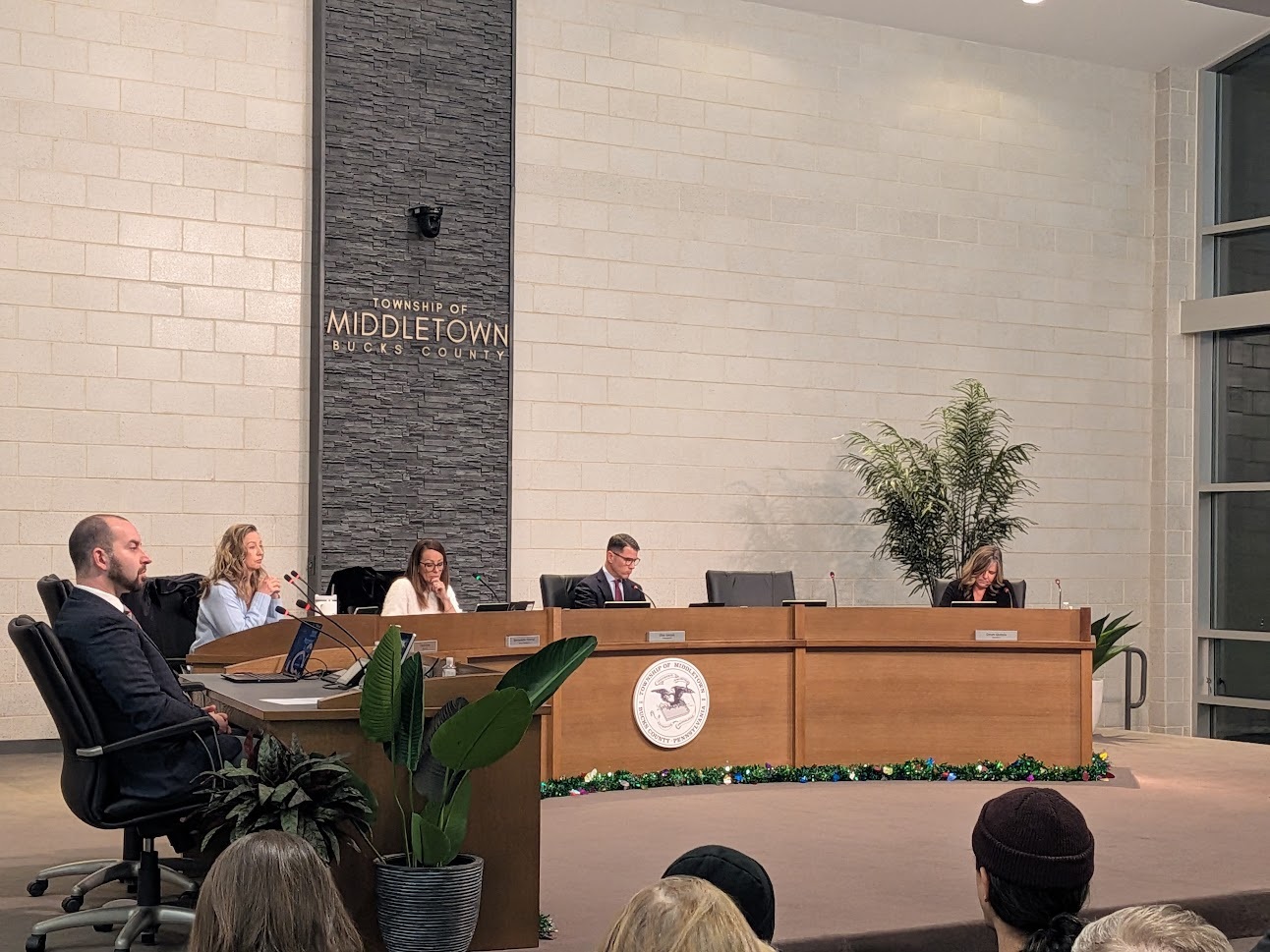
Ratliff defended the hires as bringing services in-house to reduce outsourcing costs, including the public works crew for stormwater drainage work.
The supervisors said they will be looking at the positions, including a proposal to add an in-house engineer to reduce spending on consultants.
Tom Pedrick, a retired AT&T district manager, suggested the township consider replacing pension plans with 401(k) programs during future contract negotiations with staff and police.
Advertisements
Several residents proposed selling township assets like the Styer Orchard property and the Middletown Country Club to generate one-time revenue and new tax revenue.
Ksiazek explained both properties have long-term lease agreements and serve as community assets to preserve open space.
Ratliff praised the budget team’s work during what he called “an incredibly heavy lift” and “a very, very difficult budget year.”
In her comments, Hannah encouraged continued public participation in next year’s budget process, which begins in August.

