


Credit: Chris English/LevittownNow.com
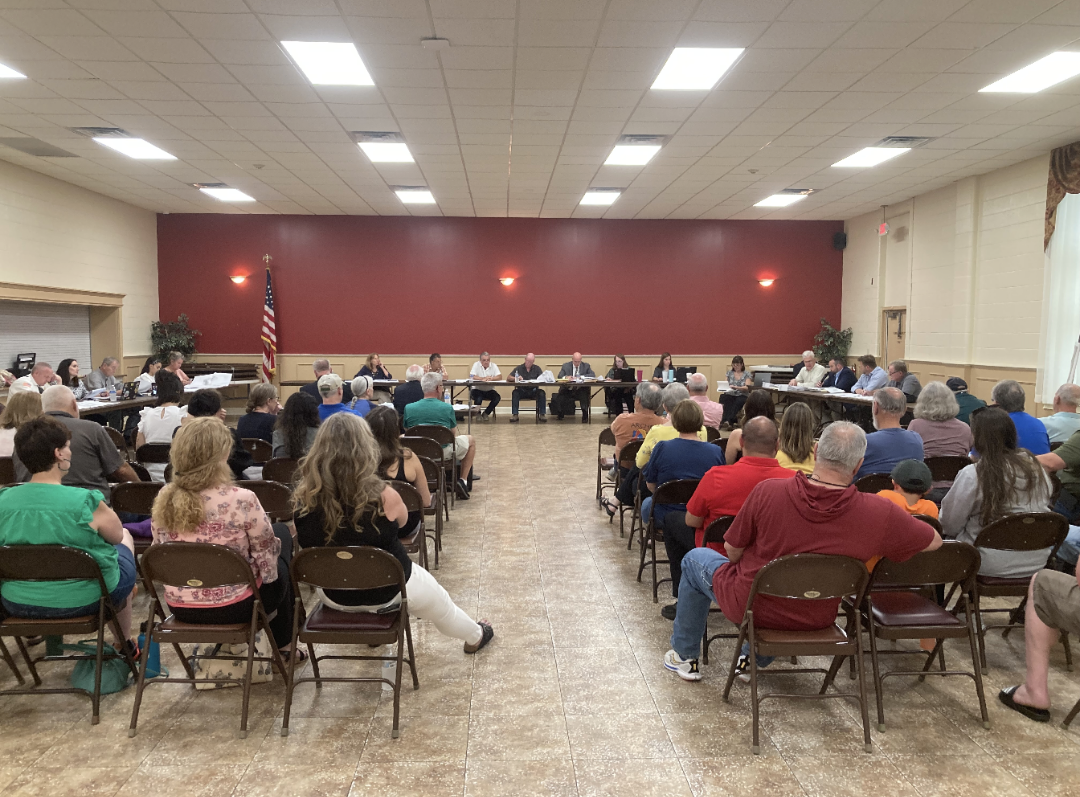
The fourth in a series of hearings that could end with a large housing development that would dramatically transform the face of Hulmeville Borough unfolded Thursday night at the borough’s William Penn Fire Company station.
Advertisements
It was the latest conditional use hearing to consider developer Superior Holdings LLC’s proposal for a Traditional Neighborhood Development (TND) of 49 townhomes, 39 single-family homes and 33 apartments on the 42.7-acre Black Farm just off Trenton Road. A TND is allowed as a conditional use in the R-3 zoning district where the property is located.
Thursday night’s hearing, held before an audience of roughly 60 to 70, included testimony from both representatives of Superior Holdings and professionals retained by a group of nearby residents who oppose the development. It was adjourned after two and a half hours and will continue at 7 p.m. July 27 at William Penn. A sixth and what borough officials are estimating would be the final conditional use hearing, would be held Aug. 17.
If the borough council grants conditional use approval, the project would also have to go through a full land development process and receive that approval from council as well in order to proceed.
Advertisements
At Thursday night’s session, Ed Murphy, the local attorney representing Superior Holdings on the project, questioned engineer Rob Cunningham and architect Joel Petty on what they believe are characteristics of a TND that would be assets for the borough. Among other features, the proposed development would have open space available for use by the general public.
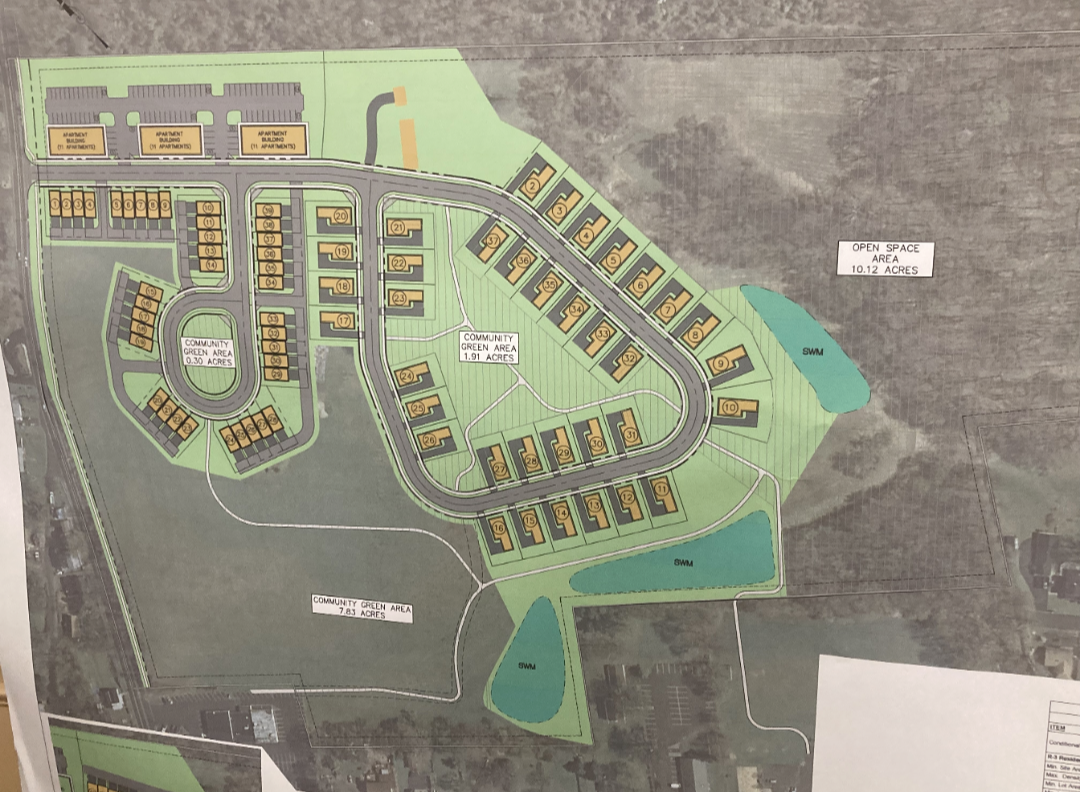
“It’s a way to condense the footprint of a development and offer a mix of housing types and encourage different areas of the community to connect, and also offer community open space,” Petty testified.
Advertisements
The nature of the plan has shifted since first being introduced in early 2022. At one point last year Eugene Lorenzetti, one of the owners of Superior Holdings, had said he was most likely going with a plan for 84 single-family homes, but the focus has now gone back to a mixed-use TND concept.
In somewhat of an odd twist, Murphy introduced Thursday night an alternate plan for mobile, or manufactured homes, based on a provision in the applicable borough zoning ordinance calling for “maximum” lot widths of 25 feet. Cunningham testified that he believes that is a typographical error and the ordinance should read “minimum” lot widths of 25 feet. But the alternate plan for mobile homes was submitted because that is the only housing type that will fit on maximum 25-foot wide lots, he continued.
The alternate plan was submitted to cover all bases “if we accept the ordinance is not a mistake,” Murphy said.
Advertisements
After he rested his case on behalf of the developer, attorney Terry Clemons and engineer Daniel Gray started their’s on behalf of the group of nearby residents opposing the development. Answering questions from Clemons, Gray testified that he felt the stormwater management system proposed for the development is inadequate. Murphy objected to the entire line of questioning, saying that stormwater management should be a topic addressed during the land development process if the matter gets that far, but he was overruled.
Gray testified that much of the soil on the farm does not make for good water infiltration, and in light of that basins and other elements of the stormwater management system should be at least 40 percent larger than what is currently proposed.
Advertisements
“It’s simply not large enough to handle the runoff,” Gray testified. “It would be a detriment to properties in the immediate vicinity.”
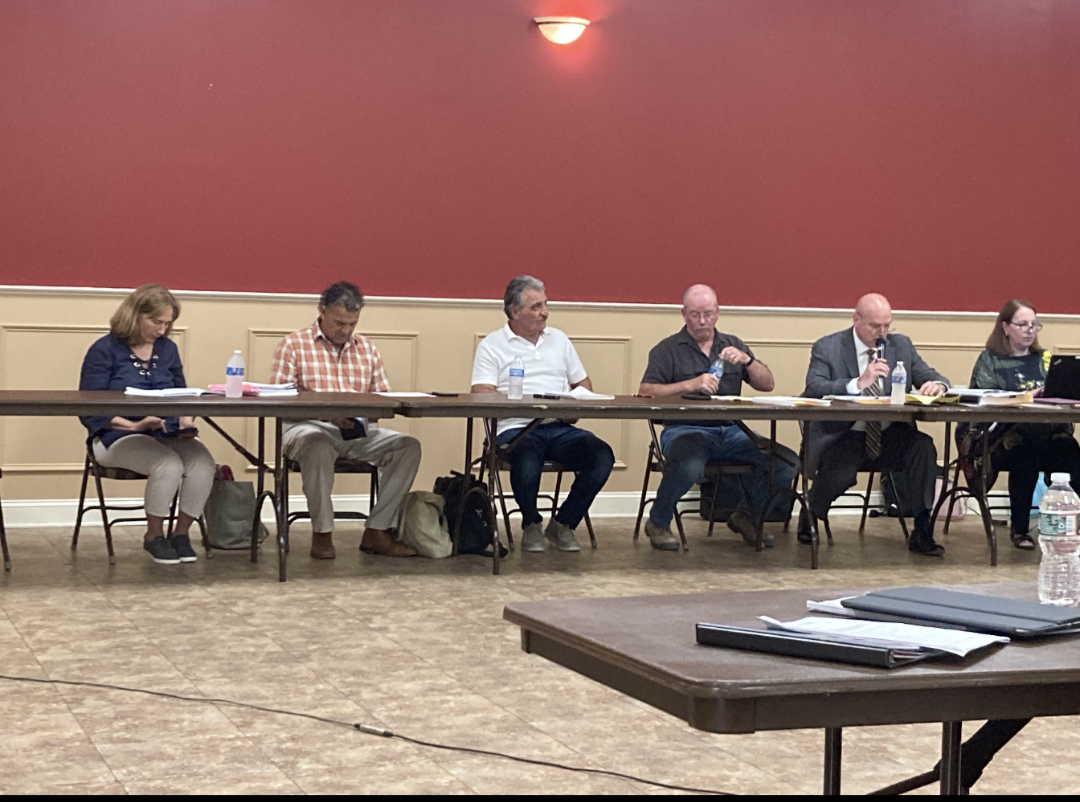
In an opening statement prior to Gray’s testimony, Clemons called the proposed mixed-use development a “cluster development masquerading as a TND. It’s not providing any of the TND essentials.”
Advertisements
The farm’s owners, Edward and Harriet Black, both died in recent years. Their son Fred had been living on the property but Lorenzetti said the current plan is not to preserve any of the existing buildings on the farm and anyone living there would relocate.
The fifth conditional use hearing on July 27 will start with more from Clemons and Gray. If the proposed development eventually receives all necessary approvals and is built, it’s estimated it would increase Hulmeville’s current population of 980 by 10 to 20 percent or more.

