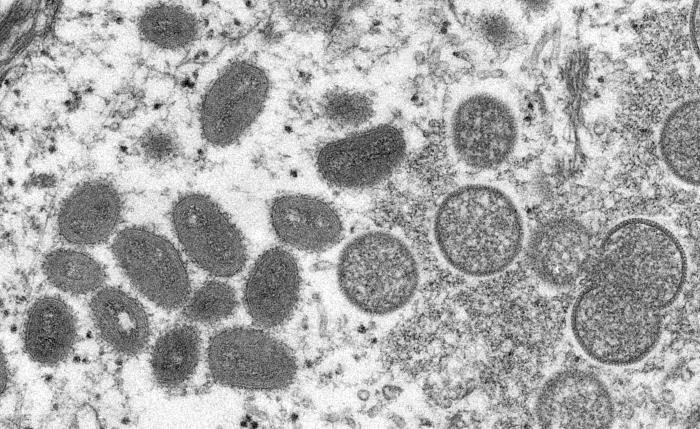
Credit: CDC
Bucks County officials know of six confirmed cases of monkeypox.
The news comes as the viral disease has spread throughout the country and globe as part of a growing outbreak.
Advertisements
According to health officials, monkeypox is a rare illness caused by the monkeypox virus, which is related to smallpox. Monkeypox is rarely fatal, but it can be extremely uncomfortable and have life-long impacts, including scarring.
Bucks County Health Department Director Dr. David Damsker said his office is performing contact tracing for the confirmed cases.
The office will “do so for as long as it continues to make sense and is effective,” he said.
Advertisements
The Philadelphia region has reported several cases since the start of June.
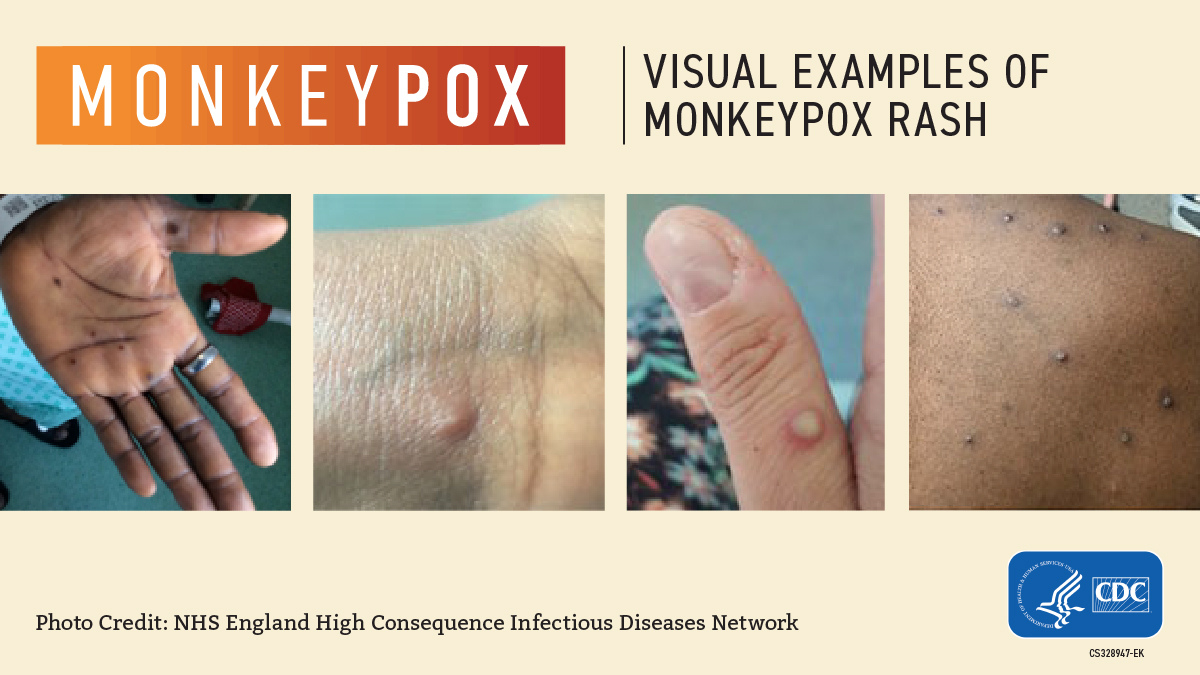
As of Friday, the Centers for Disease Control and Prevention (CDC) was reporting 124 cases across Pennsylvania and 4,907 nationally.
Advertisements
Monkeypox symptoms often are fever, headache, muscle aches and backache, swollen lymph nodes, chills exhaustion respiratory symptoms, and a rash.
A vaccine can be administered to fight monkeypox, but supplies are presently limited.
“For now, the vaccine is being given only to those who have been directly exposed to a case. We must approve each dose. Once we get enough doses to open a pre-exposure clinic we may do so. But we would need a lot more doses. and we don’t have control of that,” Damsker said.
Advertisements
On July 23, the World Health Organization (WHO) declared monkeypox a public health emergency due to the international nature of the outbreak.
Dr. Kathryn Jacobsen, of the University of Richmond, recently said the global health emergency status doesn’t mean people should panic.
Advertisements
“The WHO has advised that individuals who are members of at-risk communities take steps to protect themselves from the virus, but has not called for changed behavior in the general public,” she said.
“A public health emergency of international concern is the highest level of alert in the International Health Regulations, but it is not a synonym for a pandemic. The status is a tool for protecting global population health and not a declaration that a global crisis is already happening,” Jacobsen added.
Advertisements
Below is information put out by the Bucks County Health Department:
Monkeypox spreads in different ways:
Advertisements
• It can spread from person-to-person through direct contact with the infectious rash, scabs, or body fluids.
• It also can be spread by respiratory secretions during prolonged, face-to-face contact.
• During intimate physical contact, such as kissing, cuddling, or sex.
Advertisements
• Touching items (such as clothing or linens) that previously touched the infectious rash or body fluids.
Monkeypox can spread from the time symptoms start until the rash has fully healed and a fresh layer of skin has formed. The illness typically lasts two to four weeks.
Advertisements
The virus can be spread to the fetus during pregnancy.
HOW TO PREVENT
• Avoid touching the skin or scabs of a person who has monkeypox or monkeypox-like rash.
• Avoid intimate physical contact or sex with a person who has monkeypox or monkeypox-like rash.
• Do not share utensils or drinks with a person who has monkeypox or monkeypox-like rash.
• Do not handle bedding or clothing of a person who has monkeypox or monkeypox-like rash.
• Wash your hands often.
The vaccine is only available as Post-Exposure Prophylaxis (PEP).
Advertisements
CAN I GET MONKEYPOX FROM HAVING SEX?
Even though it is not considered a sexually transmitted infection, monkeypox can spread during intimate physical contact between people.
HOW TO PREVENT WHEN SEXUALLY ACTIVE
Advertisements
Reduce risk of exposure by avoiding intimate physical contact including:
• Oral, anal, and vaginal sex, or touching the genitals or anus of a person with monkeypox
• Hugging, massaging, kissing, or talking closely
• Touching fabrics, shared surfaces, and objects, such as bedding, towels, and sex toys, that were used by a person with monkeypox (not disinfected).
Having multiple or anonymous partners may increase your risk of exposure. You can decrease your risk of exposure by reducing the number of partners.
If you feel have been exposed to monkeypox, contact your healthcare provider.
For more information, visit: www.CDC.gov/monkeypox.
Advertisements
Report a correction via email | Editorial standards and policies