Credit: Senior Airman Sean Madden/U.S. Air National Guard
From bats to camels in the Middle East, to a “wet” market in China where live, contaminated animals were unwittingly sold for human consumption. That is the ominous, zoological route the coronaviruses took while morphing from MERS to SARS, and now a new strain, COVID-19 , a coronavirus now called a pandemic by the World Health Organization (WHO) that has severely impacted modern life around the world.
As schools, businesses, and government offices are shuttered, streets and tourist attractions abandoned, health officials like Dr. Ronald Goren, an infectious disease specialist, are waging medical war. Goren consults and teaches residents at St. Mary Medical Center in Middletown and Nazareth Hospital in Northeast Philadelphia, both a part of the Trinity Health system.
Advertisements
Like everyone else, Goren and his colleagues first found out about this latest strain of coronavirus in December, when the Chinese government belatedly – and too late to stem the virulent spread pf the disease, many experts have said – told the world about the problem.
“We heard about it and wondered what was going on. It became obvious that it was spreading rapidly, and the thought was that it would burn itself out,” Goren said.
Instead, coronavirus, which largely causes mild symptoms in the young and healthy, but can be a life-threatening scourge to the elderly and the chronically ill of all ages, grew tentacles with the world in its grip.
Advertisements
The only silver lining was that experts in epidemics were able to recognize that it was part of the coronavirus family of contagions because of previous experience with SARS and MERS. It would have caused unimaginable delays in treatment, testing, and vaccine development if the contagion had been a new-born virus, Goren said.
SARS (Severe Acute Respiratory Syndrome) was first recognized in 2003 by the WHO. MERS (Middle East Respiratory Syndrome-related coronavirus) is a viral respiratory illness that can cause severe respiratory illness, including fever, cough, and shortness of breath.
Advertisements
With the current pandemic and all the reporting around it, it’s important to know how to recognize symptoms, and to know what to do. While health officials are playing catch-up with testing supplies, and emergency rooms are worried they could be overwhelmed with coronavirus patients, or asymptomatic people who fear they have the disease, the CDC offered advice to medical professionals like Goren on how to handle it.

Recognize the symptoms: coughing, fever, shortness of breath and breathing difficulties. Goren said that if symptoms appear, the patient should call his or her family doctor, who can arrange for testing. Doctors don’t have testing equipment in their offices, Goren said.
For breathing problems, especially among older people, or those with diabetes, heart disease, cancer, or lung ailments, immediate action is called for. Hospitalization may be essential, but it is best, if possible, to call an emergency room first to advise the staff of suspicious indications of coronavirus, the physician said.
Advertisements
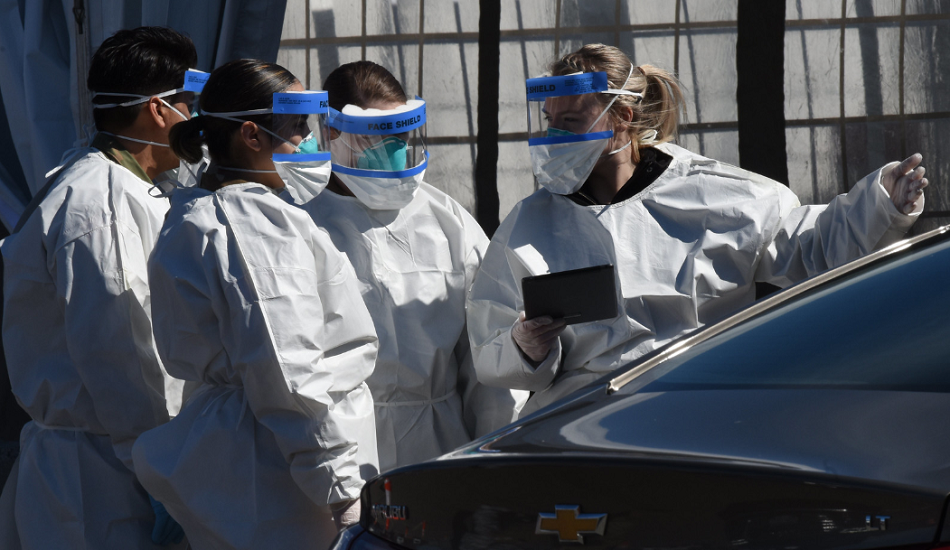
Patients are being shepherded to special quarantine areas for the protection of ER staff and other patients. Goren said that St. Mary Medical Center, like several other facilities, are considering placing an outside trailer on its main campus, where initial testing can be done, if needed.
The WHO expects that 80 percent of those affected by the virus will experience mild symptoms, and 20 percent will be more vulnerable to complications. Goren said he expects the pandemic will likely get worse before it gets better.
Advertisements
Goren’s position is held by other experts, including those who work for state and federal health agencies.
“People are going to get sick. Don’t go to grandma’s. If you’re not sick, stay away from large crowds. For professionals, vigilance is vital, Goren said. “If we let down our guard for five minutes, we’re way behind.”
Advertisements
Report a correction via email | Editorial standards and policies