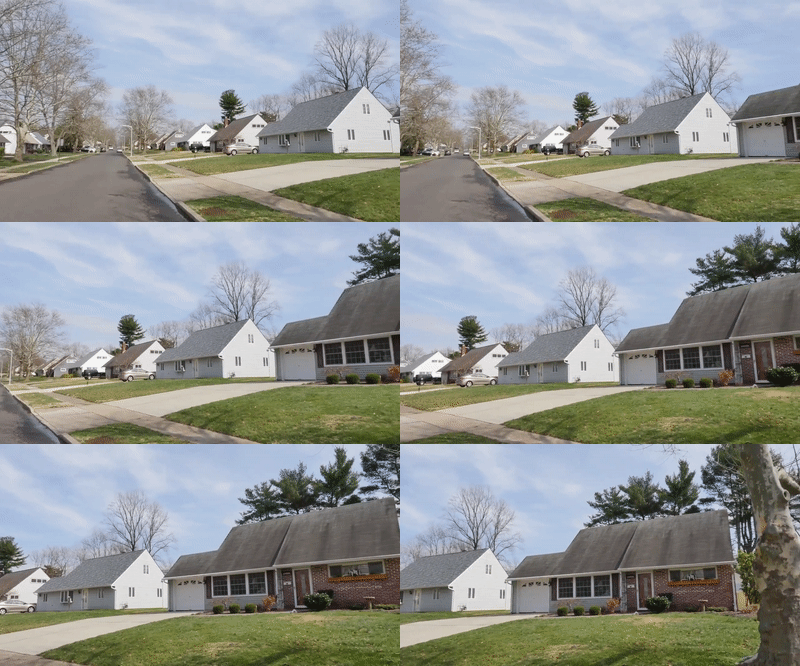


 There wasn’t a big party.
Advertisements
No cake or balloons.
Friday was just another day in Levittown, Bucks County. Cars whizzed by on thoroughfares, an ambulance cleared traffic as it made its way to the hospital, kids played outside in the humid weather to celebrate their first full week of no school and businesses opened like they usually do.
Levittown on Friday turned 65, as realized by Calkins Media columnist J.D. Mullane. At least if you start counting from the time the first of what would be 17,311 single-family homes began to pop up. They are all spread between Bristol Township, Falls Township, Middletown and Tullytown.
Advertisements
The brainchild of developer Levitt and Sons, Levittown changed Bucks County and how Americans lived.
The company’s president – William Levitt, one of the founder’s sons – led the charge to construct affordable housing for the scores of veterans who had finished their services, used the GI Bill to their advantage and planned to start a family. Another attraction was the expanding U.S. Steel plant along the Delaware River in Fairless Hills.
After Levitt and Sons built their first Levittown outside of New York City between 1947 and 1951, Levitt set his sights on Lower Bucks County, which was mainly farmland dotted by villages near large communities like Bristol or Langhorne.
Advertisements
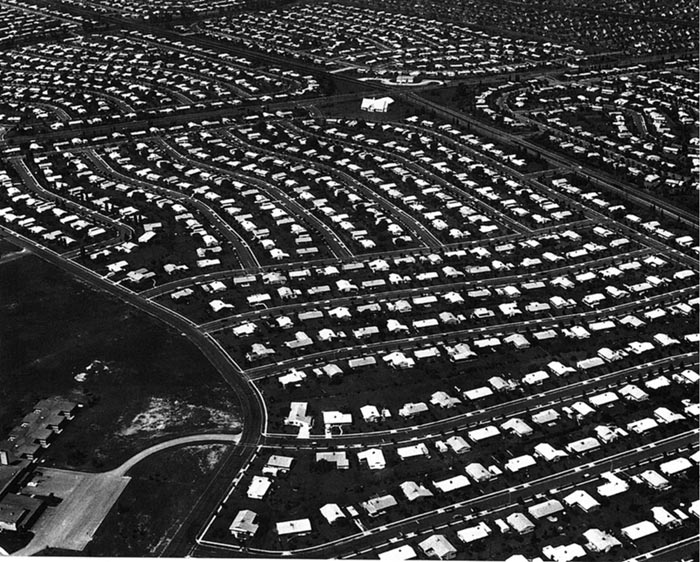
Levitt and Sons spent much of 1951 gobbling up parcels from local owners and preparing for the massive undertaking that would start early the following year and last until 1958. The company planned for recreation centers, places of worship and centers to shop to fill the nearly 6,000 acres they purchased from just under 175 different land owners.
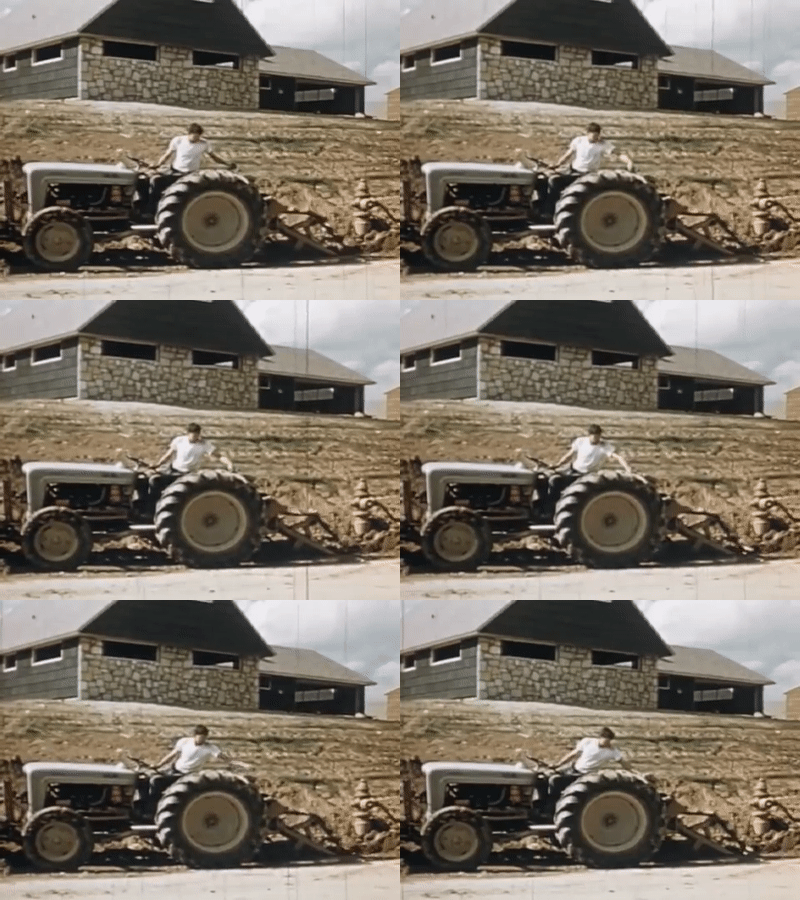
Construction began in 1952 and the assembly line-like building methods led to streets filling up with homes. A street of homes there and then a street of homes there. The story goes that Levitt’s goal for his contractors was between 30 to 40 homes being erected every single day. Pushing the boundaries of what was possible – that was Levitt and Son’s style.
The cookie cutter homes sold – many for around $10,000 with $100 down payment – and sold and sold until they were all gone. The population had boomed in Bucks County and once sleepy farm fields were jumping with thousands of kids piling into their neighborhood schools in their section.
Advertisements
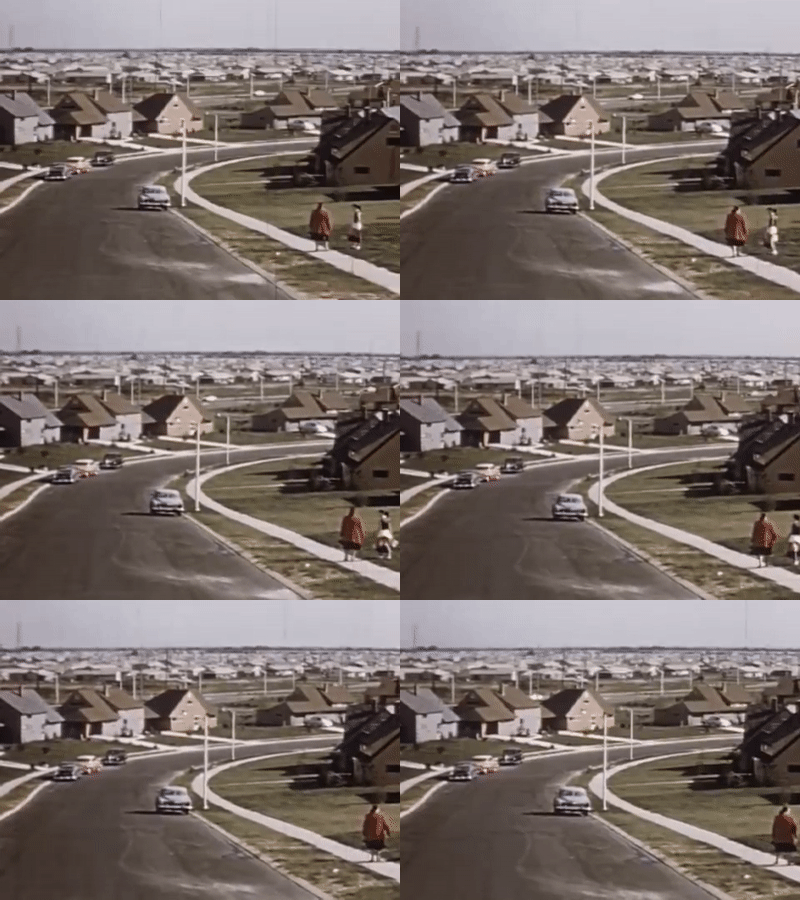
The prices were moderate but within reach for young families.
“Any damn fool can build homes,” Levitt said at one time, according to the New York Times. “What counts is how many can you sell for how little.”
Credit: Ford Motor Company
The homes were quality but certainly not luxurious.
Advertisements
Homeowners followed strict rules in Levittown’s first few years and received a homeowner’s guide.
One thing residents never had to worry about, their basement flooding.
Outside of the construction, the town made headlines for racial tension in the late 1950s and throughout the 1960s. It wasn’t until 1957 that Levittown had its first black family. Daisey Myers and her family moved in to Deepgreen Lane in Bristol Township and were welcomed with cross burnings, death threats and shouts of racial epithets. Things even got so heated fights broke out between protesters and local and state police. One striking photo from a wire service shows a unconscious Bristol Township cop being dragged by his partner after he was knocked unconscious by a rock chucked by angry Levittowners.
Advertisements
Although William Levitt said in interviews he was not a racist, he make clear the decision to target Levittown to white families was a business decision.
By 1965, race relations had settled in Levittown and a New York Times article heralded “Levittown Forgets Past Strife And Gives Award To Negro.”
Advertisements
One of the high points of the early years was the Levittown Shop-O-Rama in Tullytown, a 60-acre outdoor shopping center with more than 65 retailers. If you weren’t there for the stores, you were there for the special events. Soon-to-be elected Senator John F. Kennedy stumped for votes from the parking lot as did Richard Nixon.
In 2002, the Shop-O-Rama (later known at Levittown Shopping Center) was torn down after years of decline. The rubble sat (looked like an eyesore) for a few years before the current Levittown Town Center was constructed and packed with retailers with plenty of chains.
Advertisements
The Levittown Public Recreation Association (LPRA) along with town and community groups overall offered many recreational opportunities for kids. While all but one or two of the former LPRA pools are gone, older Levittowners still speak fondly of facilities that were a place of respite during the warm summer.
As time passes, more and more original Levittowners are moving out or passing away. Their homes are updated or flipped and a bit of history lost.
Advertisements
Levittown still holds many secrets – a sequoia tree planted somewhere in the community by Levitt’s firm and buried remains of cold war-era backyard bunkers – but it still remains a popular place to move among young families.
William Levitt moved on to built Levittown communities in New Jersey (now Willingboro) and Puerto Rico. He sold the company his father started for upwards of $90 million in 1968 and dabbled in residential communities in other locations, including France. However, nothing ever was as large or attention-grabbing as the Levittown communities.
Advertisements
After three wives and six children, William Levitt – Bill as many early Levittowners knew him – passed away of kidney disease in 1994 at 86.
The penniless pioneer of the suburbs was unable to fulfill his promise of $125,000 from his will to his closest staff. His money was gone, but 65 years later his legacy continues to live on.