


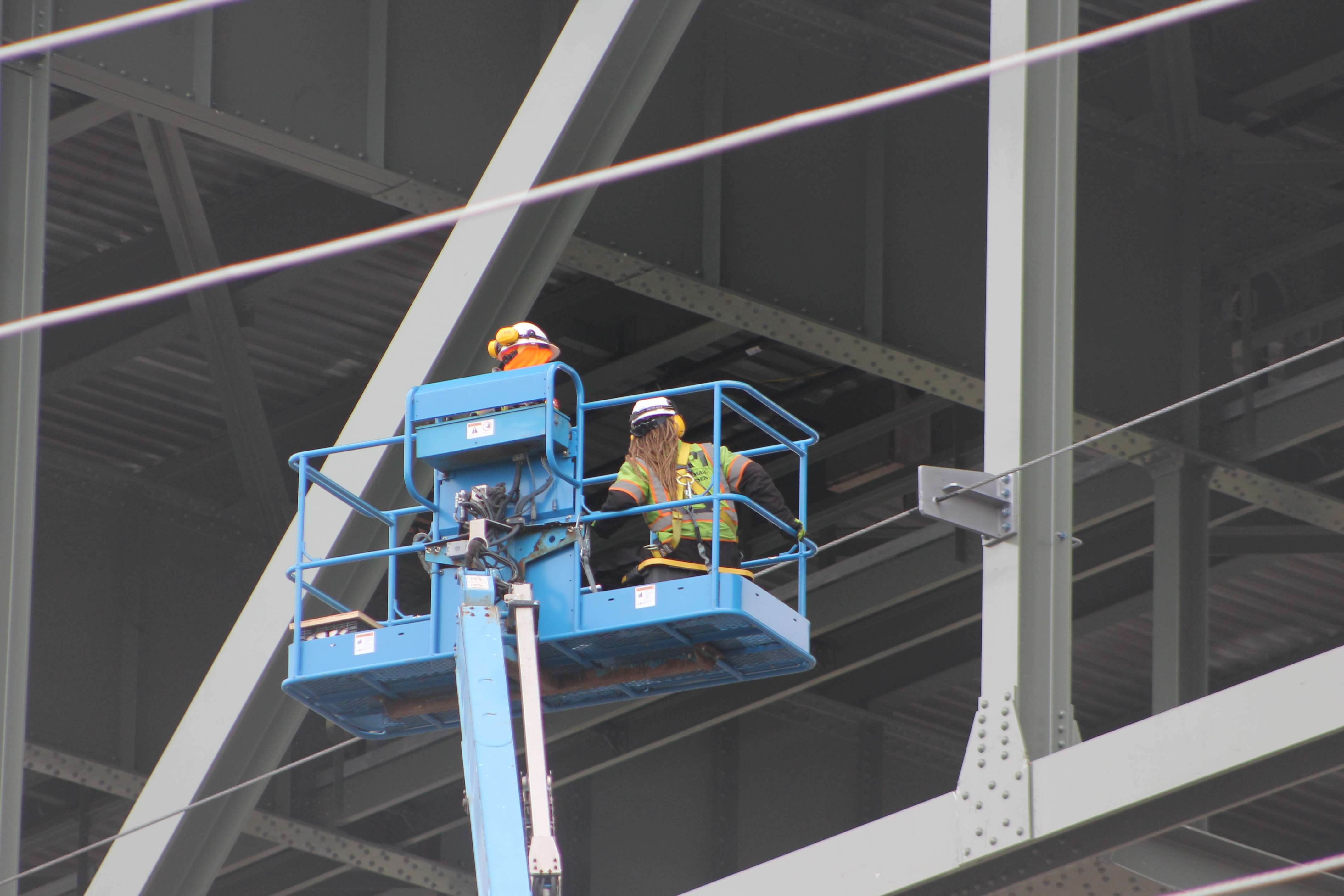
Credit: Tom Sofield/LevittownNow.com
The Delaware River Bridge that connects the Pennsylvania and New Jersey turnpikes will reopen late Thursday night, officials confirmed to LevittownNow.com.
“Many people were greatly inconvenienced by this closure over the last seven weeks, and I know that everyone is excited to get this bridge reopened and to see their lives return to normal,” said Pennsylvania Turnpike CEO Mark Compton. “Without a doubt, this incident was a bad dream for the two turnpike agencies and the contractors and consultants on our team, but a nightmare for customers and neighbors.”
Advertisements
Pennsylvania Turnpike spokesman Carl DeFebo said temperate weather has helped crews get ahead of schedule with repair and testing work.
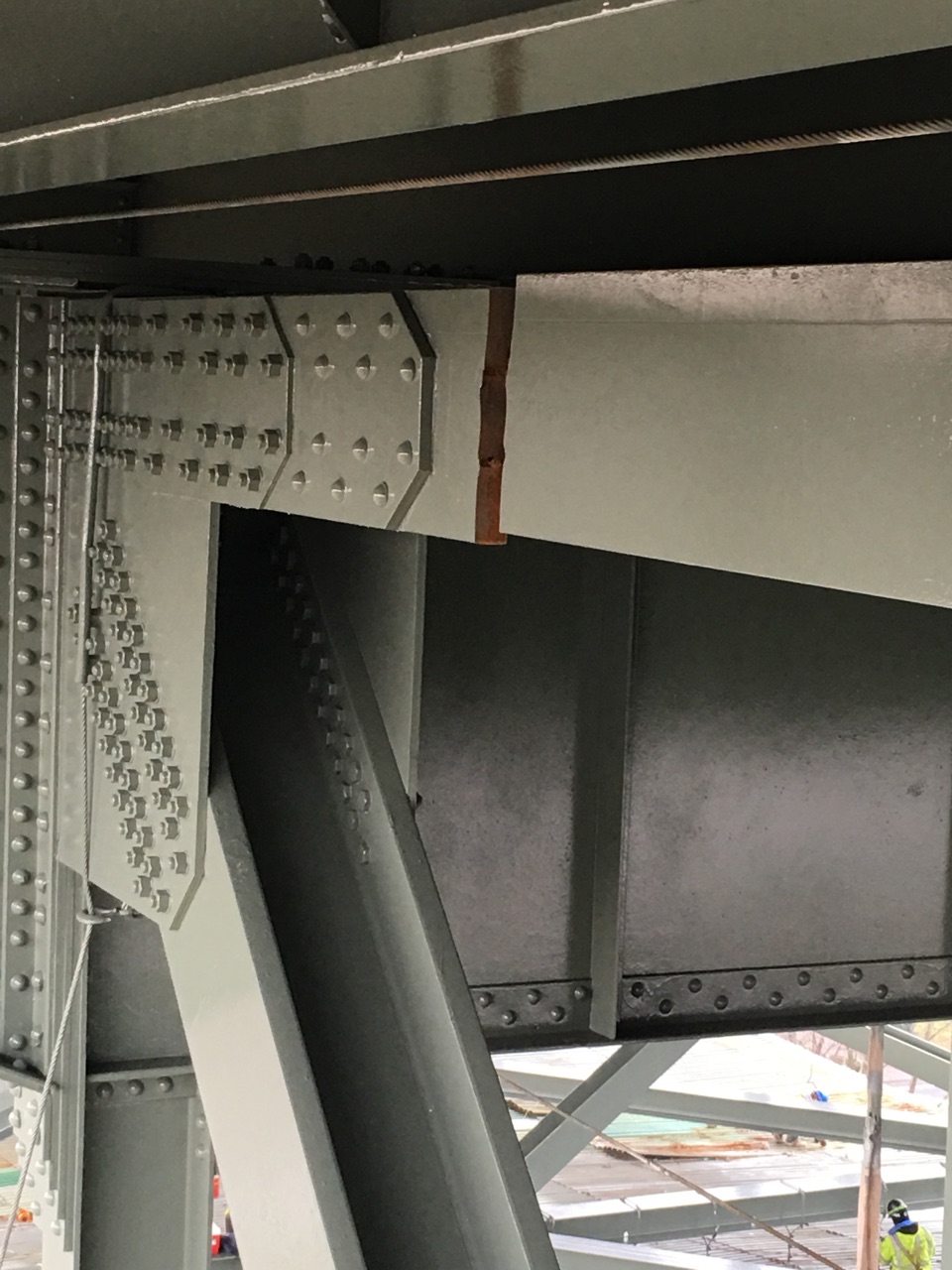
The 1.2-mile span has been closed since Friday, January 20 when an inspector checking out paint work found a 14-inch steel truss cracked above Bristol Township. The truss cracked under the westbound lanes of travel and caused the bridge structure to drop at least two inches.
The bridge closure has caused local traffic nightmares and forced engineers and consultants to test the entire bridge to make sure there is no safety risk for when traffic reopens.
Advertisements
As of Thursday afternoon, Radcliffe Street under the bridge had been reopened.

Earlier this week, the emergency engineering task force and contractors drove trucks weighted with as much as 40 tons across the span for testing.
Advertisements
“Given the number of experts who have inspected, tested and studied it over the last 49 days, it’s safe to say this bridge is perhaps the most scrutinized structure in the nation and maybe the world,” said Pennsylvania Turnpike Chief Engineer Brad Heigel. “We have a high level of confidence on both shores of the river regarding the reliability of our repair and the safety of the bridge for travelers and for nearby residents.”
The cracked truss was repaired earlier this month and the massive bridge was lifted back into place. Eight large towers with 600-ton hydraulic jacks were constructed to lift the span.
Heigel said two misdrilled holes — each approximately one inch in diameter and filled with weld material — were identified as the primary factors that contributed to the fracture. However, officials said there were also other triggers that led to the cracked truss.
Advertisements
An examination of the bridge found no other such weld-filled holes – often called “plug welds” – were found in the span, officials said.
“We continue to look at other factors such as air temperature and loads like heavy trucks or high winds that may have had an impact when the fracture occurred. But getting a definitive answer as to why it happened is akin to solving a 60-year-old mystery perpetuated by unseen offenders. We may never know for sure what all the factors were that caused the fracture,” Heigel said.

Advertisements
University of Texas at Austin Professor Emeritus Karl Frank observed the plug welds when he saw photos of the crack. He told the Philadelphia Inquirer that the now-obsolete technique was used to fill holes in the bridge’s beam.
The bridge that carries 42,000 vehicles was constructed in the mid-1950s.
Credit: Pennsylvania Turnpike Commission

