


By Rachel Martin | PA Independent
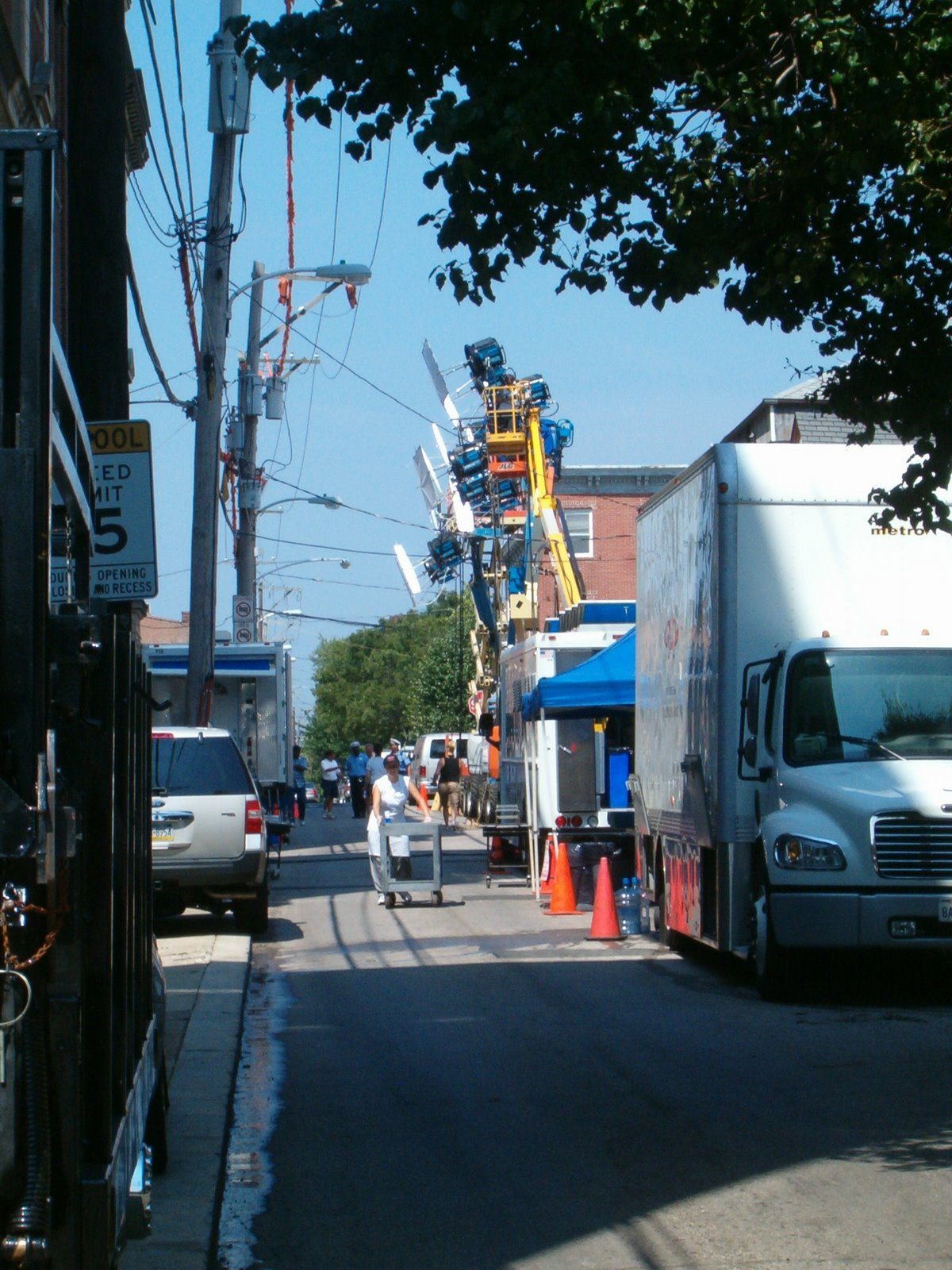
File photo
Some Pennsylvania legislators want to increase handouts to the film industry, even though the state and its new governor face a huge deficit.
Advertisements
The state spends millions each year subsidizing films. Supporters say it brings jobs, but the trade-off is sending money to Hollywood that could be used on schools or roads, for example.
“If investing in the film industry is a good idea, the private sector will do it,” Antony Davies, an associate professor of economics at Duquesne University, told Watchdog.org. “I think the best thing the state could do is treat all industries equally.”
A production qualifies for the tax credit program if 60 percent of its production budget will be spent on “qualifying expenditures” in the state — pretty much anything you can think of, though marketing and advertising are generally excluded. A production can then receive a 25 percent tax credit on those expenditures.
Advertisements
If a production company navigates all the required hoops, it effectively gets to pay 75 cents on the dollar for all production expenses incurred in the state, and that can include millions in actors’ wages. The 2014 guidelines for the FTC program are here.
Besides the philosophical question of whether governments should be giving certain industries a leg up, there also are practical considerations. Davies said legislators simply don’t have the expertise to make these decisions, and “they don’t bear the pain of making the economic decision.”
Advertisements
But taxpayers do.
Some lawmakers are looking to increase how much is spent on the tax credits. Senate Bill 218, introduced by state Sen. Wayne Fontana, D-Allegheny, would raise the cap to $125 million. It’s now $60 million a year.
Senate Bill 219, also by Fontana, would allow for “rollover” of tax credits approved for a project but not ultimately awarded.
Advertisements
One big problem with discussing these handouts is that the numbers are just plain mushy.

The Department of Community and Economic Development administers the program through the Pennsylvania Film Office. Every year, the DCED makes a report to the Legislature on the FTC program. In its 2014 report, the numbers are quite rosy.
“Since the program’s inception, nearly $433.5 million in film production tax credits have been approved/awarded to film production companies under the program. These companies, in turn, have directly injected close to $1.8 billion into PA’s economy; generated an estimated $3.2 billion in total economic activity; and supported an estimated 21,700 jobs (based on 2014 IMPLAN multipliers).”
Advertisements
The “approved/awarded” note is a big one. Looking at the charts for the tax credits actually awarded — for productions that finished and managed the paperwork — from fiscal 2007 to 2013, only $55 million in credits were awarded and 2,700 jobs were created. These are the audited numbers; no estimates here.

In terms of budgetary return, a 2013 report by the state Independent Fiscal Office, “Uncapping the Film Production Tax Credit: a Fiscal and Economic Analysis,” found the state got a return of 14 cents on the dollar for tax credits, from state taxes generated by the program.
Advertisements
Productions in given areas also boost spending in that area while in production, but keep three factors in mind.
First, companies that get these tax credits are essentially able to do their in-state spending at 75 cents on the dollar — that other 25 cents is underwritten by taxpayers. DCED has estimated that 96.5 percent of all the credits awarded are sold or transferred to another entity.
Advertisements
Second, productions can get credits for millions in wages for actors’ and other out-of-state residents’ wages. The IFO estimated that 70 percent of production-related wages were paid to nonresidents.
And while nonresidents are subject to Pennsylvania withholding for their work here, they take most of their wages with them when they leave.
Third, most of these productions are clustered in particular parts of Pennsylvania — especially Pittsburgh and Philadelphia. So while related businesses in those areas do see increased business, taxpayers throughout the rest of the state are subsidizing it.
Advertisements
Pittsburgh Film Office Director Dawn Keezer still maintains the program is “the best tax dollars for job creation Pennsylvania can spend. … I can look any taxpayer in the face and tell them this is a great deal.”
Some think-tanks say eliminating these types of subsidies and instead cutting business taxes across the board would create more — and longer-lasting — economic impact. For example, the Commonwealth Foundation states if the state would eliminate its “nearly $675 million in special subsidies,” listed in a handy chart, it could the lower the corporate tax rate from 9.99 percent to 7.3 percent.
Advertisements
Gov. Tom Wolf’s spokesman Jeff Sheridan declined to comment on the governor’s position on the program.
“Right now the governor is preparing to give his budget address on March 3. He will unveil details about specific programs at that point.”
The projected state deficit is even bigger than estimated late last year — about $2.3 billion.
Advertisements
Getting rid of the tax credits would make Pennsylvania one of the few states that does not engage in what a 2012 article in the Pittsburgh Journal of Technology Law and Policy called “an arms race with your wallet.”
“In 2000, only four states offered subsidies. Today, 45 states and Puerto Rico offer film incentives including tax credits, rebates, and exemptions,” it said.
The company Cast & Crew Entertainment Services even provides a tool to compare production incentives between states.
Advertisements
Another problem with these incentives is that states are essentially feeding black holes — mobile black holes that can pick up and leave if they don’t like what or how much you’re feeding them.
As an example of the mobility and fickleness of the industry, consider the show “Banshee.” It filmed its first three seasons in North Carolina, but packed up after that state eliminated its tax credit program and replaced it with a much smaller grant program.
The show will now film in Pittsburgh, which has a built-in irony, given that the show’s setting has always been the fictional Banshee, Pennsylvania.
“Film subsidies are like rented tuxedos,” said Brent Lane, director of the UNC Center for Competitive Economies in a 2013 interview in the Raleigh News and Reporter. “You feel like James Bond for a weekend. But on Monday, you better have a real job.”

