
By Whitney Downard | Pennsylvania Capital-Star
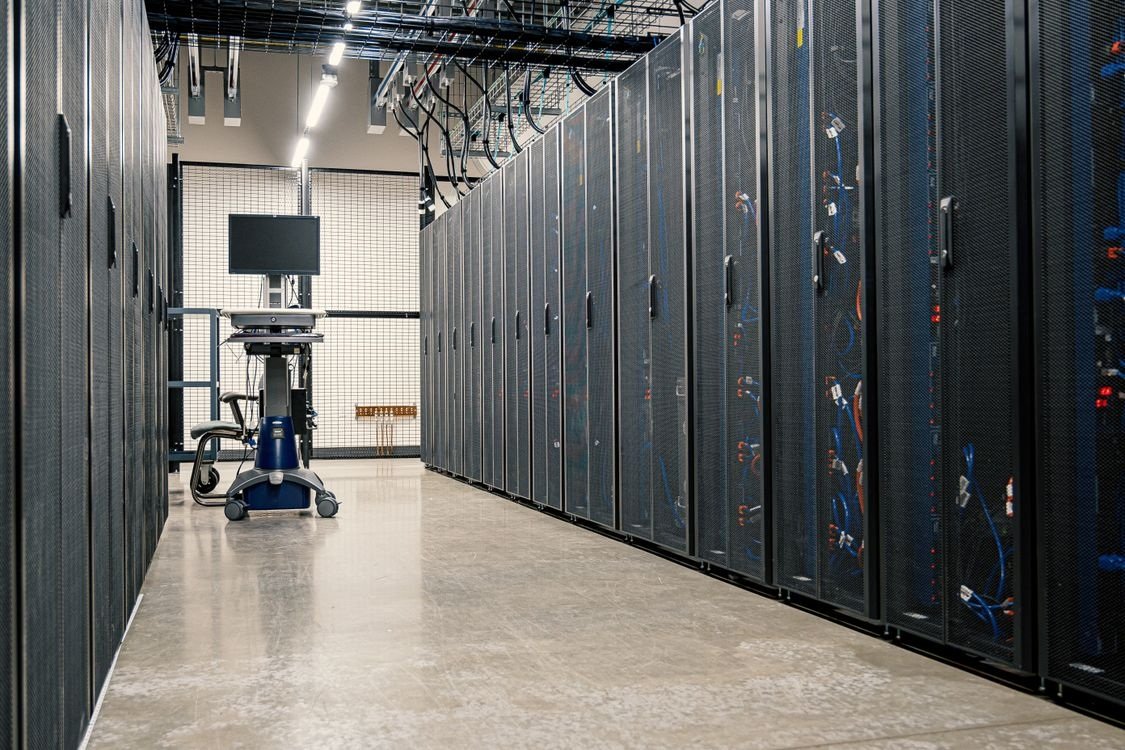
Data centers fuel the ever-growing demand for social media, artificial intelligence and streaming services, allowing people to access a plethora of entertainment options and streamline everyday tasks.
Advertisements
And their numbers are growing — another 80 proposed projects cataloged by the Data Center Proposal Tracker would more than double the current 71 active sites in the commonwealth.
An increasing number of Pennsylvanians are concerned about the resource-hungry facilities’ impact on energy prices and water consumption, but there is very little research about potential impacts to physical or public health.
“There are still, relatively, very few studies that directly examine the health impacts of data centers themselves. Much of the evidence comes from related fields,” said Neha Gour, a PhD candidate at George Mason University. “Rapid data center expansion is happening now while the research is still emerging.”
Advertisements
Gour and two other climate and health colleagues published an analysis in February, narrowing in on Virginia’s so-called Data Center Alley, the largest concentration of data centers in the world.
They concluded that while there are “significant health and environmental challenges that demand urgent action,” there are ways to design and operate the facilities safely.
Advertisements
“By prioritizing sustainability, data centers can achieve responsible growth without compromising public health,” the paper read.
One focus was to identify ways to take health into consideration “from the very start” of projects. It listed several, specific recommendations related to site selection and energy production that could minimize any potential impacts.
“Data centers themselves are not new,” said Gour. “What has changed today is a rapid growth in both the number of data centers and the scale or size of data centers.”
Advertisements
Dan Diorio, the vice president of state policy for the Data Center Coalition, called the facilities “essential digital infrastructure” that power online purchases, telehealth appointments and virtual learning.
“At a time when the average American household has 21 connected devices, data centers enable the essential services and cutting-edge technologies that drive our economy and enhance our quality of life,” he said in a statement.
Advertisements
“The data center industry will continue to work with residents, communities, and policymakers across Pennsylvania to ensure the sustainable use of water, energy, and other natural resources, while promoting the continued responsible development of this important 21st-century industry,” Diorio continued.
From noise pollution to climate change
The most immediate and direct health impact of data centers that Gour and her colleagues identified is noise pollution. Facilities operate 24/7 at a constant hum, at decibels levels that are near or even exceed federal recommendations.
Advertisements
In the short term, noise disrupts sleep and annoys neighbors. Long-term risks include heart disease, permanent hearing loss and chronic stress. But Gour differentiated between solutions for existing buildings and proposals, the latter of which can simply be built further from dense populations.
“If we’re smart about where we put new data centers, we can reduce the problem of noise pollution instead of trying to fix it later,” she said.
Advertisements
Buffer zones or adding greenery between facilities and residential areas can dampen the noise, but “the most effective fix” is reducing it — for example, re-engineering fan mounts to be quieter.
The larger health concerns are not unique to data centers, but rather a reflection of the continued reliance on fossil fuels to meet electricity demand — thereby adding to air pollution and greenhouse gas emissions that often have negative health consequences, the paper added.
“One of the most important points we make in our paper is that data centers should be understood within the broader energy and environmental systems in which they operate,” said Gour. “The issue is not data centers in isolation, but how their expansion interacts with existing infrastructure and energy systems.”
Advertisements
Factors include location, power sources, cooling factors (such as water use) and surrounding communities. Facilities located in states with a higher mix of renewable energy would have less of an impact than states that use a lot of coal or natural gas, such as Pennsylvania.
Some data centers use air-polluting diesel generators as a backstop, a source many likely used during this weekend’s heatwave when the nation’s largest electricity grid — which includes the commonwealth — pushed large customers to use them to prevent blackouts.
Advertisements
Diorio noted that prior legislative analysis from Virginia found that the use of these backup generators is “minimal,” and “rarely run for prolonged periods,” making up 7% of permitted emissions.
To keep cool, the buildings use a lot of water — some more than the entire country of Denmark. Authors urged operators to reduce their consumption through targeted cooling methods and recycle water to ease pressure on drinking water supplies.
The report from Virginia also noted that “most (data centers) use similar or less (water) than other large commercial and industrial water users,” roughly 6.7 million gallons a year. The average home uses less than 500,000 gallons annually.
Advertisements
“Collectively, the data center industry used significantly less water than other essential industries in 2025, including the agriculture, power, food and beverage, and semiconductor sectors,” said Diorio, using numbers from the Virginia analysis.
However, the need is likely to grow as more facilities come into operation.
Local governments and state officials could make following such recommendations a requirement, even cutting off data centers during droughts. But the Pennsylvania legislature has taken a largely piecemeal approach, rather than adopting comprehensive change. Additionally, a plan to incentivize “responsible” data center operations is voluntary.
Advertisements
More transparency and community engagement
Gour, who said her next project would focus on public perceptions surrounding data centers, named community engagement and transparency as crucial components for future construction.
“One of the things we realized while writing the paper is that many of the concerns, particularly community concerns surrounding data centers, are not purely technical, they’re also about trust,” said Gour. “We felt it was important to acknowledge that many of these projects are being built in places where people live, where people work and where people are raising their families.
“Communities often have legitimate questions about issues like noise, water use, electricity demand and land use. They’re looking for clear information about how those concerns are being addressed during the construction phase,” she continued.
A bill that advanced through the state House last week would require public meetings to gain certain certifications, though it met opposition from some Republicans. Currently, many of these discussions occur in tense, often combative zoning meetings — where municipalities are only approving if an application meets the criteria and not ruling the project itself.
Advertisements
“Data centers strive to be good neighbors in the Pennsylvania communities where they operate. Data center companies take compliance and accountability seriously, and only build where they are authorized to do so under local, state, regional, and federal ordinances, rules, and regulations,” added Diorio.
He noted that the industry supported nearly 130,000 jobs across the commonwealth in 2024, generating $1.9 billion in state and local taxes. Gour and others pointed out, however, that those dollars don’t always reach the neediest.
Moving forward, Gour pushed for environmental monitoring around data centers to better understand their impacts on communities, alongside long-term studies to monitor neighborhood health.
“Ultimately, our message is that technological development and community well-being should not be viewed as competing priorities. They can be advanced together through evidence-based planning,” Gour said.
Pennsylvania Capital-Star is part of States Newsroom, a nonprofit news network supported by grants and a coalition of donors as a 501c(3) public charity. Pennsylvania Capital-Star maintains editorial independence. Contact Editor Tim Lambert for questions: info@penncapital-star.com.