


Spotlight PA is an independent, nonpartisan, and nonprofit newsroom producing investigative and public-service journalism that holds power to account and drives positive change in Pennsylvania. Sign up for our free newsletters.
By Angela Couloumbis | Spotlight PA
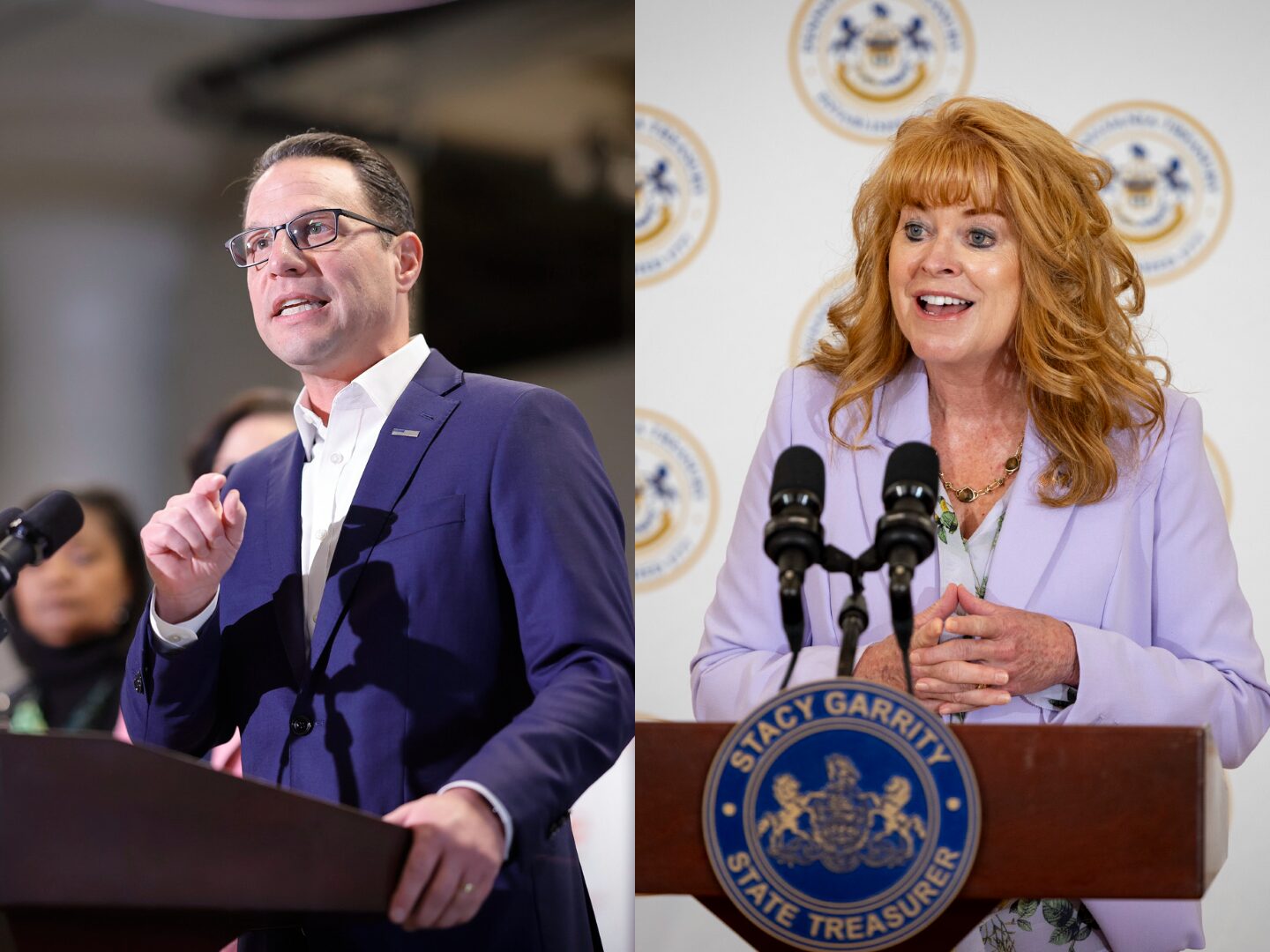
The head of Pennsylvania’s Treasury Department said her agency does not have the legal authority to pay the more than $1 million in recent security upgrades at Gov. Josh Shapiro’s privately-owned family home in Montgomery County, saying state rules bar her from using taxpayer dollars to settle those bills.
Advertisements
Treasurer Stacy Garrity — a Republican who will likely be Shapiro’s opponent in the fall general election — told reporters Thursday that state procurement rules do not permit public money to be used for construction work on a non-state-owned property like Shapiro’s house. That work — carried out last year following an attack at the state-owned governor’s mansion in Harrisburg — included a new security system, and landscaping and other maintenance work on the home’s exterior grounds.
“Over the course of nearly four months, we conducted an exhaustive review to be absolutely certain that every aspect was considered and no detail was overlooked,” said Garrity, an independently elected row officer whose office oversees payments of state revenue to employees, contractors, and others.
“It is clear,” she said, “that there is no legal authorization that allows for the use of taxpayer money for upgrades or improvement to the governor’s personal home.”
Advertisements
Garrity said that while the attack on Shapiro was “shocking and deeply troubling” — and that “everyone deserves to feel protected” — the administration’s ask for public dollars to cover the upgrades was unprecedented, and does not adhere to the state’s “fiscal and purchasing requirements that are in place to protect taxpayers.”
Garrity’s decision involves an emotionally charged issue: the safety of the governor and his family in times of rising anti-semitism and political violence. Shapiro is Jewish, and the man who attacked the residence last year had expressed anger at the governor over the ongoing war in Gaza. (As a governor, Shapiro has no decision-making power involving overseas wars.)

Credit: Commonwealth Media Services
Advertisements
And it comes at an uncomfortable moment politically, as Garrity is running for governor. She hopes to snag the GOP nomination in next month’s primary election and then challenge Shapiro in November.
In a statement, Shapiro spokesperson Rosie Lapowsky called Garrity’s decision “a completely unprecedented and shameful political action without legal basis.”
“The Treasurer should put partisanship aside, follow the law, and show some humanity for a family that has experienced real trauma, the state troopers who protect them every day, and the vendors and workers who the treasurer has now refused to pay,” Lapowsky wrote.
Advertisements
Garrity rebuffed any suggestion that she is motivated by politics: “I don’t play these kind of political games. We call balls and strikes here at Treasury.”
Shapiro does have options to resolve the matter. His administration can seek an out-of-court settlement for payment of the outstanding bills through the Office of Attorney General. Additionally, state lawmakers could authorize the spending as part of their annual budget approval process.
Advertisements
Both options would provide the state Treasury the legal authorization it needs to cut a check for the work, Treasury officials said.
Nicole Reigelman, a spokesperson for Democrats who control the state House, would say only that “the assassination attempt on our governor demands that we take all necessary steps to protect him and future governors and their families.” She did not elaborate.
Advertisements
However, it remains unclear whether Republicans who hold the majority in the state Senate would approve the spending. Senate Republican spokesperson Kate Flessner said her caucus had just learned about the decision, and “will be evaluating the matter and determine what if any actions need to be taken.”
State Sen. Jarrett Coleman (R., Lehigh) has raised concerns for months about the spending, and through the committee he chairs, subpoenaed records involving the work at Shapiro’s private house.
Advertisements
In a statement Thursday, Coleman said he plans to introduce “a legislative solution” to the matter within two weeks, but did not provide details.
Spotlight PA first revealed the billing dispute in February, based on records the news organization had obtained. At the time, a State Police spokesperson defended the spending and told Spotlight PA that while the state-owned residence was being restored, the Shapiros had to live at their personal home on a full-time basis — a move that required “serious security enhancements” to the governor’s private house.
The upgrades to Shapiro’s Abington property were recommended by State Police officials after the middle-of-the-night arson attack and attempted murder last year at the state-owned governor’s mansion in Harrisburg, where Shapiro and his family stay when in the capital. The Democratic governor and his family and friends were asleep inside, having just finished celebrating Passover the evening before, when a man broke in and set several rooms on fire.
Advertisements
Though no one was injured, the man who carried out the attack — Cody Balmer of Harrisburg — told law enforcement that had he encountered the governor during the break-in, he would have beaten him with a hammer. Balmer pleaded guilty to attempted murder and other charges.
Shapiro has spoken openly about the emotional toll the attack has taken on him and his family. But he has also stressed that it will not deter him from remaining in public office.
Advertisements
The attack set off a top-to-bottom reassessment of security protocols in place for the first family. State Police hired an outside contractor who recommended changes to protections for the governor, who is guarded by a special State Police unit. The contractor’s report was never made public, but soon after, the state launched extensive security upgrades and repairs at the governor’s mansion.
State Police also quietly authorized upgrades to Shapiro’s personal home. Those upgrades, which began over the summer, were only publicly disclosed by State Police for the first time in a letter to top lawmakers late last year.
A State Police spokesperson has said the upgrades were necessary to protect the governor and his family. In the months following the attack, the Shapiros had to vacate the state-owned property and live in their Montgomery County home, which required major updates to provide adequate security, according to the spokesperson.
Advertisements
Spotlight PA found that the security upgrades at the governor’s family home were carried out under the emergency construction provisions in the state’s procurement code, which lays out the process and (often complicated) steps state agencies must follow to purchase goods and services and execute construction projects.
The state’s procurement handbook defines emergency construction as “the process of building, altering, improving, or demolishing any public structure or building or other public improvements of any kind to any public real property to remove or correct the basis for the emergency.”
It is silent on whether private property qualifies for publicly funded emergency construction.
Advertisements
Garrity’s decision Thursday is not the only conflict prompted by the security upgrades.
The work at the governor’s private residence has led to heated litigation between the Shapiros and one of their neighbors, as Spotlight PA reported in February.
The Shapiros had initially planned to erect a fence around the perimeter of their house — but soon realized that a sliver of property they had for years thought was theirs actually fell outside the land their deed said they owned.

Credit: PA Internet News Service
When negotiations over buying or leasing that disputed tract with the neighbor failed, the governor claimed the land through an arcane real estate process called adverse possession. The latter allows a person to take legal title of a property if they can demonstrate they have occupied and used it exclusively for a certain period of time (in Pennsylvania, that is 21 years).
Advertisements
The neighbors sued the Shapiros and the Pennsylvania State Police in federal court, and the governor has countersued in the Court of Common Pleas in Montgomery County.
BEFORE YOU GO… If you learned something from this article, pay it forward and contribute to Spotlight PA at spotlightpa.org/donate. Spotlight PA is funded by foundations and readers like you who are committed to accountability journalism that gets results.

