


By Peter Hall | Pennsylvania Capital-Star
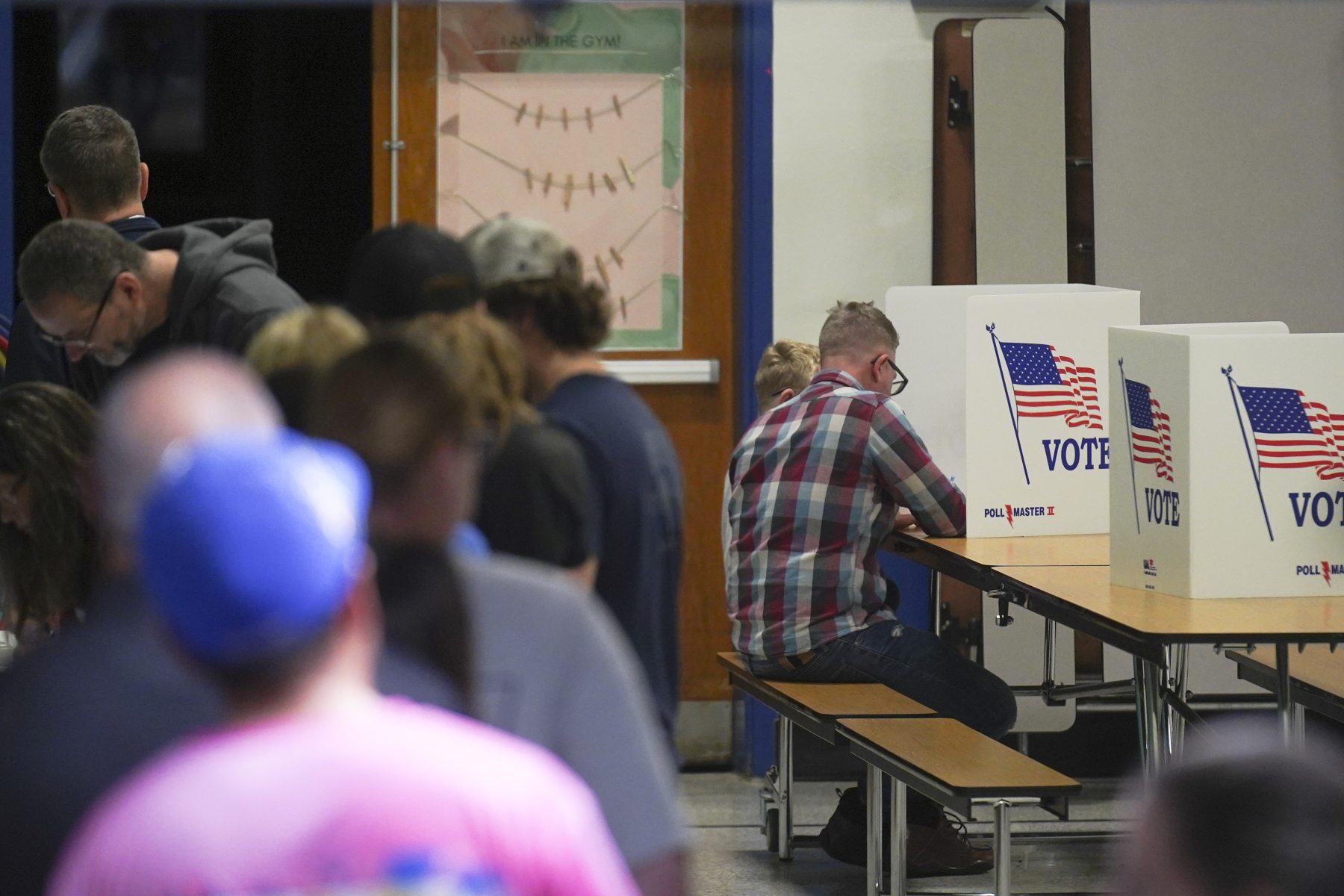
A group of five independent voters including political commentator Michael Smerconish filed a lawsuit last Wednesday asking a Pennsylvania court to end the commonwealth’s bar against independent voters participating in primary elections.
Advertisements
Under Section 2812 of the Election Code, people who are not registered as members of the two major political parties cannot vote in partisan primaries.
The group, which also includes David Thornburgh, chairman of Ballot PA Action and son of former Gov. Dick Thornburg, argues the provision is unconstitutional.
It violates the right “to cast an equally weighted vote” and to “have an equal opportunity to translate votes into representation,” enshrined in the Free and Equal Elections Clause of the state Constitution, the lawsuit claims.
Advertisements
“After 88 years of being treated as second-class Pennsylvania citizens, 1.4 million independent voters will finally get our day in court,” Thornburgh said in a statement.
The filing in Commonwealth Court follows an unsuccessful request to the state Supreme Court to exercise its power to hear extraordinarily important or sensitive matters without first being considered in lower courts. The high court rejected the group’s King’s Bench petition in August.
“Our current law disenfranchises independent voters,” said Shanin Specter of Kline & Specter, who represents the independent voters. “It is past time independent voters are given the same rights as Republican and Democratic voters.”
Advertisements
In addition to Kline and Specter, the five petitions are represented by Faegre Drinker Biddle & Reath.
The new petition includes expert testimony citing Pennsylvania election data that shows how denying unaffiliated voters participation in primaries dilutes the power of their votes.
Carnegie Mellon University Department of Mathematics Professor Wesley Pegden analyzed election data between 2002 and 2020 for all state House and Senate races. He also looked at mayoral and school board elections in the counties where the petitioners live and major local elections for mayor and other executive roles across the state.
Advertisements
The analysis measured voter influence, which is the number of votes it would take to flip the outcome of an election. The smaller the margin, the more individual votes matter in a given race, Ballot PA Action said in a news release.
“Since Democratic and Republican voters get to vote in two elections — both a primary and a general election — and independents are only allowed to vote in the general election, the partisan voter’s influence is greater when elections are contested,” the organization said.
Pegden found the median influence of Democratic and Republican voters in legislative elections from 2002 to 2020 was nearly double that of independent voters. The only time affiliated and unaffiliated voters have equal influence is when the primary and general elections for an office are uncontested, and that, Ballot PA Action said, is because the number of votes doesn’t matter.
Advertisements
“In other words, the only elections in which independent voters have equal electoral influence to partisan voters is when no voters have any choice at all,” Ballot PA Action said.
According to the Department of State, more than 1.4 million Pennsylvanians are registered to vote as unaffiliated or as members of a minor party. The Democratic and Republican parties have 3.8 million and 3.6 million registered voters, respectively, according to the most recent count Nov. 3.
Legislation intended to end the prohibition on independent or unaffiliated voters casting ballots in primaries has also fizzled in recent years.
Advertisements
Rep. Jared Solomon (D-Philadelphia) has a bill currently making its way through the state House that would allow unaffiliated voters to participate in either the Democratic or Republican primary, but wouldn’t allow third-party voters. The legislation passed the House State Government Committee in May.
Sen. Lisa Boscola (D-Northampton) introduced a bill to end closed primaries in 2023 but it did not advance beyond the Senate State Government Committee. Boscola said earlier this year she intends to reintroduce the bill.
Advertisements
Sources vary, but Pennsylvania is one of between nine and 11 states with closed primaries in which only voters registered as a Democrat or Republican may vote.
Other states allow voters to cast primary ballots through a variety of systems — ranging from registering with a party at the polls to choosing which party’s ballot to vote on in the voting booth, according to the National Conference of State Legislatures.
Advertisements
Pennsylvania Capital-Star is part of States Newsroom, a nonprofit news network supported by grants and a coalition of donors as a 501c(3) public charity. Pennsylvania Capital-Star maintains editorial independence. Contact Editor Tim Lambert for questions: info@penncapital-star.com.