


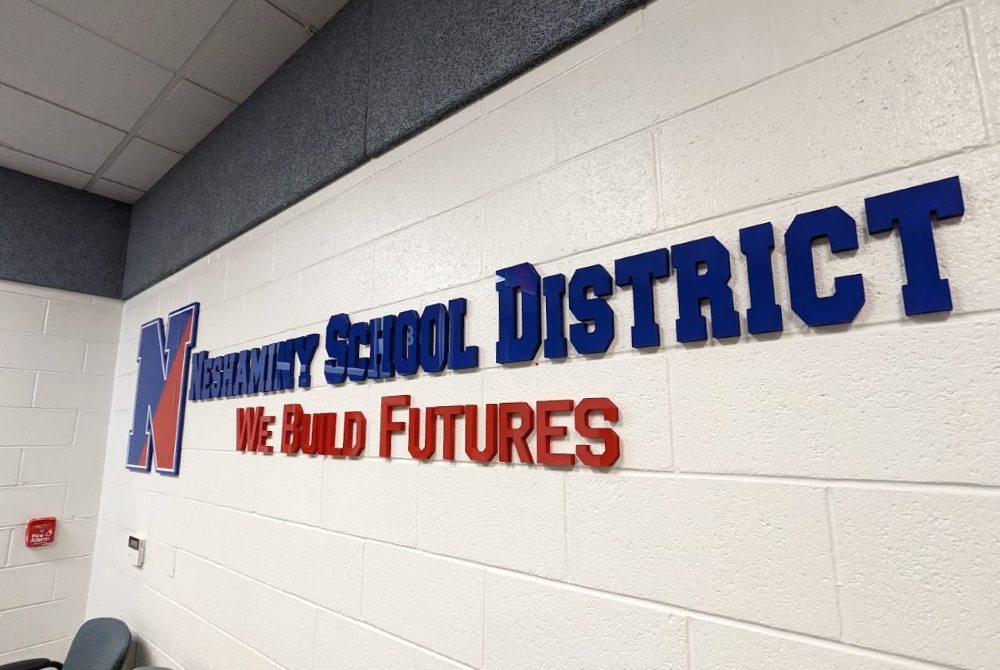
Neshaminy School District administrators are working to reduce a projected $10.7 million deficit for the 2025-2026 school year as they work to craft the 2025-2026 budget.
Advertisements
Business Administrator Deborah Klahold presented the draft figures at a school board meeting earlier this month. She outlined $225.1 million in projected spending against $214.4 million in anticipated revenues.
The school board is scheduled to vote on a formal proposed budget in May, with a final vote expected before the end of June.
Local taxes and income make up the majority of the district’s revenue, with the state contributing about 26 percent and the federal government providing 1.1 percent.
Advertisements
Klahold told board members that the deficit could be reduced to approximately $4 million if taxes are raised to the Act 1 index of 4.7 percent.
If the board approves a tax increase to the 4.7 percent index, it would generate approximately $6.7 million in additional revenue.
For the average homeowner with an assessed home value of $27,600, the tax hike would translate to an additional $236 in property taxes annually, Klahold said.
Advertisements
However, the tax impacts could be partially offset for some residents through the state’s Homestead Farmstead Exclusion program.
Several significant financial challenges are contributing to the budget shortfall. They include a decreasing tax base due to assessment appeals, projected salary increases, and rising special education costs.
One factor is the projected 24 percent increase in health care costs.
Advertisements
Klahold explained that a small number of high-cost claims are significantly impacting the district’s self-insured health care plan.
“We have about over 2,200 members. Thirty-seven members out of 2,200 represent 33 percent of our total claims,” she noted. “We just have some high claimants with some medical issues that are spiking.”
While the district explored joining health care consortiums, Klahold said limited savings were identified due to the district’s size.
Advertisements
As a self-insured entity, the district’s claims fluctuate based on the needs of its insured members.
Special education costs represent another major budget pressure.
The district currently serves 2,094 students with disabilities, an increase of 186 students since the 2021-2022 school year.
Advertisements
“One out of five students have a disability,” Klahold said, highlighting the growing need for specialized services.
Early intervention numbers have nearly doubled in four years, rising from 83 students in 2021-2022 to 160 in 2024-2025.
Advertisements
The growth, combined with staffing challenges, has led the district to rely more heavily on Bucks County Intermediate Unit services and outside placements, according to Klahold.
The cost of outside placements continues to rise.
Advertisements
Tuition for students in autistic support classes, for example, has increased from $90,000 per student in 2023 to a projected $98,000 per student for 2025-2026.
Similar enrollment increases are being seen in other specialized programs, with services for students with deafness and blindness more than doubling since 2022-2023.
Advertisements
The district’s state funding has not kept pace with these rising costs.
While special education expenditures are estimated at $42.7 million for the current school year, the district receives only $7.8 million in special education subsidy from the state, Klahold said.
Advertisements
The district’s fund balance has also been declining, dropping to 14.9 percent of revenue in 2023-2024.
Klahold noted the importance of maintaining an adequate fund balance for the district’s bond ratings.
Advertisements
Klahold stated that administrators are continuously looking at potential savings, including through staffing adjustments as retirements occur.
Uncertainty in state funding, as the legislature has yet to approve a budget, and potential federal funding cuts proposed by President Donald Trump’s administration add complexity to the budgeting process.
Last year, the school board approved a tax hike that increased the millage rate from 171.23 to 181.675.
Advertisement

Convenient Legal Access to High Quality Cannabis Just A Few Minutes Away!

Canna Remedies: Educate Curate Elevate
Shop Now: cannaremediesnj.com/shop
Advertisements
Report a correction via email | Editorial standards and policies