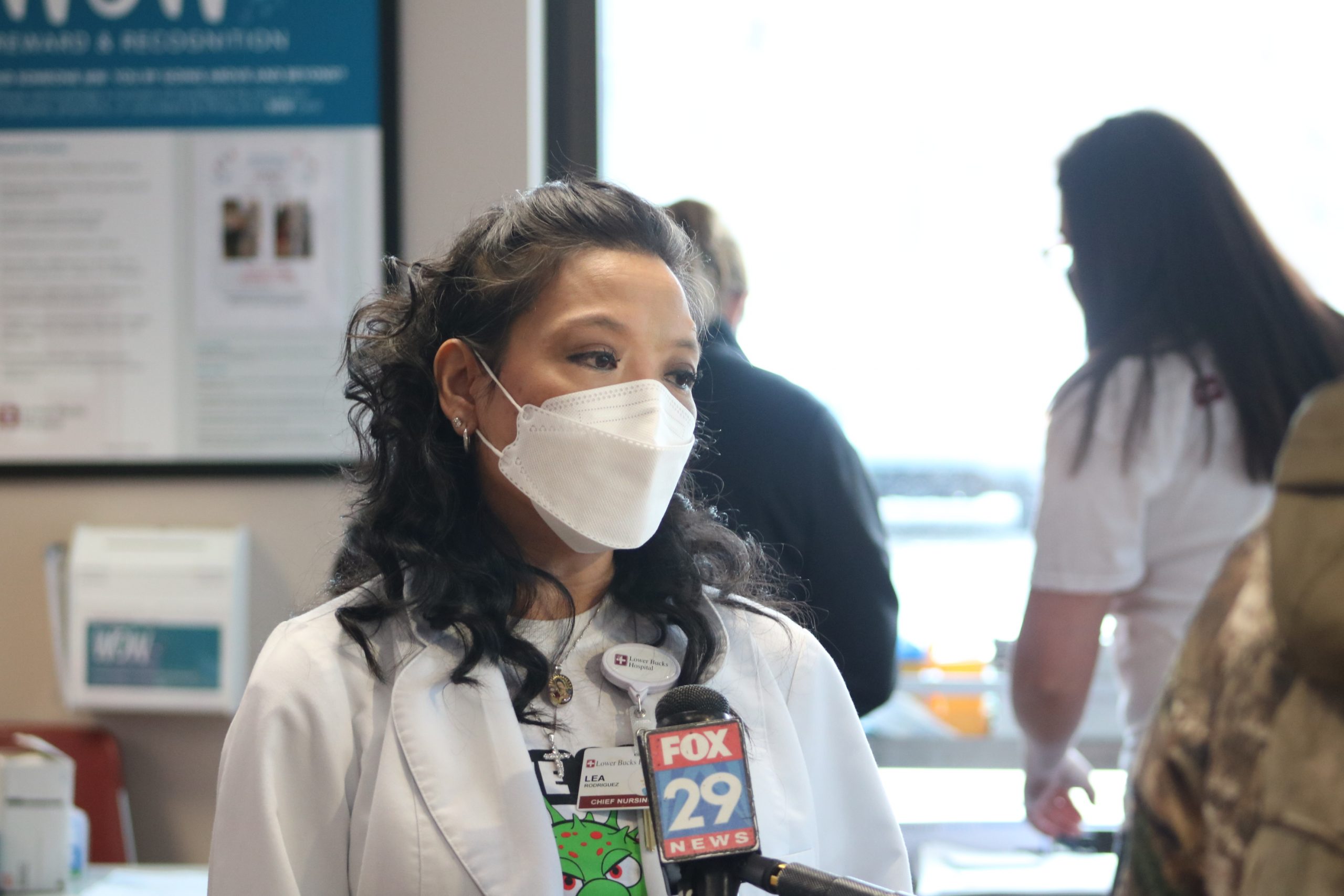
Credit: Tom Sofield/LevittownNow.com
Lea Rodriguez may not look like a typical cardiac patient often portrayed in film and TV, but she warns locals that looks can be deceiving.
Advertisements
Rodriguez, the chief nursing officer at Lower Bucks Hospital in Bristol Township, found that out at the age of 41 when she started feeling ill.
One day in February 2010, the medical professional started feeling sick. First, indigestion, then jaw pain, and finally shooting shoulder pain like nothing she had felt before.
She chalked it up at first to her meal the day before, but then the pain wouldn’t go away. She took antacids and then a special cocktail designed to settle her stomach, but it wasn’t working.
Advertisements
Rodriguez knew her family had a history of heart issues and she also has diabetes, increasing her risk of heart trouble.
Once she presented her family medical history to a doctor at the hospital, she was able to get heart evaluations, which didn’t show anything at first, but further probing revealed she needed several stents.
Advertisements
A few months later, she felt off again and found out she needed some more stents.
“If I didn’t recognize the symptoms, I would have probably had a massive heart attack,” she told LevittownNow.com.
“Women totally present differently than men,” she said of the symptoms.

Advertisements
Rodriguez said men often get chest pain and arm pain, but women commonly have less symptoms. It’s something she sees quiet often at the hospital where she works.
The chief nursing officer warned women to keep an eye out for neck, jaw, and shoulder pain, shortness of breath, vomiting, feeling sick to the stomach, sweating heavily, and extreme tiredness.
Advertisements
“Women tend to just ignore it or have something to do, but by that time, they could have a massive heart attack,” she said. “We need to recognize that women have different symptoms.”
Rodriguez advised locals – both men and women – to go in for a yearly checkup at their family doctor, pay attention to how their body feels, and not to be afraid to get looked at if something feels off.
Advertisements
“We need to recognize the symptoms and people can’t put it off. That could lead to a fate our families don’t want,” she said.
The medical professional urged people to be upfront with their doctors about what is troubling them.
Advertisements
According to the U.S. Department of Health and Human Services, heart disease is to blame for one in five deaths of women, and only about half of women recognize heart disease is the number one killer of women.
The Centers for Disease Control and Prevention said men and women can reduce the risk of developing heart disease by not smoking, talking to their doctor about checking cholesterol and triglyceride levels, getting 150 minutes of physical activity each week, making health food voices, limiting the amount of alcohol a person drinks, and managing stress levels.
Advertisements
Report a correction via email | Editorial standards and policies