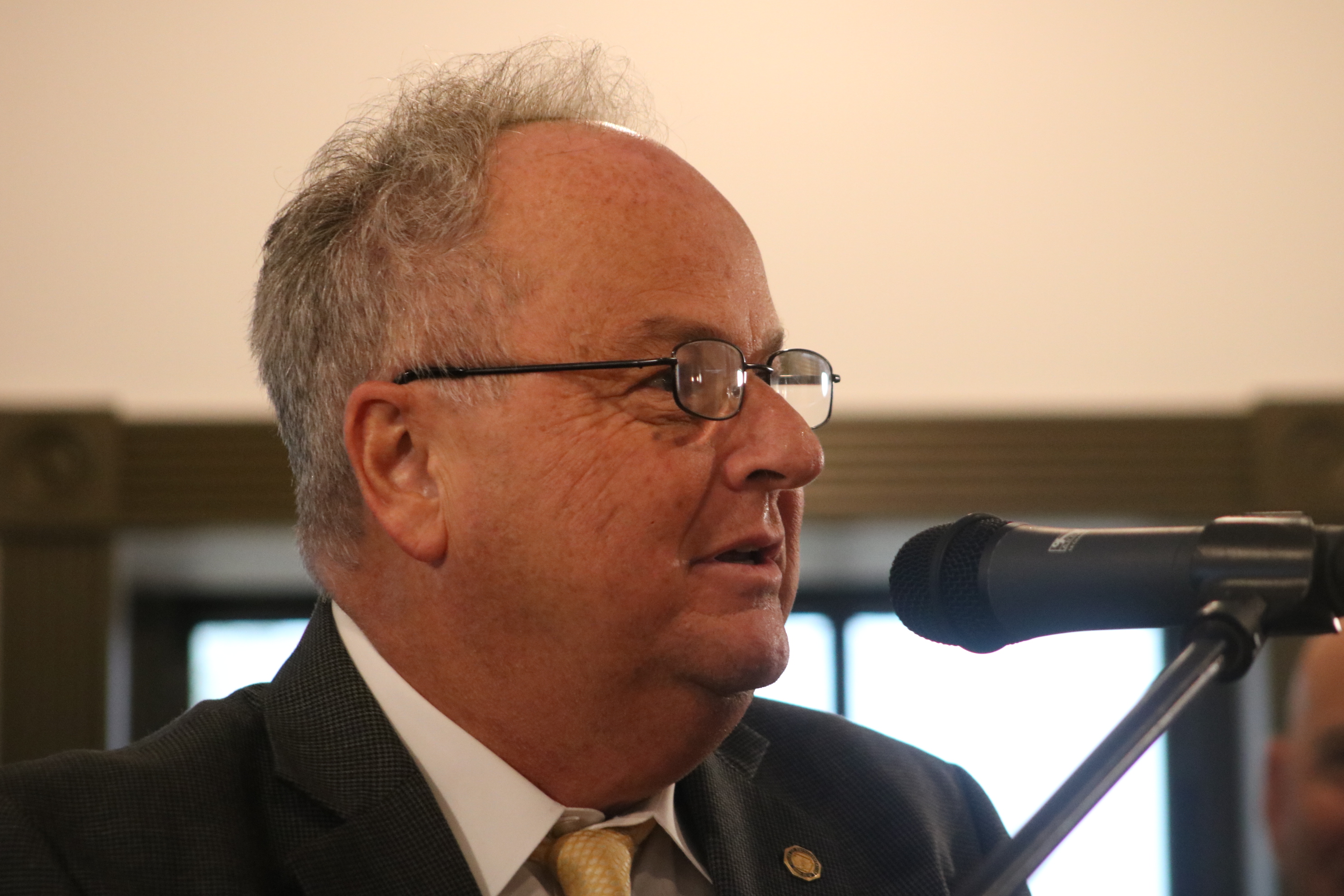
Credit: Tom Sofield/LevittownNow.com
Following the work of a task force in Harrisburg, State Rep. John Galloway will be working with fellow lawmakers to implement the group’s 15 recommendations.
Advertisements
Galloway, a Democrat from Falls Township, pushed for the creation of Act 85 of 2020, which looked at the issue of worker misclassification and its impact in the Keystone State.
The Joint Task Force on Employee Misclassification’s preliminary report was issued to lawmakers in Harrisburg this month.
“Misclassification of employees occurs when a business wrongfully classifies a worker as an independent contractor even though the nature, type and oversight of their work determines they should be considered an employee under the law. Misclassification can impact industries from home health care to construction to online businesses, like Uber and Lyft drivers,” Galloway’s office explained.
Advertisements
The task force report estimates:
- 7.9: Average number of misclassified employees found per Office of Unemployment Compensation Tax Services audit.
- 11,670: Estimated number of misclassified employees who suffered injury or illness at work and were denied Workers’ Compensation in 2020.
- 49,266: Annual number of employers who currently misclassify at least one employee.
- 389,000: Annual number of misclassified employees in Pennsylvania.
- $440,780: Estimated losses to the Uninsured Employers Guarantee Fund due to misclassification in 2020.
- $131 million: Annual lost revenue to UC Trust Fund due to misclassification.
- $6.4 million to $124.5 million: Estimated range of lost revenue to General Fund due to misclassification in tax year 2019.
- $176.3 million: Estimated losses to misclassified employees who suffered injury or illness at work in 2020 without workers’ compensation insurance.
The report’s 15 recommendations were unanimously agreed upon by the task force.
Advertisements
Galloway highlighted the following recommendations:
- Extending Act 72, the Construction Workplace Misclassification Act, beyond the construction trades to cover other industries in the commonwealth.
- Expanding statewide clearance programs to require all state agencies to pull current licenses or not renew current licenses if a business is determined to have knowingly misclassified workers and has not paid the fines and fees associated with that violation or previous violations.
- Enhancing the penalties associated with worker misclassification violations under Act 72 by increasing the fines in tiers for first, second and subsequent violations, and by enhancing criminal penalties for known violations while maintaining summary offenses for negligent violations.
Galloway said lawmakers can “level the playing field by preventing honest, hardworking Pennsylvanians from being wrongly classified as independent contractors and suffering from lost wages, medical bills and lack of unemployment compensation; law-abiding businesses from struggling with the impact of lost profits and competitive bids; and the taxpayer and state government from losing out on rightfully owed revenue that could be used to improve services and infrastructure.”
“Criminals use employee misclassification to get rich in Pennsylvania at the expense of the financially vulnerable and the law abiding,” Galloway said in a statement. “I hope the legislature will adopt the proposals to end this unfair and unethical practice, which is currently bleeding the state dry so that we can build a better Pennsylvania with better jobs, better roads, better bridges and better infrastructure for everyone.”
Advertisements
The task force met monthly in 2021 as they gathered data and heard more information on the topic. They took statements from workers on how misclassification was impacting their lives and heard from groups that deal with the issue, said Basil Merenda, the chairperson for the task force and a deputy secretary for the Pennsylvania Department of Labor and Industry.
The task force plans to prepare a plan to work with businesses, labor groups, and the community to increase public awareness of employee misclassification, finalize and format final recommendations for statutory changes, and issue a final report by the end of the year.
Advertisements
Report a correction via email | Editorial standards and policies