

By Elaine S. Povich | Stateline, an initiative of The Pew Charitable Trust.
Drivers from other states owed Maryland nearly $11 million in unpaid highway tolls, late fees and fines last year. In New Jersey, out-of-staters skipped out on about $10.5 million last year.
Advertisements
Unlike in-state drivers, out-of-state motorists who evade tolls in those states don’t have to worry about their vehicle registrations or license renewals being held up if they don’t pay outstanding tolls or fines. That can make it a challenge to get them to pay up.
It’s a different story for drivers living in a zone that includes Maine, Massachusetts, New Hampshire, New York and Rhode Island. Those states have a reciprocity agreement, meaning that if a driver flouts a toll in any of those states, their home state will go after them—holding up re-registrations, license renewals and the like—until the debt is paid.
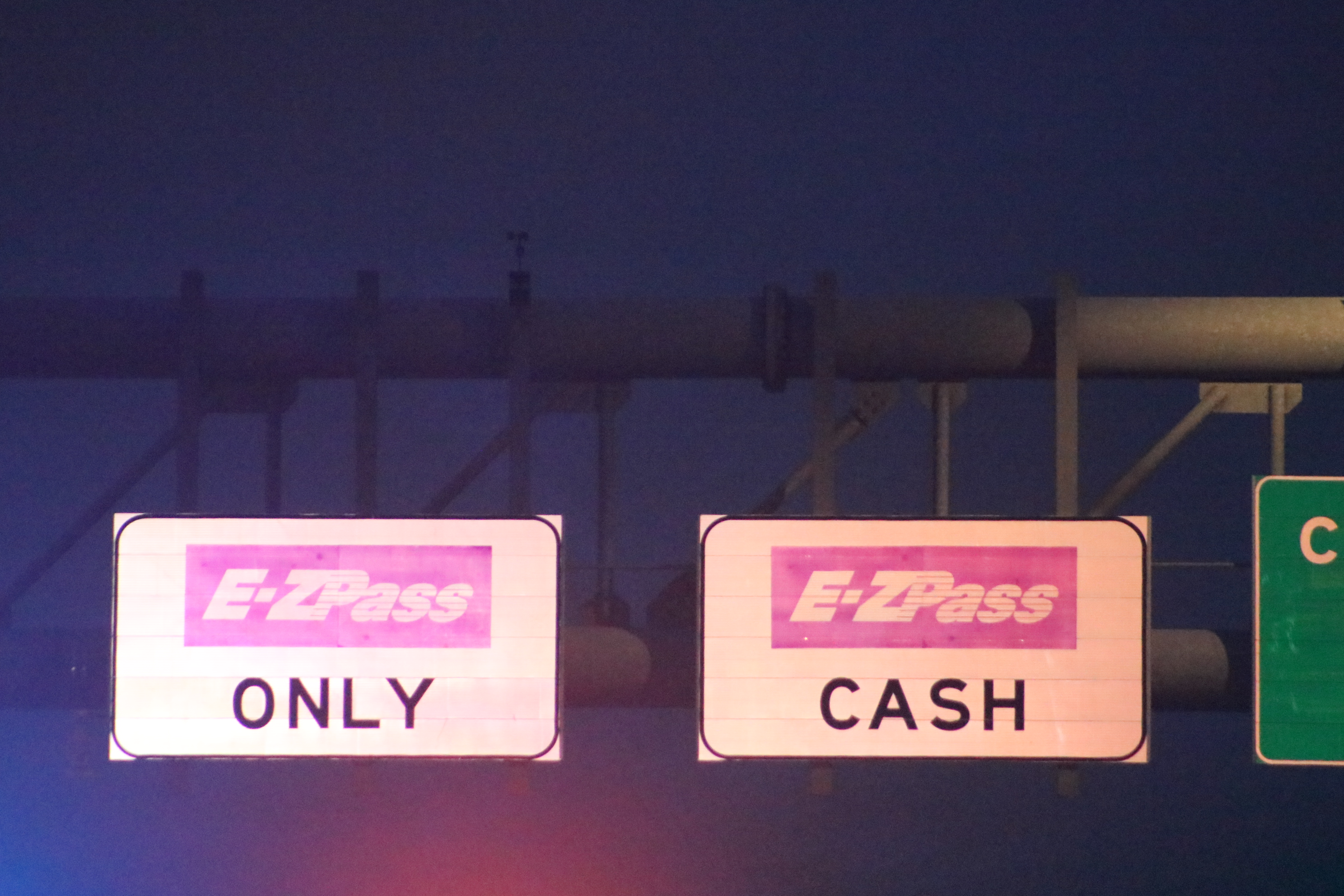
With the rise of automatic tolling and E-ZPass, which allow (and sometimes require) cars to zip through toll lanes without taking tickets or dropping coins into baskets, more states are taking a good look at who doesn’t pay their tolls. That’s especially true in the Northeast, where major highways often require payment, and unpaid tolls from visitors add up.
Advertisements
Mark Muriello, a spokesperson for the International Bridge, Tunnel and Turnpike Association (IBTTA), said there is no overall estimate of the millions of dollars that states lose in unpaid tolls from outside drivers. But the situation is so serious that the IBTTA formed a task force last year to investigate. The panel is scheduled to release its report later this year.
The number of U.S. toll road transactions increased by roughly 11% between 2016 and 2019, from 7.5 million to more than 8.3 million, according to IBTTA. In addition, more than 55% of toll facilities in the U.S are now cashless operations, representing nearly 3,600 miles of roads.
Maryland and New Jersey are among the states that are considering changing laws or regulations this year to implement or allow for reciprocity agreements with nearby states. Some other states, such as Georgia, rely on private collection firms to chase down the overdue tolls and associated extra assessments. There is an ongoing argument over which method works best.
Advertisements
“Many states are looking at multiple layers of attack here,” said Muriello. “All of them prove to be beneficial to some degree. Sometimes states find combining them gives you even a better result. What these agreements often will do is target either vehicle registrations or driver’s licenses.”
That’s what Maryland state Del. Al Carr, a Democrat from the Washington, D.C., suburbs would like to do. He’s calling on Maryland Republican Gov. Larry Hogan and other top state officials to enter into agreements with nearby states.
“The reciprocal agreements work extremely well in New England and New York,” said Carr in a phone interview. “They don’t have these $168 million in back tolls owed.”
Advertisements
Between August 2020 and last month, the Massachusetts Department of Transportation’s reciprocal agreements with nearby states collected $1.3 million from New York drivers, about $477,000 from Rhode Island, $94,000 from New Hampshire and $82,000 from Maine, MassDOT said in an email.
The Maryland Transportation Authority, MDTA, reported that from July 2013 through August 2020, back tolls amounted to $167.6 million. Carr pointed to a 2015 Maryland Transportation Department report that called for reciprocity agreements as the “most effective” way to go after unpaid tolls from out-of-state drivers. The report argued that holding up registrations is one of the “most effective countermeasures” against scofflaws.
But, Carr said, there is now resistance at the department. “They are not taking their own advice.”
Jim Ports, MDTA’s executive director, said in a phone interview that reciprocal agreements are hard to implement and his agency is opposed to instituting them at this time. “Each state has totally different rules, totally different fines. The policy question is: Do you want Marylanders getting their license suspended by another state?”
Advertisements
Besides, he said, these agreements “take years to put together.”
In an April letter to Hogan and other state officials, Carr and a group of lawmakers argued that a reciprocity agreement—particularly between Maryland and Pennsylvania, which share a border—would make more sense than hiring a collector.
“Both states would benefit,” the lawmakers wrote. “Pennsylvania is the #2 state comprising Maryland’s out-of-state toll debt. Because their nonpayment penalties are similar to those in Maryland, they would make an ideal partner. Pennsylvania drivers currently owe MDTA $20 million ($5 million in tolls plus $15 million in fees). Maryland drivers owe Pennsylvania $1 million in tolls (not including fees).”
Advertisements
As of July 2019, MDTA said Virginia residents owed the most in tolls to Maryland, nearly $26 million, with Pennsylvania second at $12.8 million.
Pennsylvania Turnpike spokesperson Rosanne Placey said in an email that her agency’s priority is Pennsylvania drivers, though she said the state has some pending agreements with other nearby states. She did not specify the states.
Advertisements
“As you might imagine, our enforcement tools for PA residents are the most robust—as that represents the lion’s share of our customers,” Placey wrote.
“We, of course, do billing and follow up toll violation notifications for all states,” she continued.
Advertisements
Maryland’s Ports said a swifter solution than reciprocal deals would be to hire an outside collection agency to go after the toll dodgers. He said the agency will be putting out a request for proposals from collection firms soon.
“You can sell them your toll debt and they will give you a certain amount of money,” he said. “Or you can hire them, and they get a percentage, and you get a percentage [of collections].”
Private Collection Agencies
Advertisements
Tiffany McCall, a spokesperson for the Georgia State Road and Tollway Authority, said in an email that the state “does not have any reciprocity agreements with other states for violation payments.” Georgia, she said, uses a collection firm to go after toll violators.
Paul Hartwick, a spokesperson for Professional Account Management, the firm that handles Georgia’s collections, said the company provides “parking and tolling solutions.” He could not detail the amount of tolls, fines and fees that remain uncollected.
Advertisements
But the company’s website said the company provides follow-up notices, bankruptcy handling, skip tracing, support for tax “intercept/offset programs” and secondary collections.
New Jersey state Sen. James Beach, a Democrat, said the state lost $10.5 million last year and $5.4 million two years ago from out-of-state drivers’ unpaid tolls, mostly on the New Jersey Turnpike and Garden State Parkway.
Advertisements
“That’s a lot of money,” he said in a phone interview.
He said he’s preparing a bill that would give New Jersey the authority to partner with other states and impose sanctions on drivers who don’t pay up.
“We would help them, and they would help us collect from those who are evading tolls,” he said. If all the outstanding tolls were collected, he postulated, perhaps the tolls could be lowered overall. “This gives everyone the opportunity to join together and prevent these people from ignoring and evading tolls which just cost everyone else money.”
He said that unlike in Maryland, he has gotten support from New Jersey’s Department of Transportation. But the legislature is distracted, he said. “Because the entire legislature is on the ballot this November, there are things that have taken priority over this bill. I understand why.”
‘Giving the Finger’
Advertisements
Patricia Hendren, executive director of the Eastern Transportation Coalition, made up of 17 Eastern states and the District of Columbia, said their common objective is to collect unpaid tolls. The organization, she said in a phone interview, is focused on “making it easier to pay” tolls, rather than concentrating on unpaid charges.
Reciprocal agreements, Hendren said, are a good starting point for ensuring payments, but she noted there are lots of details to be worked out between the states, including how many violations trigger the fines.
“It’s so much more complex than is generally understood,” she said. “When you get into larger facilities, with multiple out-of-state drivers, you have multiple state laws to address.” She said the first step is to have laws authorizing the agreements, and not all states have such laws, throwing the issue to the legislatures.
She acknowledged that holding up a driver’s license or registration can affect a person’s personal life: “getting to the doctor, getting to work,” for example. And she also mentioned that sometimes people get “inadvertent tolls” such as when they get lost and have to find their way over an unanticipated toll road.
License suspensions for unpaid fines are controversial. Some advocates for drivers say that yanking a license for failure to pay fines amounts to discrimination against poor people. Usually the controversy is over court-imposed fines, not traffic, but traffic fines are subject to criticism too.
Shelia Dunn, a spokesperson for the Waunakee, Wisconsin-based National Motorists Association, a group that opposes tolls they deem excessive, said she frequently crosses a bridge into Kentucky, and got a bill for $50 for inadvertently not paying a toll for two months. “I called and said I wasn’t going to pay it,” she said in a phone interview. “They said, ‘OK.’”
The National Motorists Association argues that tolls amount to double taxation on roads, which are supposed to be paid for by gasoline taxes.
Advertisements
In-state residents complain about tolls too, usually because of the large ensuing fees attached. For a time, Maryland’s fee was $50 per violation, which many argued was steep for a missed $2 toll. MDTA lowered the fee to $25 last year. At the same time, MDTA instituted a 15% discount for drivers who pay a video toll within a certain timeframe. Video tolls occur when the toll gate takes an automatic picture of a license plate and sends a bill, in lieu of the driver putting a transponder on their vehicle’s dashboard.
Discounts attract more drivers to pay tolls and avoid fines altogether, according to Muriello, who used to work at the New York/New Jersey Port Authority, an agency that controls many tolled bridges and tunnels within New York City and its metropolitan area. He said that due to discounts, 88% of regular drivers on Port Authority infrastructure have transponders in their vehicles. Within the city, it’s 95%.
Pat Jones, executive director and CEO of IBTTA, said that with 95% participation in the transponder effort, “only 5% is susceptible to leakage.” In other words, despite some tolls being ignored, the overall high participation cuts down on the unpaid tolls and fines.
Georgia state Rep. Alan Powell, a Republican, sponsored a bill a few years ago that provided sanctions for Georgia drivers who ignored tolls, fines and fees. That law instituted holds on registrations.
He said he did it because those Georgia drivers were “giving the finger to the toll authority. That did not include out-of-staters,” he said in a phone interview. “That might not be a bad idea.”
Report a correction via email | Editorial standards and policies