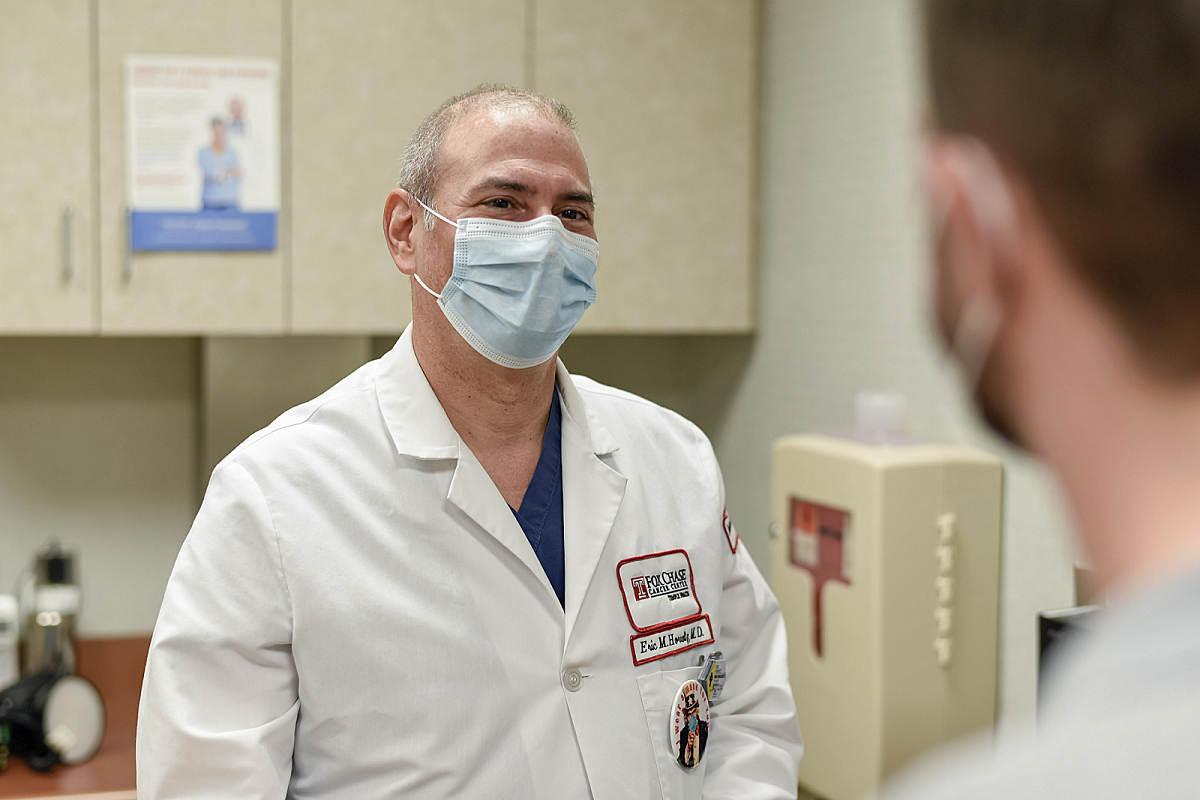
Credit: Submitted
Local medical facilities are practicing a new way to treat cancer.
Fox Chase Cancer Center has been at the forefront of studies, trials, and implementation of the method of radiation treatment that many hospitals are just adapting now for standard treatment.
Advertisements
The 10-year study of involving the use of the hypofractionation procedure began in 2001 for the purpose of contrasting its application with conventional radiation therapy in the treatment of prostate cancer, said Dr. Eric Horwitz, chair of the department of radiation oncology at Fox Chase.
By 2018, the American Association of Radiation Oncologists, and other professional organizations, backed the therapy for use as standard treatment. In the years since, the use of hypofractionation was expanded for other types of tumors, including breast, lung, and gastrointestinal cancers.
Hypofractionation simply means that larger doses of radiation are administered at each treatment, and that lessens the number of treatments necessary. Hypofractionation is a word that practically defines itself because each day of radiation treatment (RT) is called a fraction.
Advertisements
Horwitz said that the process can also be used to east pain or control existing tumors in patients with metastatic cancer. Another benefit is that, according to the data, there is no difference in its effectiveness for targeting tumors.
“In the old days, there was only one way to do radiation. In the last 20 years, technology is so much better. Radiation machines are so much better, and far more precise. We can treat smaller areas,” said Horwitz, who led what was the largest single-institutional study on the treatment.
Advertisements
Hypofractionation is not a stand-alone method of radiation therapy. Sophisticated CT scanners MRIs, and advanced computers that develop treatment strategy, all help the oncologists “see inside the body” and helps to spare damage to healthy tissue.
“Along with technology, the combination of radiation, chemotherapy, immunotherapy – whatever components of treatment are called for – alongside other medical professionals, make cancer treatment both quicker and more efficient,” Horwitz said.

A patient’s faith in the oncology staff is an important element in planning treatment strategy, and Dr. Robert Cardinale said that trust is evident in the patients who come to St. Mary Medical Center in Middletown Township.
Advertisements
Reassurance and openness to patient’s questions keep the rapport strong between patients and medical professionals, said Cardinale, chair of the medical center’s radiation oncology department.
When patients begin their radiation, they already know what to expect, and that knowledge builds their confidence. Since Hypofractionation was adapted as standard treatment as a result of the pandemic, the patients accept their method and treatment schedules.
Advertisements
Occasionally, for someone who had had a family member who previously received a longer treatment schedule – depending on the type and what stage the cancer is – an explanation is called for, Cardinale said.
For instance, the difference could, with hypofractionation, be reduced from six to three weeks, or a matter of days. In some cases, what was once a 45-week, five days a week course, could now be reduced to 25 weeks, the radiation oncologist said.
Advertisements
“We explain to the wary that the fewer number of treatments now in use are safe, and a patient could choose the traditional method of radiation,” Cardinale said.
He added that most cancers can be treated with hypofractionation except for people who had prior radiation, or who have inflammatory bowel disease, Chron’s Disease or lupus were reason’s not to do it, the radiation oncologist said.
Advertisements
The health insurance aspect figures into the hypofractionation equation because “insurance companies love it,” he said, because they get to pay for fewer treatments.
“In the long run, advances in technology and better equipment are a big leap in radiation oncology for patients and doctors,” Cardinale said.
Report a correction via email | Editorial standards and policies