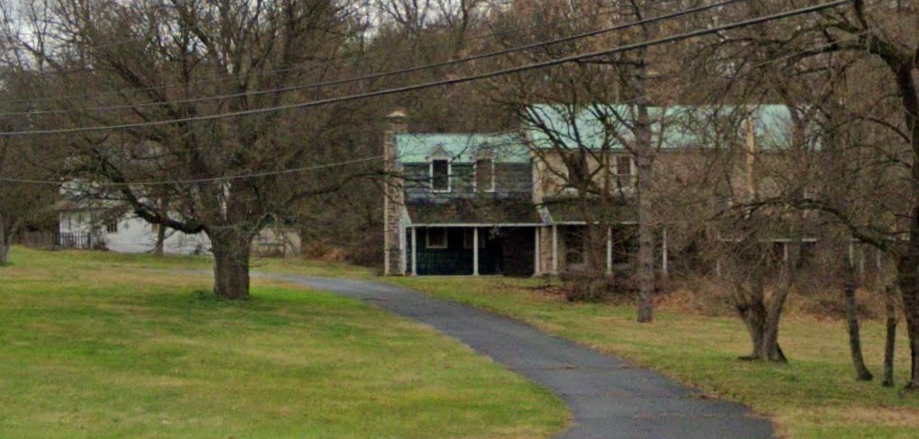
The long-empty Boone Farm in Middletown Township was once known as a place for steady employment for Black Americans during the The Great Migration.
Linda Salley, president of the African-American Museum of Bucks County that will be established at the farm on Newtown-Langhorne Road by the intersection with Bridgetown Pike, recently explained the county-owned Middletown Township farm’s importance during a video.
Advertisements
She said that during The Great Migration that had Black families move from the south to northern and midwestern states, Bucks County became a stopping point on the way to New York. The availability of good-paying jobs at the Boone Farm kept many families migrating from the south in Bucks County.
“They settled right here in the Bristol area … a truck would go down to Bristol, pick them up, bring them up (to Boone Farm) and they would work the farm and get regular wages,” Salley said. “They would raise their children and have a better life, a safe life right here in Bucks County.”
The Boone Farm and it connections to the history of Black America will be highlighted when the African-American Museum of Bucks County opens in the coming year.
Advertisements
The Boone Farm has structures listed in the National Register of Historic Places. The Godfrey-Kirk House was constructed as a residence for artisans and later converted to a farm. The structure adjacent is a carriage house, which was later turned into a home. The site also features the stone foundation of a barn from 1850.
Last year, the Bucks County Commissioners agreed to allow the African-American Museum of Bucks County to rent the empty Boone Farm for $1 per year until 2030. Renovations are planned.
Advertisements
Salley noted that Bucks County played an important role in the underground railroad, had a large Quaker population, and has many African Methodist Episcopal Church locations, including in Bristol Borough, Bensalem Township, and Langhorne Borough.
At one time, Bristol Borough was a key location for the local slave trade, Salley said.
While Bucks County played an important role in the abolition movement and harboring escaping slaves, it also has a history of slavery, according to the 1905 book The History of Bucks County, Pennsylvania.
Advertisements
The more than 100-year-old history book notes that there were Black and Native American slaves. The first slaves were brought to Bucks County by settlers from Holland as soon as 1636 and later by the English and Dutch. At times, even Quakers had slaves who worked on their farms.
“The time is now. This is the story that must be told,” Salley said in the video.
Advertisements
Report a correction via email | Editorial standards and policies