


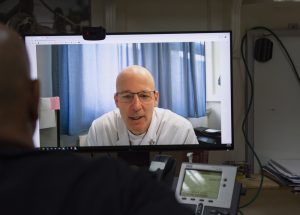
Telemedicine became a vital tool in limiting the contagion of COVID-19, while enabling medical professionals to bridge the gap in patient care through the worst of the crisis. But some administrative and legal issues have yet to be resolved.
Pennsylvania has no regulations regarding telemedicine, and that leaves health care professionals operating in “Wild West” mode, said Dr. Lawrence John, M.D., president of the Pennsylvania Medical Society (PAMED.)
Advertisements
PAMED proclaims its mission as “Returning to the Art of Medicine,” dedicated to advocating, navigating, and educating on behalf of physicians and their organizations.
A close brush with resolution was thwarted in April, when Gov. Tom Wolf vetoed a telemedicine bill passed by the state legislature. Wolf said his rejection of the bill was based on restrictions on an abortion drug.
Instead, the governor issued his own guidelines, but any debates could be held up until after the Nov. 3 elections. The makeup of the legislature could change, and debates might have to start over, further delaying implementation of regulations, John said.
Advertisements
Included in the issues that PAMED considers critical to effective implementation of telemedicine are:
Reimbursements: John said doctors should be paid the same for remote checkups as they are for in-person visits because they provide the same service, time, knowledge, and advice. And the purchase and installation of equipment is costly.
Licensing and credentialing: Licensing gives health care workers the authority to practice medicine within a state. Credentialing refers to the process of verifying the health care provider’s license, education, insurance, and other information, as is required in most states.
Advertisements
Parity: Insurance companies must mandate uniform coverage for services. Currently more than a dozen insurance companies that John deals with have different rules about what they will cover and how much they will reimburse for care.
“We don’t know who in the state legislature is doing what. I believe these issues sit on the back burner until after Nov. 3,” John said.
While uncertainty looms over Harrisburg, the front lines belong to physicians like Dr. Melinda Ratini, whose office is in Bensalem. Seniors make up about 30 percent of her practice and many of them need help gaining access to blood pressure cuffs, weight scales, and other in-home, self-monitoring equipment.
Advertisements
“I hope that patients and others will lean on insurers. Telemedicine is what we want going forward. We have to have some kind of infusion of funds to make this work,” said Ratini, who is also a medical reviewer for WebMD.
Report a correction via email | Editorial standards and policies