


 Large majorities of Americans from both major parties support steps to control prescription drug costs such as showing prices in ads, removing barriers to generics and letting patients get less expensive drugs from Canada, a new poll shows.
Advertisements
By a 9-to-1 ratio, Republicans, Democrats and independents favor making drug companies show list prices in their advertising, says a new survey from the Kaiser Family Foundation. Highly advertised medicines such as Humira, for arthritis, cost tens of thousands of dollars a year, even after discounts.
Although Republicans tend to frown on government control over commerce, 8 in 10 Republican respondents said they support giving negotiating power to the $700 billion Medicare program in order to lower drug prices for seniors.
More than 70 percent of all respondents back importing drugs from Canada and capping out-of-pocket Medicare costs. More than 80 percent said they favor making it easier for less expensive generics to compete with brand-name drugs.
Advertisements
As President Donald Trump and Congress vow to act against drug inflation and journalists chronicle patients experiencing medical and financial shock from drug expenses, increasing numbers of Americans blame pharmaceutical companies for high health care costs.
Expensive drugs are one of several factors in rising medical costs that strain government, employer and household budgets. In some health plans, drug costs exceed inpatient hospital bills, accounting for a third of all spending.
Advertisements
KFF’s survey was done in mid-February, before this week’s widely watched hearing of seven pharma executives testifying before the Senate Finance Committee. (Kaiser Health News is an editorially independent program of the foundation.)
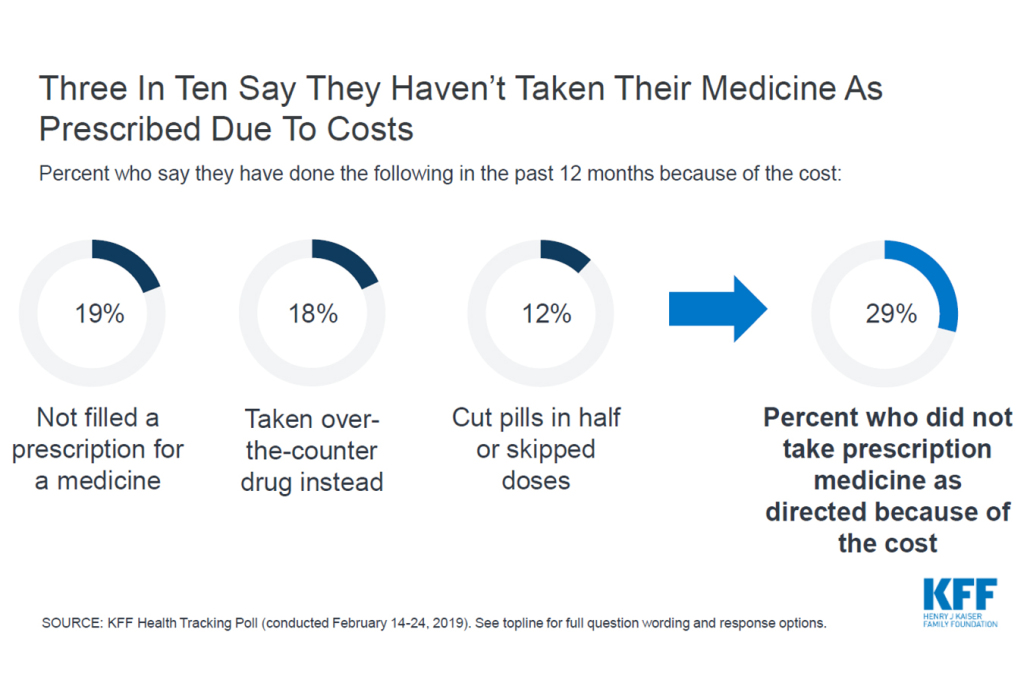
Americans deem prescription costs a big problem, even though most don’t have trouble getting the medicine they need. Most of those using prescription drugs said it’s easy or very easy to afford them. But one-fourth of adults said it is “difficult” to afford their medicines and 1 in 10 said it’s “very difficult.” Nearly 3 in 10 said they haven’t taken their medicine as ordered by a doctor because of high cost. They skip doses, leave prescriptions unfilled or take a non-prescription drug instead.
Advertisements
Eight in 10 said prescription drug costs are unreasonable. Only 3 percent said they trust drug companies “a lot” to price products fairly. Another 22 percent said they trust them “somewhat,” adding up to a quarter of respondents who placed trust in pharma — down sharply from 41 percent a decade ago.
But support for cost-control measures isn’t unconditional. When told that government negotiation could lead to Medicare leaving some drugs uncovered or to a cut in federal research investment, two-thirds of those polled opposed the idea.
Advertisements
Six in 10 survey respondents also said profits from middlemen managing drug benefits are a major factor in high prices.
The Pharmaceutical Research and Manufacturers of America, the lobbying group for brand-name drugmakers, has spent millions of dollars trying to shift the blame to pharmacy benefit managers, known as PBMs, which take a large cut of the revenue stream.
Advertisements
Kaiser Health News (KHN) is a national health policy news service. It is an editorially independent program of the Henry J. Kaiser Family Foundation which is not affiliated with Kaiser Permanente.

