


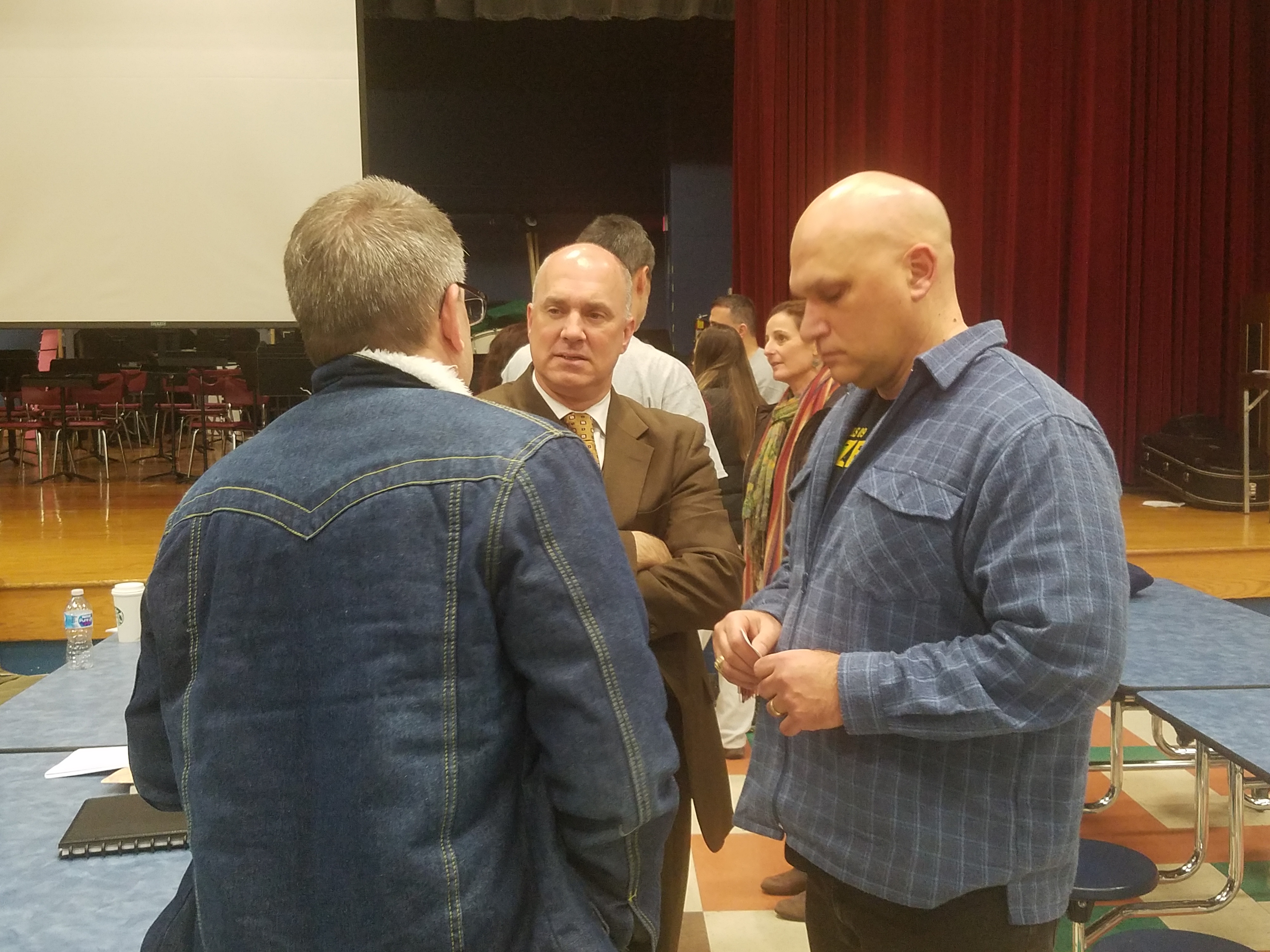
Credit: Erich Martin/Levittownnow.com
As part of the Pennsbury School District’s ongoing mental health and addiction task force, representatives from the Richard J. Caron Foundation came out to William Penn Middle School in Lower Makefield Wednesday evening to give a presentation about preventing and educating students on the dangers of substance abuse.
The Prevention Resources and Education for Parents (PREP) program goes through a number of stats regarding school-age drug use, types of drugs used by school-aged kids, ways to talk to kids about these issues and more.
Advertisements
The first drugs kids are exposed to and learn about is caffeine, explained Kim Futer, the Caron Student Assistance Program (SAP) representative assigned to Pennsbury High School.
Futer spoke to more than 50 parents about the risks and usage patterns of each caffeine, nicotine, alcohol, marijuana, over the counter and prescription drugs.
The presentation went into ways in which people use drugs for specific purposes including for relaxation, pleasure, socialization, avoiding unpleasant emotions, finding excitement, feel like they are fitting in, cope with failure and rebelling. The teenage brain, Futer told parents, is wired more towards taking risks and less towards taking the measured approach through decision making.
Advertisements
The presenters outlined a number of strategies for ways to positively influence kids, starting with students as young as preschool age. Talking with kids about the joys of healthy living, celebrating decision making, having the child take responsibility for their own health and helping kids to understand the difference between reality and fantasy were just a few of the strategies presenters walked through.
For kids 5 to 8 years old, presenters stressed the importance of finding teachable moments, focus on consequences when talking about drug abuse, making sure you appear as a strong role model, help you child to feel better getting out of situations they feel uncomfortable with and have the child participate in an active and positive activity like volunteering.
Advertisements
For kids 9 to 12 years old, presenters pushed practicing refusal skills, establish expectations, give kids facts and get to know their friends and their friends’ parents.
In addition to all of this, presenters gave advice on when to talk to kids and the importance of finding and using teachable moments, like any possible questionable commercials coming on during the Super Bowl in a few weeks.
Following the presentation, Superintendent Dr. William Gretzula explained that he believes that the district has strong educational programs in schools but acknowledged their ability to do more, including events like the one held Wednesday night.
Advertisements
“We also recognize that sometimes people are just looking for new strategies,” Gretzula said.
Part of the work of the district’s addiction and mental health task force is the effort to destigmatize issues of mental health and addiction.
Advertisements


