


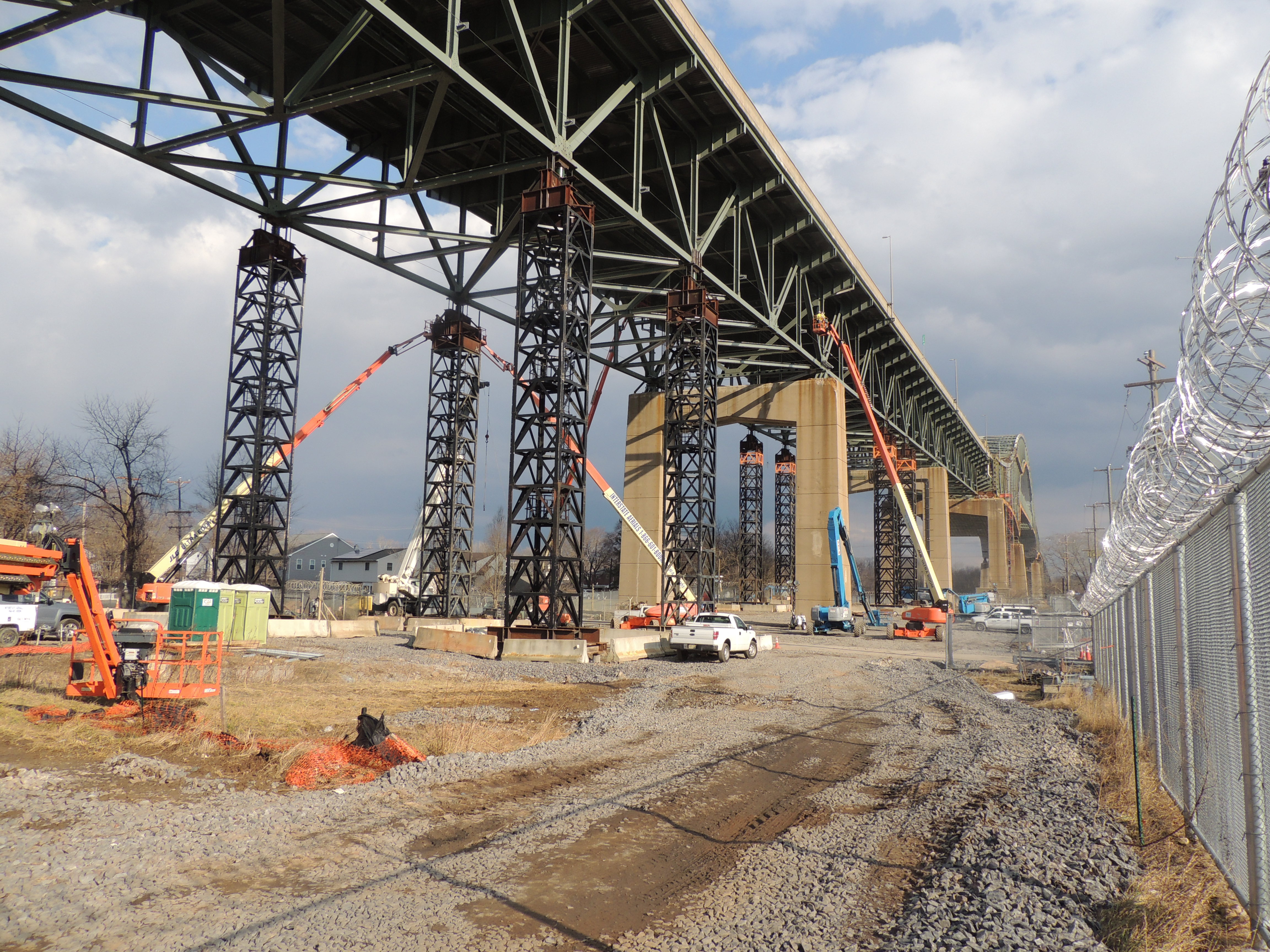
The near-Herculean task of reopening the Delaware River Bridge that connects the Pennsylvania and New Jersey turnpikes remains underway.
Contractors were working Friday to realign the section of the bridge that dropped when a steel truss cracked. The realignment of the truss will be set by eight temporary towers that have been put up and 600-ton hydraulic jacks to return the span to its original position before the crack was discovered on January 20.
Advertisements
While no reopening date for the Turnpike bridge has been set, the best-case scenario would be an early April opening. However, if more extensive repairs are needed, the bridge will be closed indefinitely.
Pennsylvania Turnpike Commission spokesman Carl DeFebo said Friday afternoon that the bridge will not be reopened until it is safe for motorists.
So far, the New Jersey Turnpike Authority, which owns the bridge with the Pennsylvania Turnpike Commission, has issued $9 million in contracts for work on the bridge. In addition, Pennsylvania has approved changes to a pre-existing $2 million engineering contract to include the bridge work.
Advertisements
The Pennsylvania Turnpike Commission and New Jersey Turnpike Authority are currently working with their experts, consultants and scientists to determine what caused the crack to the truss that was put in place during the bridge’s construction in the mid-1950s.
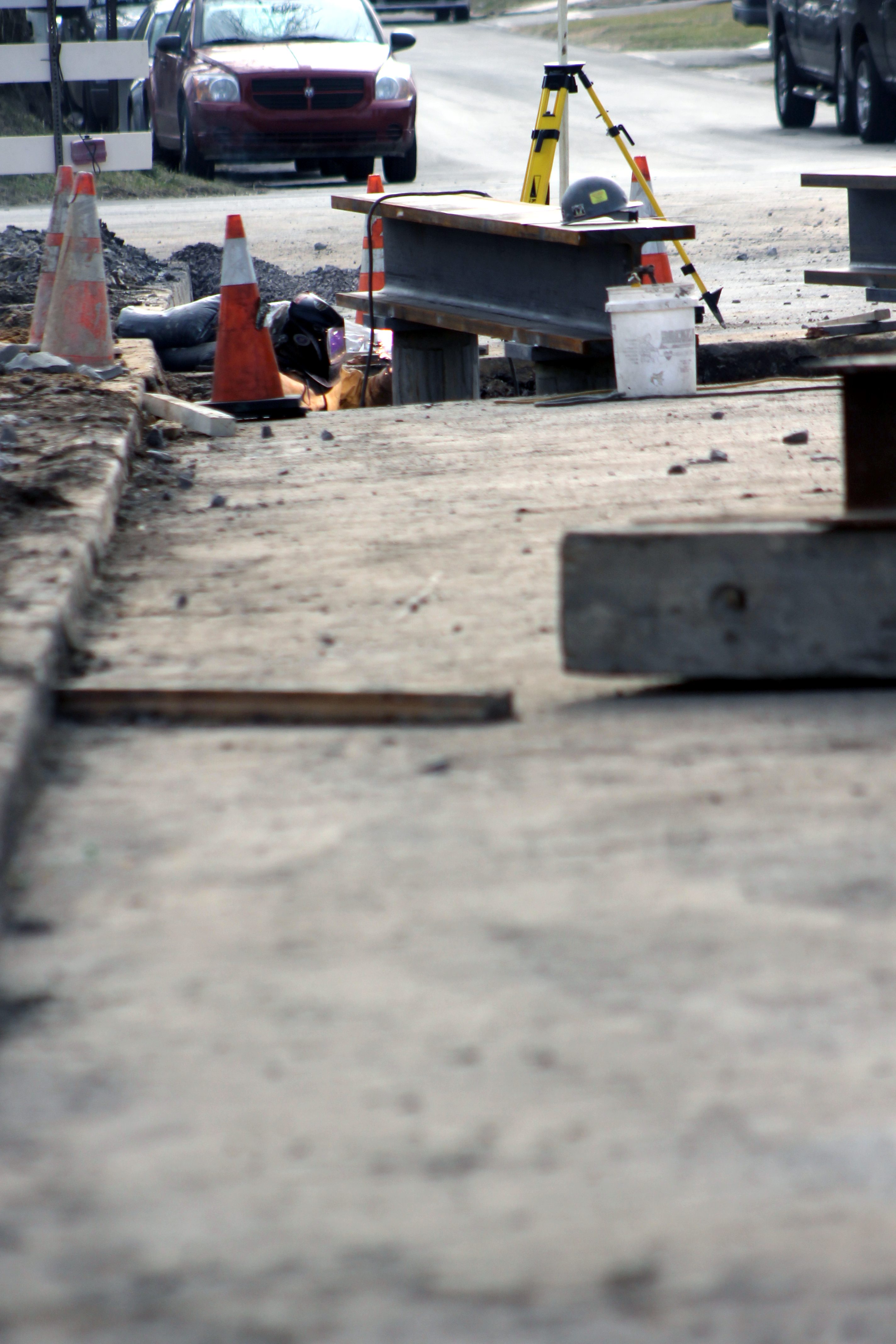
Credit: Tom Sofield/LevittownNow.com
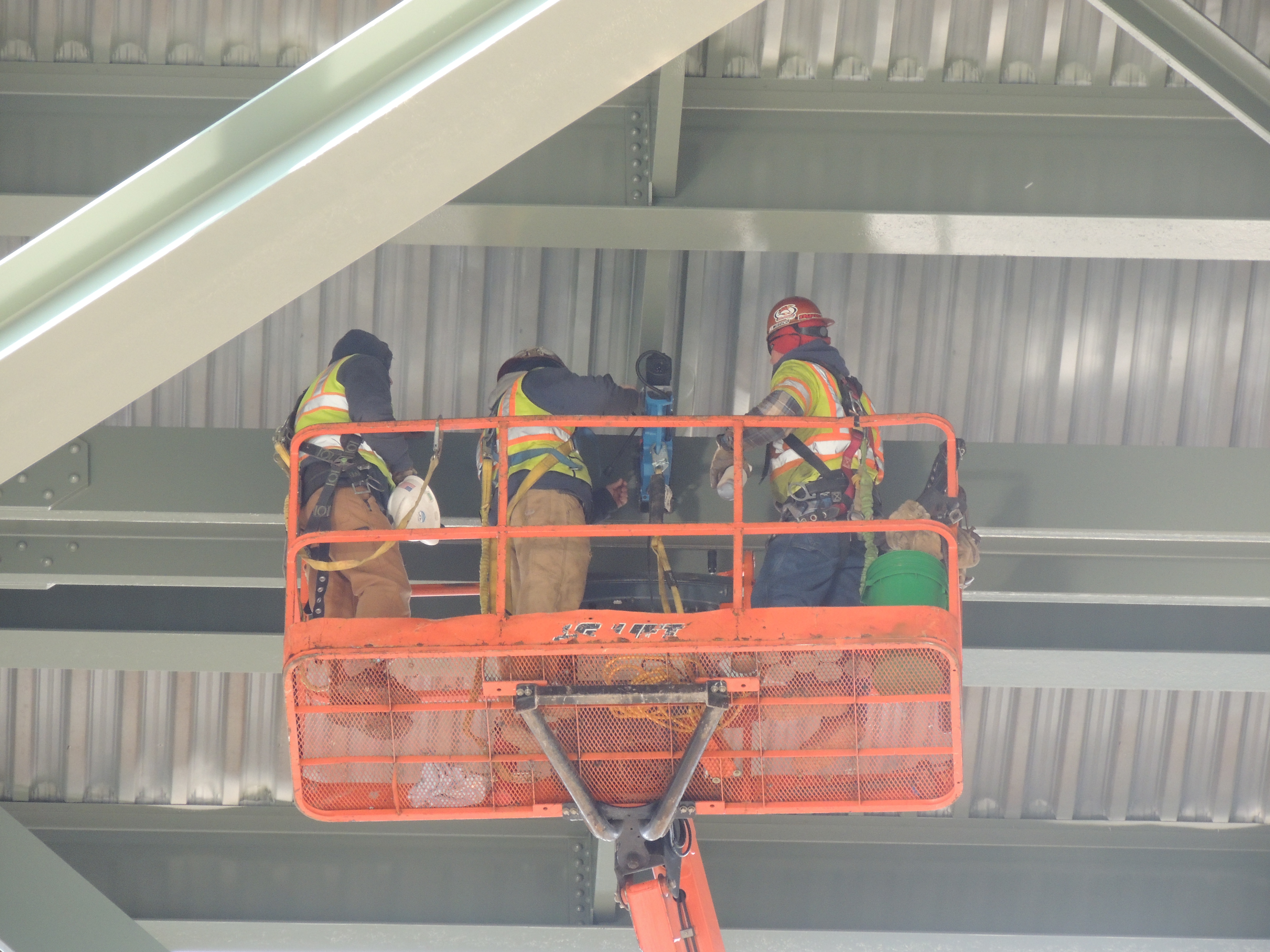
Crews have been boring holes into section of the bridge structure and popping out some rivets for inspection.
Advertisements
“Is this limited to a particular section or is this global to the bridge? We’re looking at a lot of things,” DeFebo said.
Engineers are still looking at heavy loads that came across the bridge around the time the crack was discovered along with temperature changes and high winds.
One theory engineers are investigating are plug welds discovered in the area of the truss crack. The Philadelphia Inquirer first reported last month that University of Texas at Austin Professor Emeritus Karl Frank observed the now-obsolete technique that was used to fill holes in the bridge’s beam. He told the newspaper the plug welds likely weakened the beam and could be to blame for the crack along with other factors.
Advertisements
“Yes, we’re looking at that,” DeFebo said.
As of Friday, work on the bridge was a day ahead of schedule and continuing. While much of the work takes a break during the weekend, contractors often work throughout the night, DeFebo said.
Advertisements
In addition to the bridge remaining closed, Radcliffe Street and the residential streets under the bridge are expected to remain blocked indefinitely.
DeFebo said the Pennsylvania Turnpike Commission is talking regularly with PennDOT, local municipalities, the Burlington County Bridge Commission and the Delaware River Joint Toll Bridge Commission about the closure, which has sent more than 40,000 vehicles daily onto other roadways.
Advertisements
“This has a large impact on the community. We’re encouraging people to carpool and take public transit,” DeFebo told LevittownNow.com.
The bridge closure is also having an impact on businesses on both sides of the Delaware River. 6abc reported on the problems some business owners are experiencing earlier this week.
Advertisements
“The companies hire rigging companies to bring their big machines in, and if they have to travel farther it costs more. So it’s costing them more and it’s making it harder to find people to bring this stuff in,” Russ O’Connor of the Bridgeview Business Park in Bristol Township told the TV station.
The Pennsylvania Turnpike Commission sent workers door-to-door through the neighborhoods around the bridge in Bristol Township to advise neighbors of the ongoing work.
“The contractors are trying to limit the noisiest work to the day,” DeFebo said, adding the Turnpike was trying to “courteous to commuters and residents.”

