


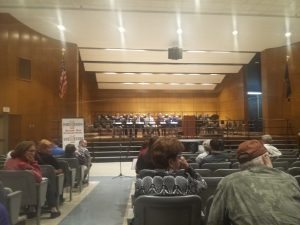
Nearly two dozen residents of the community met at Pennsbury High School’s West Campus on Thursday evening to ask questions from a diverse panel of experts about the associations between prescription medications and drug abuse.
The event was hosted by Pennsbury’s LYFT organization, a volunteer community coalition made of up members of the community that seek to support and strengthen the youth and families that make up the Pennsbury School District.
Advertisements
The panel consisted of Diane Rosati, the Executive Director of the Bucks County Drug & Alcohol Commission, Dana Cohen, the Lead Family Therapist at Livengrin, Ken Dickinson, the Corporate Director of Marketing at Gaudenzia, David Fialko, the Certified Prevention Specialist at The Council of Southeast Pennsylvania, Thomas Foley, the Clinical Director at BioCare Recovery, Matthew Weintraub, the Bucks County District Attorney, and Jim K., a Levittown resident who shared his perils of drug addiction as well as with treatment and successful recovery.
According to Cohen, about half of the patients she encounters at Livengrin, began their chemical dependency with misuse and/or addiction to medications that were originally prescribed to them by a physician. Educating teenagers and young adults about the dangers of prescription medications has become necessary in a community like Levittown, which has seen the perils of drug addiction – specifically heroin – skyrocket over the last several years.
While measures have been taken by Governor Tom Wolf to help curb the abuse of prescription medications with the passing of the Prescription Drug Monitoring Program – Weintraub, who was sworn in as DA last month, noted the program, right before passing was deemed non-mandatory, not requiring all physicians to monitor patients for doctor shopping or drug seeking behavior.
Advertisements
For Jim K., 31, the link between prescription medications and harder street drug use hits close to home. He remarked to the interested audience that after being prescribed opiates for a highschool sports injury, he began a decade-long descent into drug addiction, at his worst purchasing about 28 bags or $200 worth of heroin a day.
An audience member, who remarked she is a high school athlete, stood towards the end of the evening to ask the panelists what she should ask a doctor about prescriptions if she was to get injured. Foley, a certified drug and alcohol counselor,
Advertisements
“First, ask, do I need this medicine, especially if its a narcotic? Is there anything I can take that’s not a narcotic? Are there side effects that could cause problems down the road? What’s the least amount of time I can be on it? And, what are side effects I should look for in terms of accidental overdose?” said Foley, a certified drug and alcohol counselor. Foley noted that those taking medication should also ask doctors ways to get off a medication that would prevent any physical dependence down the road.
According to statistics provided at the panel discussion, doctor prescribed opioid use before high school graduation increases the risk of future opioid misuse after high school by 33%.
According to Rosati and Weintraub, this growing local issue has put a strain on county resources. Rosati noted that while some people may be approved for funding for treatment if they don’t have insurance, there isn’t always a facility with an open bed to house the person for 28 days. Weintraub noted that he’s aware the county “can’t arrest themselves out of the problem” and that he’d like to see more concepts developed, with a focus on long-term treatment, instituted as part of sentencing when those arrested for simple possession crimes face incarceration.
Advertisements
Rosati noticed that supply will improve in the county this year, as the Bucks County Drug and Alcohol Commission plans to open one out-patient facility, one detox and rehab facility, and one men’s halfway house in the coming months.

