


By Eric Boehm | PA Independent
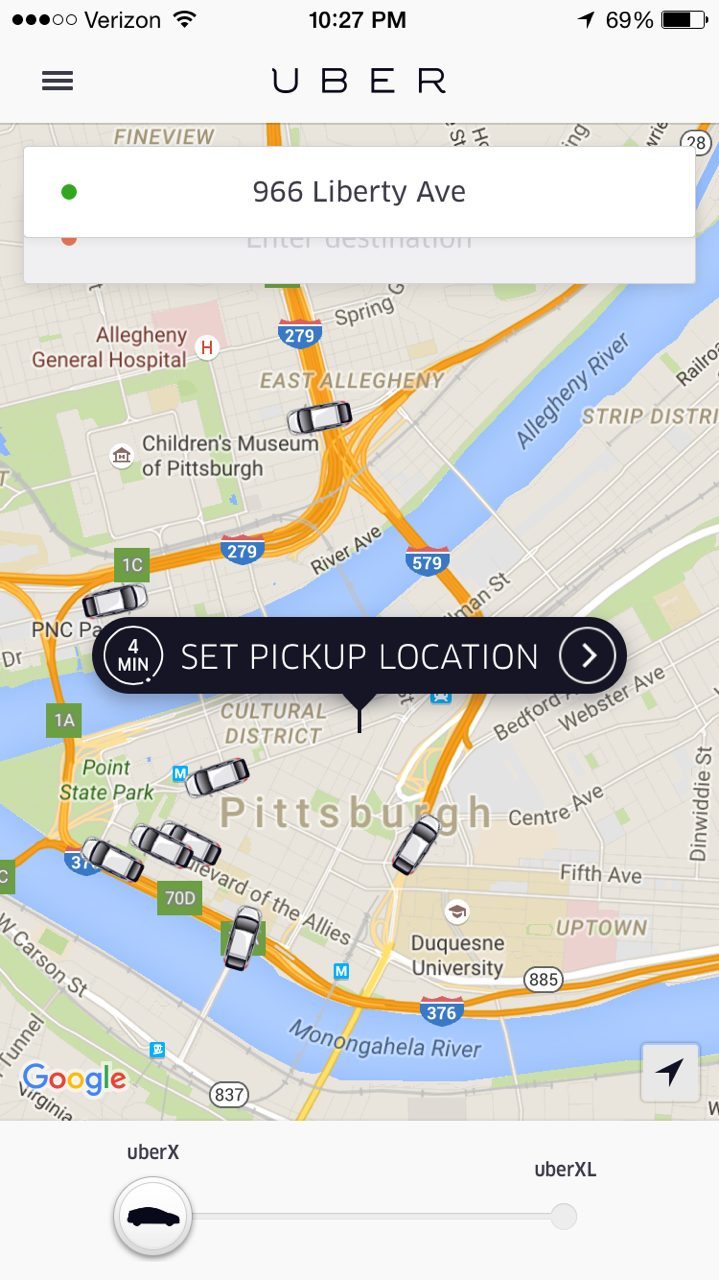
An Uber ride from Philadelphia’s Center City to Lincoln Financial Field might soon be legal, but it will come at a higher cost.
Advertisements
Legislation to legalize the operation of ride-sharing services like Uber and Lyft passed the state Senate last week, but buried inside the 45-page bill is a new tax that would apply to rides within Philadelphia. The 1 percent tax would be collected from all rides originating within the city and would fund the School District of Philadelphia and the Philadelphia Parking Authority.
The tax could end up costing riders as much as $50 million over the next decade. To some observers, the new tax is yet more evidence of the sway that special interests hold in Harrisburg, while others see it as the cost of compromise — a necessary detail to ensure bipartisan support of important legislation.
The bill passed the state Senate with a 48-2 vote on Tuesday and is awaiting further action in the House Consumer Affairs Committee.
Advertisements
“As our transportation needs evolve, it is critical to ensure a proper balance between innovation and consumer protection,” said State Sen. Camera Bartolotta, R-Washington, who sponsored the ride-sharing legalization bill.
During remarks on the Senate floor last week, Bartolotta acknowledged the unique regulatory situation in Philadelphia, where the Philadelphia Parking Authority can regulate ride-sharing and taxi companies independent of the state Public Utility Commission, which regulates them over the rest of the state.
Advertisements
The bill makes other special exceptions for Philadelphia: it prevents ride-sharing companies from using taxi stands at Philadelphia International Airport, at the city’s main train station and at hotels, for example.
But the tax to support schools stands out because it is the only element of the bill that goes beyond typical transportation regulations.
The original version of the legislation included a 0.5 percent per-ride tax to fund the Philadelphia Parking Authority, but the funding for schools was added during the amendment process.
Advertisements
Katrina Anderson, Bartolotta’s chief of staff, said its inclusion was part of an overall effort to ensure bipartisan support for the legislation and secure the backing of senators from the Philadelphia area.
“For rides originating in Philadelphia, most of those users are going to be from there. They’re likely to have kids in the city schools,” she said.
Advertisements
Some Democratic lawmakers unsuccessfully pushed for the inclusion of a 5 percent tax on ride-sharing companies to fund schools.
On a per-ride basis, the 1 percent tax would be negligible. It would add 20 cents to a $20 ride on Uber or Lyft.
Advertisements
But those pennies add up in a hurry.
Based on Uber’s own projections, the ride-sharing company believes it could make as much as $5 billion in the Philadelphia region by 2025. If so, the 1 percent tax would generate $50 million in revenue over the next decade, with the School District of Philadelphia getting two-thirds of the total (about $34 million using these projected figures) and the Philadelphia Parking Authority getting the rest.
Advertisements
A spokesman for Uber declined to comment on the local tax contained in the bill, but said the company is supportive of the legislation.
Nate Benefield, director of research for the Commonwealth Foundation, a free market think tank in Harrisburg, said the tax’s inclusion is another example of how special interests get their hands into all sorts of legislation.
“It takes a transportation bill and turns it into a school funding bill,” said Benefield. “They’re not looking to help consumers or make things easier, they just want to get their piece of the pie.”
Advertisements
He noted the long history of questionable patronage spending by the Philadelphia Parking Authority — it once made headlines for paying a $75,000 salary for a part-time job and for paying six-figure salaries to 20 managerial-level employees — and said lawmakers should find a less piecemeal way to fund schools.
What if another city or town wants to follow that example and impose a tax on Uber to help fund schools? Well, they can’t. The legislation expressly forbids any municipality from imposing a tax or adding layers of regulation beyond what the state decides to do.
Advertisements
“A statewide regulatory framework is a must for this industry,” said Bartolotta. “We must ensure they are capable of operating responsibly and safely.”
She said the legalization of ride-sharing across the state will create new economic opportunities for Pennsylvanians and will decrease the number of drunk driving accidents.
Uber and Lyft are currently operating under two-year temporary licenses granted by the Public Utility Commission, except in Philadelphia where the city’s Parking Authority has regulatory power over taxi and ride-sharing services.
Advertisements
Uber is operating in Philadelphia despite not being granted permission to do so.
Senate Bill 984 would require both the ride-sharing company and driver to maintain insurance coverage and have up-to-date vehicle inspections. Licensed ride-sharing companies are also required to maintain three years of data on all drivers and trips and to conduct background checks on anyone who signs up as a driver.
Those background checks include a criminal history — anyone with a conviction for DUI or felony convictions for fraud, theft or sexual crimes will be ineligible — and a driving history. Three moving violations within a three-year period will also disqualify potential drivers.
Advertisements
The Public Utility Commission would have the final say on any new regulations for ride-sharing companies, except in Philadelphia.
Uber says it is committed to providing safe and reliable service, and conducts background checks on drivers. The company carries a $1 million insurance policy.
“The overwhelmingly bipartisan Senate vote is a major victory for choice and opportunity across the state,” said Uber spokesman Taylor Bennett.
Bennett encouraged “the House to quickly pass the bill and finish the work.”
Advertisements
There is currently no timetable for the bill in the state House. Uber and Lyft can continue to operate, except in Philadelphia, until early 2017 under the existing temporary licenses granted by the PUC.
If the bill reaches Gov. Tom Wolf’s desk, there are early indications he would be willing to sign it.
“Gov. Wolf supports ride sharing companies like Uber and Lyft, and he wants these companies to grow in Pennsylvania to offer as many options as possible for riders,” said Wolf spokesman Jeff Sheridan.

