


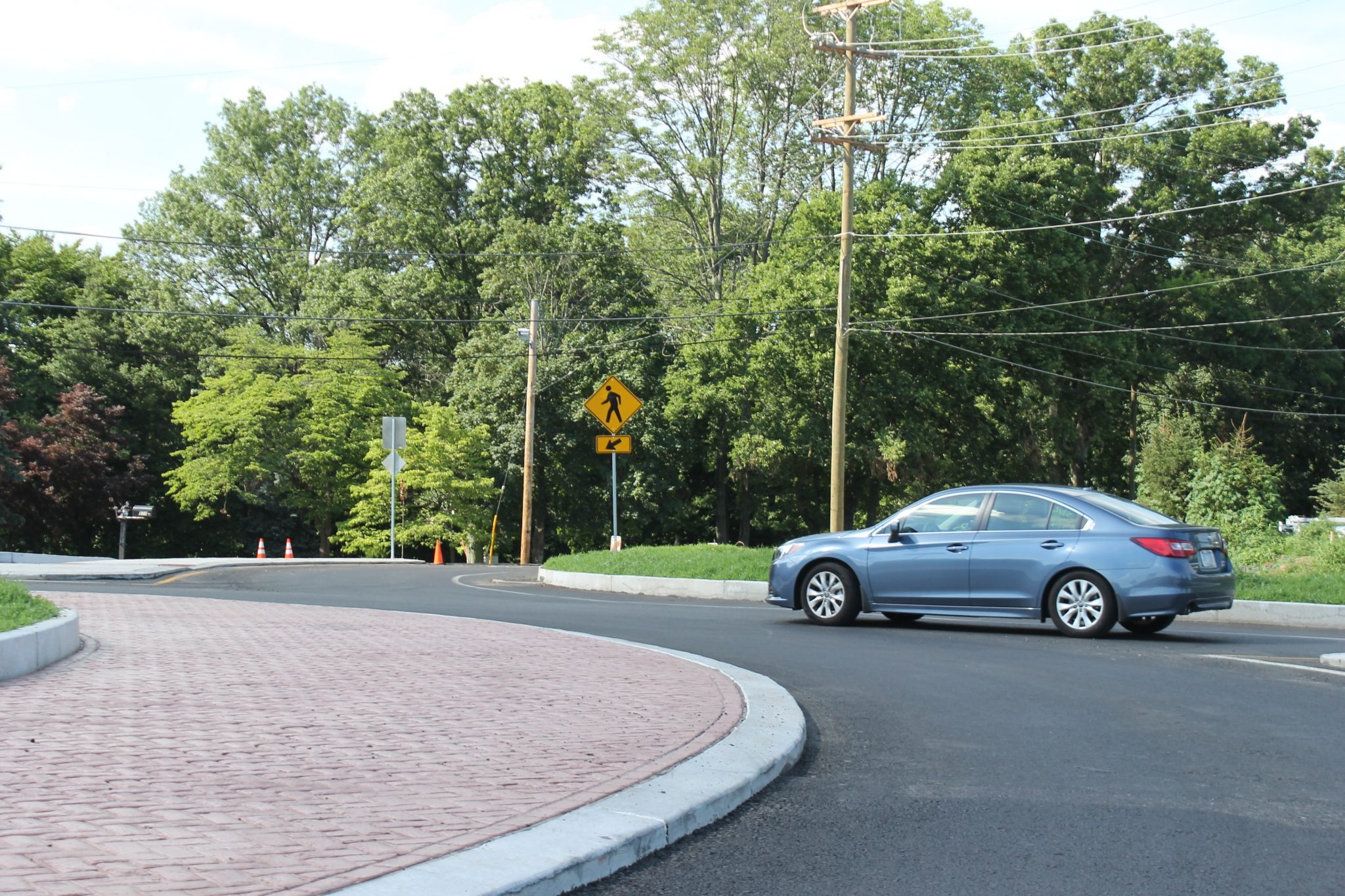
PennDOT opened the new traffic roundabout at the intersection of Bridgetown Pike and Maple Avenue in Lower Southampton earlier this week.
While it may look like one of those nightmarish traffic circles of years past, officials have said multiple times in the past that roundabouts are different and better.
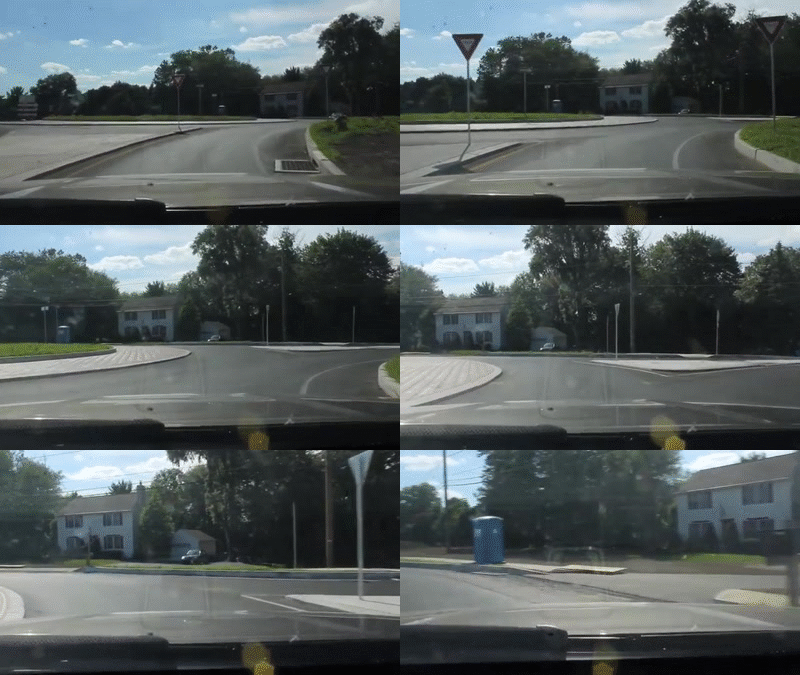
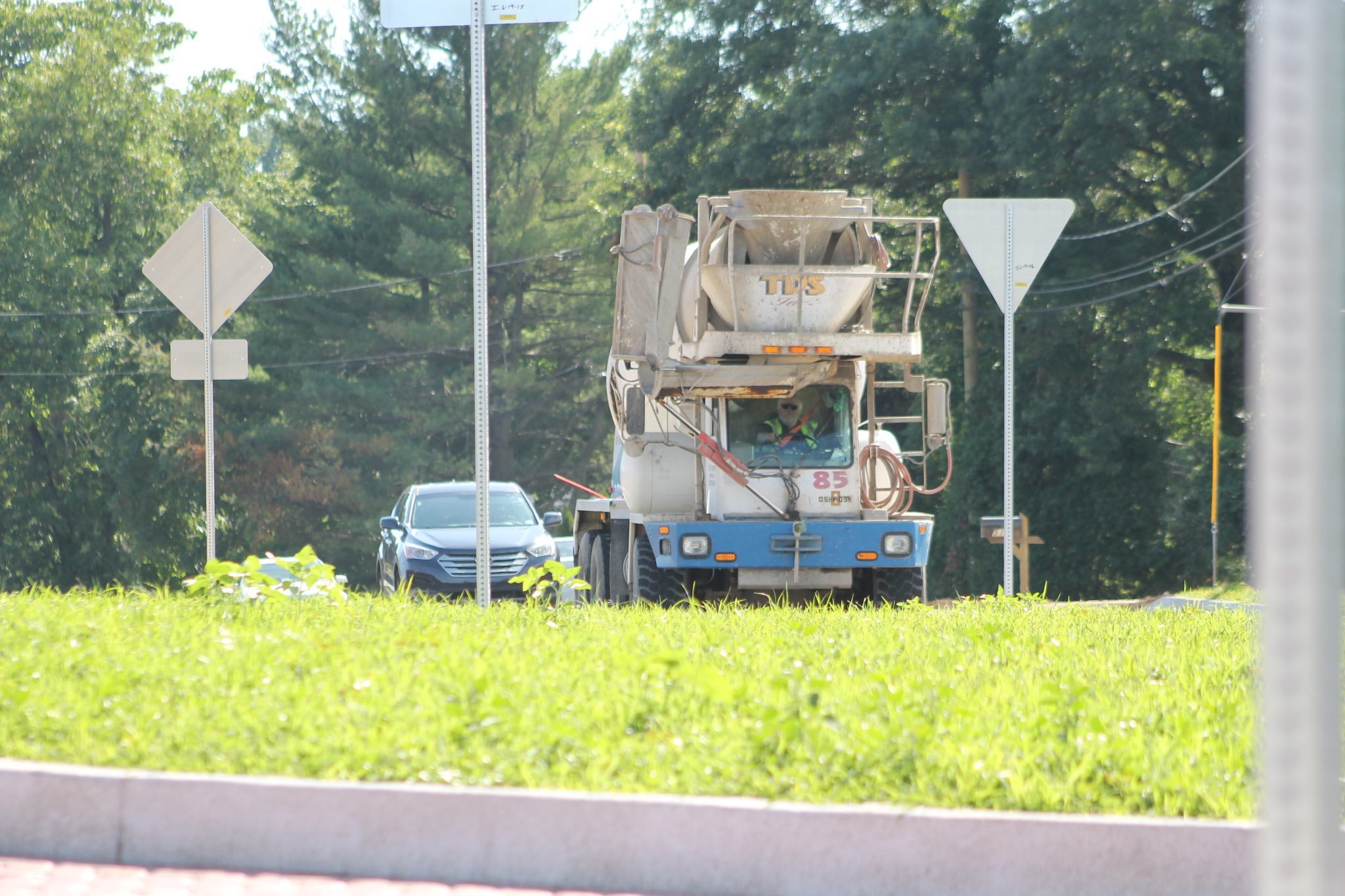
Credit: Tom Sofield/LevittownNow.com
Advertisements
First, what is a traffic roundabout and what are the benefits?:
It is a circular traffic intersection form that officials cite has “fewer conflict points, slower speeds, and easier decision making.” Incoming traffic enters to a yield sign and exits freely, unlike New Jersey’s traffic circles. Engineers contracted by PennDOT said at a 2012 presentation on the Maple Avenue roundabout that studies have shown a roughly 90 percent reduction in fatal crashes and a 75 percent reduction in crashes with injuries. The engineers cited slower speeds, less spots for a crashes and better traffic flow for the reductions. Also, there is a lovely green space in the center.
Second, why one on Maple Avenue?
PennDOT officials added the roundabout to the West Maple Avenue Bridge reconstruction project. Engineers working for the state said in 2012 that the new intersection design made sense for the intersection that sees roughly 14,000 vehicles per day. Much of the traffic at the Lower Southampton intersection is headed into or from Middletown, Levittown and Langhorne. Officials said the ideal time to create the roundabout was while the bridge was being reconstructed.
Lastly, what’s the cost?
The roundabout was funded by $7.3 million in state funds approved by the Act 89 transportation funding bill. The bridge and roundabout were both paid for through the $7.3 million, according to figures released by the state.
Advertisements
PennDOT officials said the state’s newest roundabout took 11 months to construct and still has some final paving work to be done.

In case you are confused on how to bike, walk or drive through a roundabout, PennDOT has created a niffty interactive website.
Advertisements
If you prefer to read, here’s tips from PennDOT:
General Information and Driving Tips for Motorists
Going Left or Making a U-Turn:
* When approaching a roundabout, you must be in the LEFT LANE unless otherwise marked on the road.
* Slow down and be prepared to yield to pedestrians in the crosswalk.
* Pull up to the Yield line, look to the left and check for approaching traffic within the roundabout. CIRCULATING TRAFFIC HAS THE RIGHT-OF-WAY.
* Enter the roundabout when there is a safe gap in traffic.
* Use your right turn signal and exit the roundabout from the left lane into the left lane of the exit leg.
* Be prepared to yield to pedestrians in the crosswalk.Going Straight:
* When approaching the roundabout, you can be in EITHER LANE unless otherwise marked on the road.
* Slow down and be prepared to yield to pedestrians in the crosswalk.
* Pull up to the Yield sign, look to the left and check for approaching traffic within the roundabout. CIRCULATING TRAFFIC HAS THE RIGHT-OF-WAY.
* Enter the roundabout when there is a safe gap in traffic.
* Stay in your lane when going around.
* Use your right turn signal and exit the roundabout, staying in your lane.
* Be prepared to yield to pedestrians in crosswalks.Going right:
* When approaching the roundabout, you must be in the RIGHT LANE unless otherwise marked on the road.
* Slow down and be prepared to yield to pedestrians in the crosswalk.
* Pull up to the Yield line, look to the left and check for approaching traffic within the roundabout.
* Enter the roundabout when there is a safe gap in traffic.
* Stay in the right lane.
* Use your right turn signal and exit the roundabout from the right lane.
* Be prepared to yield to pedestrians in the crosswalk.Special notes:
Be prepared for EMERGENCY VEHICLES. Do not enter the roundabout when emergency vehicles are approaching. Pull to the side. If in the roundabout, immediately exit the roundabout and pull to the side. NEVER STOP IN THE ROUNDABOUT.LARGE TRUCKS. Motorists should be aware that large trucks using multi-lane roundabouts may require both lanes. Motorists should never attempt to pass a truck in a roundabout.
BICYCLISTS have the option to function as a vehicle or a pedestrian when using a roundabout. When acting as a vehicle, they will follow the same rules. Never overtake a bicyclist acting as a vehicle in a roundabout.
PEDESTRIANS. Motorists must yield to pedestrians when entering and exiting a roundabout. Pedestrians will utilize crosswalks and splitter islands to cross each leg of the roundabout.

