By Cassie Miller & Stephen Caruso | Pennsylvania Capital-Star

Credit: Tom Sofield/LevittownNow.com
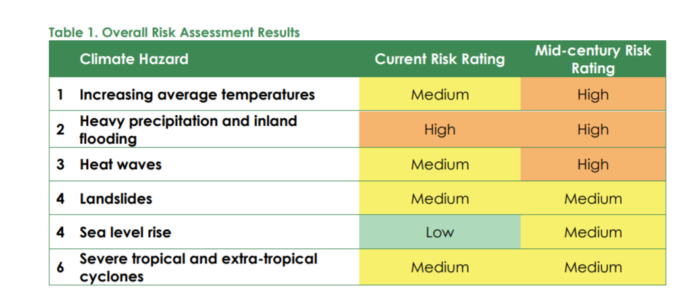
Extreme weather events such as flash floods, intense heat waves, and rising temperatures, all could become more frequent and severe in Pennsylvania by mid-century if current trends continue, according to a recent report.
Advertisements
“No one can expect Pennsylvanians’ lives to stay as they are now,” Pennsylvania Department of Environmental Protection Secretary Patrick McDonnell said.
The Pennsylvania Climate Impacts Assessment is a report the DEP produces every three years, as directed by the Pennsylvania Climate Change Act (Act 70) of 2008.
The report is sourced using federal, state and local data from Penn State University, ICF Consulting, and Hamel Environmental Consulting and funded by grants from the U.S. Department of Energy through the State Energy Program.
Advertisements
Each update builds upon previous impact assessments, according to the department. This year’s report – the fifth iteration – differs from years past because it “offers a risk-based approach to assessing risks and prioritizing adaptation needs,” the document reads.
McDonnell clarified that the projections included in the 2021 Pennsylvania Climate Impacts Assessment are based on “business as usual” behaviors, meaning no new preventative or mitigation measures are considered in the forecasts.
Advertisements
The 143-page report debuted Wednesday with state officials weighing in on the findings, possible solutions, and mitigation measures.
Findings
The report noted six expected changes by mid-century when compared to a 1971-2000 baseline.
- The average annual temperature statewide will continue to rise, and is expected to increase by 5.9°F (3.3°C) compared to the baseline.
- There will be more frequent and intense extreme heat events. For example, temperatures are expected to reach at least 90°F on 37 days per year on average across the state, up from the 5 days during the baseline period. Days reaching temperatures above 95°F and 100°F will become more frequent as well.
- Increasing temperatures will continue to alter the growing season and increase the number of days that people need to cool their homes and workspaces, but will also decrease the number of days that people will need to use heating.
- Pennsylvania could experience more total average rainfall, occurring in less frequent but heavier rain events. Extreme rainfall events are projected to increase in magnitude, frequency, and intensity. Drought conditions are also expected to occur more frequently due to more extreme, but less frequent precipitation patterns.
- Tidally influenced flooding is expected to increase in the Delaware Estuary coastal zone.
- Lake Erie is also expected to undergo significant changes in water level, coastal erosion, and water temperature. Notably, Lake Erie experienced record high water levels in 2019.
Credit: Capital-Star screen capture
A Multi-dimensional Problem
Talking to reporters Wednesday, Department of Conservation and Natural Resources Secretary Cindy Adams Dunn called the report “sobering” and expressed concern for wildlife and plant species that could be affected by the effects of climate change in Pennsylvania.
Advertisements
She noted that symbolic state species such as the Eastern Hellbender “may not make it” to mid-century due to their specific habitat needs, and the range of Eastern Hemlock trees – Pennsylvania’s state tree – could shift north as average temperatures rise.
These shifting plant hardiness zones, or geographic areas of a certain climate range that determine what plants will grow in a given region, could also affect pollinators such as bees, butterflies, bats and hummingbirds by “mismatching” their migration patterns and the plants’ blooming season.
Advertisements
With more than 149 dams across the commonwealth under DCNR’s jurisdiction, Dunn said increased precipitation and extreme storms are “a worry” for the department. “It is a big concern, Dunn told the Capital-Star. “You don’t know where they [the storms] are going to park themselves.”
Dunn said the department has awarded six contracts to repair deficient dams and has bids out for 20 more, but noted infrastructure funding is a continued concern for the department’s efforts to repair the dams.
Advertisements
But the impacts aren’t limited to plants, wildlife and infrastructure, state Agriculture Secretary Russell Redding said.
“What we grow, when we plant, when we harvest, all of that will change,” he said.
Advertisements
Redding warned that addressing climate change is mission critical for Pennsylvania’s agriculture industry, which supports more than 593,000 Pennsylvania jobs and logs $132.5 billion in annual economic impact for the commonwealth.
Redding said farmers’ close connection with the environment makes them the “frontline” in combating climate change.
“We have a very intimate relationship with the climate,” Redding told the Capital-Star. “We need them there.”
Advertisements
The Pennsylvania Department of Agriculture has been working with farmers statewide to implement best practices that not only boost the environment’s climate resilience, but protect water and soil quality, Redding said. “We need to make sure we don’t think about this in one dimension.”
Enter: RGGI
The report comes as the Wolf administration finalized its regulations for the Regional Greenhouse Gas Initiative, a coalition of 10 northeastern states that limit greenhouse gas emissions from power plants.
Advertisements
RGGI (pronounced “Reggie”) auctions off carbon credits to power plant operators who must purchase enough to cover their projected emissions. Fifty-eight plants, powered by coal, gas, or a mix, will have to buy these credits.
By putting a price on carbon, proponents argue it incentivizes private companies to reduce emissions and invest in green energy. Revenues from the sale are funneled back to the states, which can use them for such programs as utility aid and aiding displaced workers.
However, opponents argue that Pennsylvania — the second biggest energy-producing state in the country — is ill-suited for this additional regulation.
Advertisements
Business groups, the coal industry, organized labor, and lawmakers from fossil fuel-producing regions all have argued the plan is akin to a carbon tax, punishing one of Pennsylvania’s native industries and forcing jobs across state lines to less regulated jurisdictions.
Pennsylvania released 233 million tons of carbon in 2017, according to the state’s most recent data. A little less than a third of that total came from fossil fuel burning power plants.
The DEP argues adopting RGGI will prevent 188 million tons of emissions, or about two and a half years worth of electricity emissions, over the next nine years.
Advertisements
The policy likely won’t be final for months as it winds its way through the state’s lengthy regulatory review process. Without legislative action, a subsequent governor could revoke the policy at will.
With RGGI, sustainable farming efforts and infrastructure adaptations, DEP Secretary McDonnell said Pennsylvania can work to “pursue a different future.”
“We can reduce the impact that we are having on climate change,” McDonnell said.
Report a correction via email | Editorial standards and policies