


The Pennsylvania Turnpike Commission has improved its credit standing and financial operations over the past three years, but it continues to grapple with an unpaid toll problem and a large debt load, according to a performance audit released last Thursday.
Advertisements
The audit report, which was issued by Pennsylvania Auditor General Timothy DeFoor, covered the period from June 1, 2022, through May 31, 2025.
DeFoor said the Turnpike has shown progress since its previous audit in 2022.
“The Commission has worked with the legislature to implement our recommendation to make it harder for drivers to dodge their toll bills, made headway on its debt payments, and improved its credit rating,” DeFoor said.
Advertisements
However, the audit highlights significant long-term financial liabilities. As of May 31, 2025, the commission carried a total debt obligation of $14.4 billion.
In comparison, Pennsylvania’s general debt obligation for all government activities stood at $11.6 billion as of June 30, 2025.
Advertisements
Much of the Turnpike’s debt stems from Acts 44 and 89, which were passed in 2007 and 2013. They required the commission to transfer more than $9.6 billion to PennDOT through 2057 to fund statewide roads, bridges, and transit. The commission has paid more than $8 billion under those mandates as of May 31, 2025, leaving $1.6 billion remaining.
In 2023, the Commission’s required annual transfer to PennDOT was reduced from $450 million to $50 million.
The reduction helped the agency improve its credit rating and allocate capital funds for roadway projects beyond basic maintenance, according to the Republican auditor general.
Advertisements
Auditors noted in generating sufficient toll revenue to manage long-term obligations and future capital plans remains a challenge.
Additional findings pointed out that annual toll increases required by the Act 44 and 89, which are scheduled through 2055, continue to cost drivers on the Turnpike.
Advertisements
Auditors also looked at the implementation of Open Road Tolling, which replaced physical toll plazas with overhead gantries that scan transponders and license plates. Auditors stated the updated system charges drivers based on vehicle height and axle count rather than weight, aligning the agency with standard practices.
The audit also identified revenue losses and reported $229 million in uncollected and unbillable tolls between June 2024 and May 2025.
Advertisements
Approximately $171 million, or 75 percent of the unpaid balance, was owed by drivers who received invoices but did not pay. The remaining amount was unbillable due to obstructed license plates or missing registration data in PennDOT’s database, according to the report.
“If everybody would do their part, the burden for us who do pay our bills would be a little better,” DeFoor said.
Advertisements
Despite enforcement tools, including suspending vehicle registrations for motorists owing at least $250, the agency has not recovered unpaid tolls at the needed rate, auditors said.
The auditor general offered 19 recommendations, including:
- Closely monitor its two third-party collection agencies and hire additional firms if collection rates do not improve.
- Secure toll reciprocity agreements with neighboring states whose drivers owe high unpaid toll balances in Pennsylvania. The state currently holds an agreement with Delaware and is pursuing deals with New Jersey, New York, Ohio, and Maryland.
- Expand digital payment offerings to include options such as Cash App or Venmo, and explore reporting unpaid tolls to credit bureaus.
For lawmakers, auditors recommended creating a task force to address the Turnpike’s debt, maintaining the annual PennDOT transfer at $50 million, and considering eliminating the transfer requirement.
Addressing the issue requires involvement across state government, DeFoor said.
Advertisements
“The Turnpike Commission has made tremendous improvements in innovation and technology since our audit of 2022,” DeFoor said. “It has worked hard to reduce its debt, and that work needs to be acknowledged.”
“But the fact remains, the Turnpike still has a bigger debt obligation than the entire Commonwealth of Pennsylvania, largely due to Acts 44 and 89,” DeFoor added. “While there have been steps taken in the right direction by the Commission and the legislature, more work needs to be done.”
Advertisements
In a statement responding to the report, the Pennsylvania Turnpike Commission said: “We appreciate the Auditor General’s review and share the goal of operating a financially strong, transparent and accountable organization. Many of the recommendations identified in the report are already underway. Since the very beginning, the Pennsylvania Turnpike Commission has embraced continuous improvement and will keep enhancing our systems, strengthening our partnerships and finding ways to better serve our customers.”
Marissa Orbanek, a Turnpike spokesperson, pointed out that “operating expenses have stayed below budget for nine consecutive years.”
Addressing unpaid tolls, the commission reported that its enforcement efforts over the past five years have generated results and collected more than $70 million in unpaid tolls as of July.
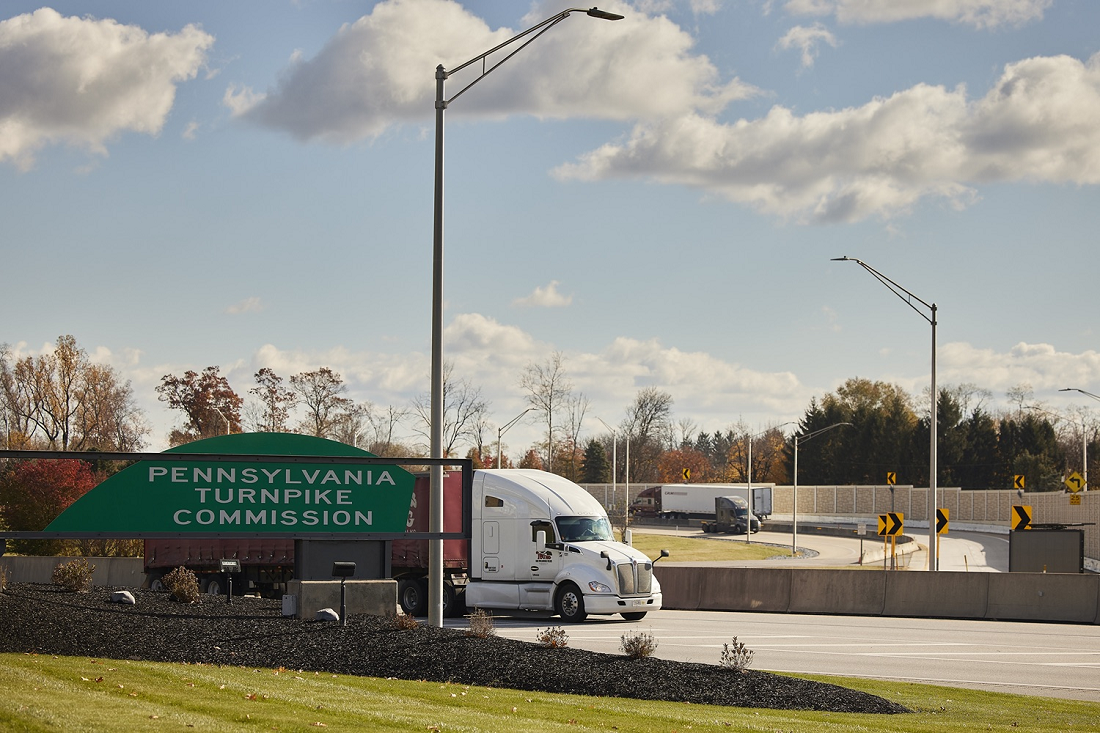
Credit: PA Internet News Service
Advertisements
The commission is working on a streamlined internal processes for registration suspensions, affordable payment plans, working with collection agencies, civil court actions, and vehicle registration suspensions for motorists owing $250 or four unpaid invoices or violations, according to a statement.
Over the past year, nearly 100 cases involving egregious violators were referred to the Pennsylvania Attorney General’s Office for civil action.
The commission said it is also supporting the Pennsylvania State Police’s use of license plate recognition technology for on-road enforcement and has added Apple Pay and Google Pay to its payment options.
Advertisements
On its financial position and longterm debt, the commission stated it remains financially stronger than in recent years.
The agency reported its credit ratings with Moody’s, Fitch, S&P, and Kroll are at “AA,” matching pre-Act 44 levels. Refinancing efforts are projected to save approximately $1.7 billion over time, including $377 million during fiscal year 2026.
The commission clarified that while its direct annual transfer to PennDOT is currently $50 million, it continues to pay debt service from prior transfers. That Act 44-related debt service exceeds $400 million this year and is projected to peak at $600 million annually by 2038, driving long-term toll rates.

