


Credit: Tom Sofield/LevittownNow.com
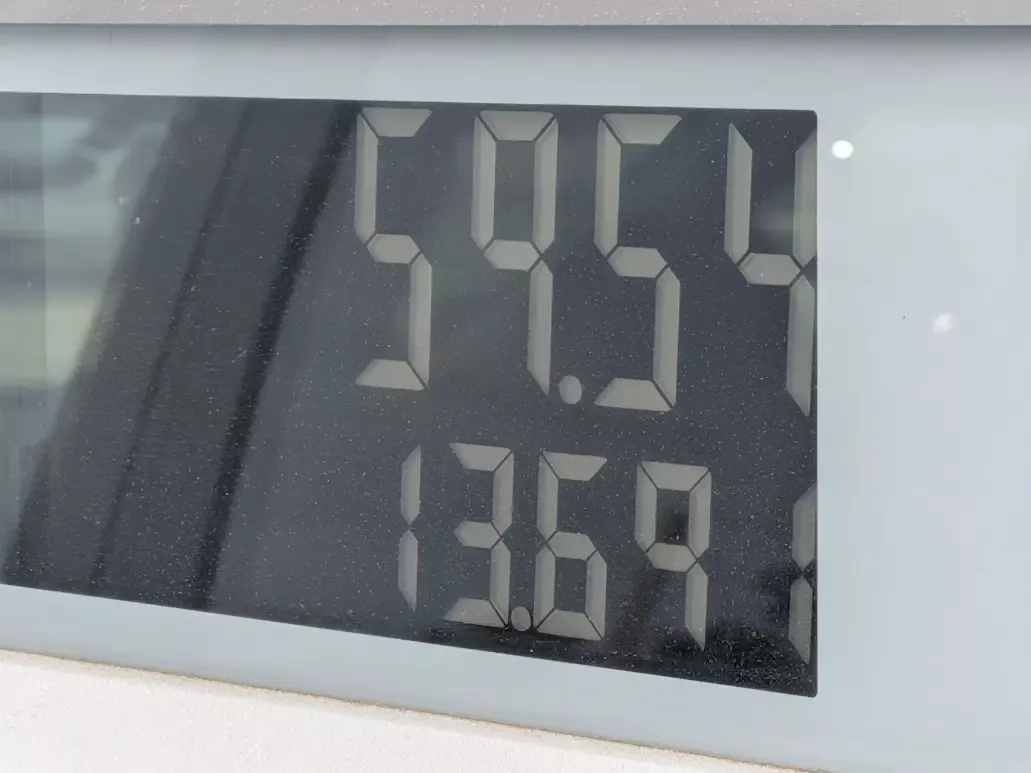
Drivers in the region are facing the highest gas prices in four years after a 37-cent spike over the past week, according to data from AAA.
Advertisements
The average price for a gallon of regular unleaded now stands at $4.48 in the five-county Philadelphia region.
In the Levittown area, Saturday morning prices fluctuated between $4.29 and $4.59, GasBuddy reported.
The recent price increase represents a jump of more than $1.30 per gallon compared to this time last year.
Advertisements
Diesel prices have also climbed, reaching an average of $5.90 in the five-county Philadelphia region as of Friday.
While prices are nearing record territory, they remain below the highs seen in the summer of 2022, when local prices were slightly above $5 per gallon.
Advertisements
The Bucks County gas price record, adjusted for inflation, has been held since the 2008 recession. Counting inflation, those highs would be above $6 today.
Gas prices have risen since the late February war between the U.S., Israel, and Iran.
Days before the war started in late February, the region’s average gas price was $3.02.
Advertisements
The war has almost entirely paralyzed freighter traffic through the Strait of Hormuz, a critical global shipping lane for fuels.
“Oil prices have been climbing again as markets react to renewed geopolitical tensions and the cancellation of talks between the U.S. and Iran,” said Patrick De Haan, head of petroleum analysis at GasBuddy. “As a result, gasoline prices are set to rise further.”
Advertisements
President Donald Trump addressed the rising costs this week.
“And you know what? And we’re not going to have a nuclear weapon in the hands of Iran,” Trump told reporters, according to Hearst Television. “The gas will go down. As soon as the war is over, it’ll drop like a rock. There’s so much of it. It’s all over the place, sitting all over the oceans of the world.”
Advertisements
Spirit Airlines, which had been attempting to emerge from bankruptcy, cited the sudden rise in fuel costs as a factor in its decision to abruptly cease operations on Saturday, according to an internal email sent to employees.
The U.S. Department of Energy provided the following strategies to save fuel:
• Minimize idling your car by turning off your engine when your vehicle is parked for more than 10 seconds. Idling can use a quarter to a half gallon of fuel per hour, depending on engine size and air conditioner use, adding up to three cents of wasted fuel a minute. In the winter, most manufacturers recommend driving off gently after about 30 seconds. The engine will warm up faster being driven, which will allow the heat to turn on sooner, decrease your fuel costs, and reduce emissions.
Advertisements
• Drive sensibly and avoid aggressive driving, such as speeding, rapid acceleration, and hard braking. Aggressive driving can lower your highway gas mileage by 15 percent to 30 percent and your city mileage by 10 percent to 40 percent.
• Avoid driving at high speeds. Above 50 mph, gas mileage drops rapidly. For every 5 mph above 50 mph, it’s like paying an additional $0.22 per gallon of gasoline.
• Reduce drag by placing items inside the car or trunk rather than on roof racks, which can decrease your fuel economy by up to 8 percent in city driving and up to 25 percent at Interstate speeds.
Advertisements
• Avoid keeping heavy items in your car; an extra 100 pounds in your vehicle could increase your gas costs by up to $.03 cents per gallon.
• Combine errands. Several short trips, each one taken from a cold start, can use twice as much fuel as one trip covering the same distance when the engine is warm.
Advertisements
• Check into telecommuting, carpooling, public transit and active transportation like bicycling or walking to save on fuel and car maintenance costs. Many urban areas provide carpool lanes that are usually less congested, which means you will get to work and home faster and more refreshed.

