


ProPublica is a nonprofit newsroom that investigates abuses of power. Sign up to receive their biggest stories as soon as they’re published.
By Debbie Cenziper & Megan Rose | ProPublica
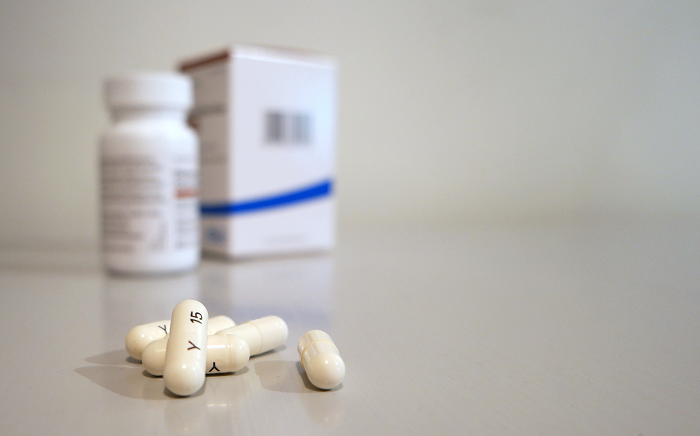
It’s a fundamental tenet of health care in America: Generic drugs are just as safe and effective as brand-name ones. The only difference is the price.
Advertisements
“The same high quality, strength, purity and stability,” the Food and Drug Administration assured the public years ago as factories started to flood the market with their own, cheaper versions of commonly used drugs, from antibiotics to cancer treatments.
But the agency stakes that promise on a risky gamble.
It doesn’t routinely test generics for quality concerns or to see if they’re working as effectively as brand-name medications. Instead, the agency heavily relies on drug companies, often in countries as far away as India and China, to do their own testing and to report any problems.
Advertisements
In recent years, independent labs, universities and the Department of Defense have raised alarms about contaminants and other quality failures in a number of generic medications. So have doctors, who in some cases have gone on to create their own ad hoc lists of drugs they trust and those they learned to avoid.
Yet the FDA largely dismissed the warnings and has only sporadically tested a sampling of generic drugs, which now account for about 90% of prescriptions in the United States. That means the government can’t always say which ones may be compromised or how often that happens. And patients can’t make informed choices about which drugmakers to depend on.
Advertisements
“This ridiculous, small sample of testing that FDA does just cannot stand,” said Albinus D’Sa, a chemist who spent more than 25 years in drug safety at the FDA before retiring in 2023. “It’s not in the public interest.”
ProPublica decided to test several generic versions of three of the most widely prescribed drugs in the United States: the antidepressant bupropion XL, the generic for Wellbutrin XL; the heart medicine metoprolol succinate, the generic for Toprol XL; and the cholesterol drug atorvastatin, the generic for Lipitor. A total of 11 samples from readers, ProPublica employees and the independent testing lab Valisure were assessed, representing a cross section of manufacturers from around the world.
Some were analyzed for impurities such as lead or whether their dosage levels matched the claims on their labels. Another test scrutinized the speed at which the tablets dissolved — a critical indicator of how medication is released in the body — and compared the results to the brand-name drugs.
Advertisements
While most of the samples passed, the findings showed that one version of bupropion and one version of metoprolol, dispensed at least tens of thousands of times in 2024 alone, had irregularities that experts say could compromise their effectiveness.
The tablets dissolved slower than their brand-name counterparts, which could leave patients without the right therapeutic levels for treatment and no way of knowing if their medication might be at fault.
Advertisements
Metoprolol is a beta blocker used by about 15 million people for conditions like chest pain, heart failure and high blood pressure. Bupropion is a go-to drug for the treatment of depression, prescribed to about six million people in the U.S. each year.
Oregon psychiatrist Dr. James Hancey said receiving incorrect amounts of bupropion throughout the day is a serious quality threat that puts vulnerable patients at risk.
Advertisements
“One of the great potential dangers here is that people become discouraged and disillusioned,” he said when told about ProPublica’s findings.
Hancey said he worries that patients taking ineffective antidepressants can feel hopeless, increasing suicide risk. “Sort of like, ‘I must really be messed up. … I’ll never get any better,’” he said. “You can only lose so much hope.”
Advertisements
Irregular levels of metoprolol can also pose a danger, especially for people with congestive heart failure or a history of heart attacks, said Dr. Art Kellermann, a longtime member of the National Academy of Medicine and former senior vice president for health sciences at Virginia Commonwealth University.
“You may never get to the level your body needs to be safe,” he said.
Dozens of companies received approval from the FDA over the years to sell metoprolol and bupropion in the U.S. Yet from 2018 to 2024, the agency reported running only 2 tests on metoprolol and 7 on bupropion through its quality surveillance program — in each case, by pulling a sample from a single drugmaker. In many of those years, the drugs weren’t tested at all, FDA records show. Those that were assessed received passing results.
Advertisements
The FDA did not respond to questions about why the agency didn’t do more testing and how it can know that generics are safe without a more robust program. On its website, the FDA said it has relied on a “more targeted, risk-based” approach to testing since 2018, choosing samples of drugs that have safety, effectiveness or quality concerns. The agency publicly reports the results on its website and notes that a majority of the tested drugs meet its standards.
ProPublica, however, found the agency for years failed to routinely test not only the generics that have worried outside experts but also drugs coming from factories that amassed so many serious quality and safety violations they were ultimately banned from the U.S. market.
Advertisements
In 2023, the FDA barred two Intas Pharmaceuticals factories in India from shipping drugs to the U.S., in part because workers had manipulated drug-testing records to cover up bad results, government records show. An “egregious pattern,” regulators wrote in a letter to the company.
The agency simultaneously excluded the company’s bupropion from that ban, a practice used by the FDA to avoid drug shortages, and has only reported testing the medication once since then. It passed.
ProPublica’s testing, however, found the factory’s bupropion dissolved more slowly than the brand-name drug as well as versions of the medication made by other generic manufacturers.
Advertisements
Intas, whose U.S. subsidiary is Accord Healthcare, said in a statement that its bupropion is safe, effective and equivalent to the brand-name medication, and that the company has made improvements since the FDA’s inspections, including bringing in third-party experts focused on quality and data integrity. The company added it is no longer manufacturing bupropion for the U.S.
In recent years, the FDA’s own records show the agency has fielded thousands of complaints about generic versions of both bupropion and metoprolol. Some reports described seizures, cardiac arrest, nausea and other health problems. Others said the pills just didn’t control patients’ symptoms.
Kellermann and others said too many doctors shrug off those concerns, attributing them to bad luck or a patient’s underlying conditions without considering that the medication itself could be the problem.
Advertisements
“Before we blame God or biology, what are we doing with the best intentions that might be hurting this patient?” he said. “If we don’t entertain the possibility that the patient is right, then we might overlook the true cause of their problem. That’s why testing generic drugs to verify their quality and safety is so important.”
“Afraid of What It Could Find”
Despite its reputation as one of the world’s toughest drug regulators, the FDA takes a decidedly hands-off approach to testing. Its position hasn’t wavered even though the drug supply chain is sprawling, with manufacturers scattered around the world. India produces about half of all generics used in the United States, and crucial ingredients are made in China.
When manufacturers from those countries send drugs to the European Union, they are required to use labs on EU soil to test every batch before releasing them to the public. There is no such requirement in the U.S.
In interviews with ProPublica, former FDA officials and others who have studied the safety of generics said the agency should have done more years ago to probe the drug supply.
Advertisements
Though billions of prescriptions for generic pills, tablets and vials of injectable medication are filled every year, the FDA reported conducting fewer than 650 tests under its quality surveillance program since 2018. That number includes many generic drugs, as well as some brand-name prescription drugs, over-the-counter medications like Children’s Tylenol, and various drug ingredients.
About 94% of those tests produced passing results, FDA data shows. In 2024, the most recent year with data, the agency reported the results of just over 50 tests.
The total does not include tests on hand sanitizers and supplements or any other quality testing that is not publicly reported. The FDA sometimes commissions studies about drugs, which are also not reflected in the tally.
D’Sa said the FDA’s efforts aren’t nearly enough.
As deputy director of the agency’s India office in 2009, he said he worried that inspections alone couldn’t guarantee Americans were receiving quality medication. His team was scouring facilities in every corner of the country and regularly reporting distressing results: factory after factory with no testing procedures to monitor the strength, quality or purity of drugs. Some factories weren’t being inspected at all.
In 2024, the FDA inspected a third of India’s nearly 600 manufacturing sites, agency data shows.
“Regular testing would be an objective measure of quality,” D’Sa said, noting that inspections only examine manufacturing practices at a single point in time.
Advertisements
Other agency insiders have also been concerned. One former official at the FDA’s Center for Drug Evaluation and Research still remembers a phone call almost 20 years ago from a sobbing woman in Texas who said her husband had switched to a generic version of bupropion that she said wasn’t effective. He killed himself.
“That used to keep me up at night,” said the former official, who did not want to be identified because they still have ties to the agency. The FDA needed more training at its testing labs, among other improvements, the official said, but changes were slow.
In an interview, Janet Woodcock, the longtime head of drug safety at the FDA, said the agency didn’t have the resources to do more testing and that she wasn’t overly concerned about widespread lapses in quality.
“A huge, huge majority of drugs on the U.S. market are totally fine,” said Woodcock, who retired from the agency early last year.
Woodcock did not respond to a question about how she knows that drugs are safe if the FDA hasn’t regularly tested them. Instead, she said, the best way to ensure quality is through training and improved manufacturing.
“I don’t believe random testing is an appropriate method for maintaining quality of the drug supply,” she said.
Some doctors and others said they believe the FDA decided against routine testing because it could undermine the public’s confidence in generics and raise questions about the agency’s oversight of the industry.
“The FDA doesn’t want to do the testing because it is afraid of what it could find,” said pharmacologist Joe Graedon, who for years has advocated for drug safety reforms on his website The People’s Pharmacy.
The FDA has even resisted when groups outside the agency offered to help.
“We Want to Find the Really, Really Horrible Ones”
Nearly every morning before dawn, a truck stocked with more than $2 million in prescription drugs arrives at the University of Kentucky’s hospital. Without fail, chemist Robert Lodder’s team of pharmacy technicians is there to greet it.
While other hospital employees ready the sterile injectables for use, Lodder’s technicians siphon off samples and whisk them off to a small lab tucked inside the pharmacy. There, they put the samples on a machine called a spectrophotometer to get a picture of each drug’s chemical composition.
If the medication is made properly, Lodder and his team would see a similar image for every batch. Too often, something doesn’t look right.
Lodder has screened hundreds of thousands of samples since 2020, representing about 350 different medications. About 10% of those drugs have failed the initial assessment and were removed from the hospital’s supply for further study. Some were cleared after Lodder looked at them a second time, but he was so concerned about 20 different drugs that he reported the problem to the FDA and urged the hospital to change suppliers if it could.
Lodder first became interested in drug quality when he was a graduate student at Indiana University in the 1980s. At the time, people were dying after someone tampered with over-the-counter pain relievers to lace them with cyanide, prompting Lodder to study the makeup of similar drugs. When he took the job at the University of Kentucky in 1988, he urged his bosses to set up a lab to screen medications.
Lodder knew the FDA assessed — and nearly always passed — samples from only a small number of drugs. For sterile injectable medication, which can be particularly dangerous if contaminated, Lodder wanted to look at every vial that came through the hospital’s doors.
“We want to find the really, really horrible ones,” he said. “There’s almost always … a few that you would not want to put out there.”
In 2023, Lodder traveled to Washington, D.C., to talk about his screening program with officials from the FDA and the White House Office of Science and Technology Policy. He had given the group a data file identifying the drugs that failed his initial screening, including chemotherapy drugs to treat leukemia and breast cancer. Lodder expected the FDA to dig into his findings.
But agency officials, he said, asked only a few questions.
“They weren’t listening to us,” he said. “People were indifferent, like, ‘Is this really necessary?’”
The way to ensure drug quality, Lodder recalled pitching the group, is to launch a large-scale testing program and publicize the results, which would force troubled manufacturers to make improvements. He suggested that academic medical centers could do the work: screening medications, pooling their data and reporting results to the FDA and to the public.
His own testing program cost less than 0.01% of the hospital pharmacy’s drug budget.
“Then the public will know who has the best,” he said. “That’s what we want out of all of this: You know who to buy from. You can judge on quality as well as price.”
The FDA did not respond to ProPublica’s questions about Lodder’s proposal.
He went back to Kentucky after that 2023 meeting, convinced little change would come from Washington. Lodder didn’t know the details at the time, but another arm of the U.S. government was just as concerned about the nation’s drug supply as he was.
A Matter of National Security
As a global supply chain commander in the Army, Col. Vic Suarez didn’t rattle easily. But he kept hearing something that, if true, could put soldiers at risk: The military’s doctors were worried that some of the generic drugs they were prescribing, particularly from India and China, weren’t working as they should.
In 2019, Suarez recalled that at least one doctor was specifically troubled by tacrolimus, an immunosuppressant medication used by organ transplant patients to prevent rejection. Some generic versions didn’t appear to deliver the right dose, risking the lives of fragile patients. Suarez started advocating for additional drug-quality testing and took the idea to top leaders.
In 2023, the Defense Department decided to investigate generic medications commonly used by U.S. service members and veterans.
“We saw it as our responsibility to protect our own service members and their families,” Suarez said.
Suarez hoped to explore a collaboration with the FDA, an effort previously reported by Bloomberg. In June of that year, he and a group of officers met with the leaders of the Center for Drug Evaluation and Research.
At the meeting, which has not been previously reported, FDA officials pushed back on the plan. They questioned the kind of testing the Defense Department was planning and the independent lab that would do it, according to a transcript obtained by ProPublica. One said the Defense Department’s concerns about drug quality could damage public trust and “undermine confidence in the drug supply.”
After the meeting, the agency summarized the discussion in a confidential memo, noting that a majority of drugs tested by the agency over the years had met quality standards. The memo pointed to a 2020 FDA study that tested more than 250 so-called “difficult-to-make prescription” drugs and didn’t surface any problems.
“As the agency with jurisdiction over the pharmaceutical industry due to our extensive experience with manufacturing and testing … FDA has substantial concerns about the proposed pilot,” the agency said in the unsigned memo, which was obtained by ProPublica.
The FDA did not respond to questions about the Defense Department’s initiative or the meeting.
The DOD is using the independent lab Valisure to test more than 40 drugs that officials consider the most essential in the military health system, representing roughly 2,000 versions of the medications. The vast majority are generic. Early results show about 10-15% of those drugs are high risk, meaning they were found with elevated levels of contaminants, didn’t have the right dosage or dissolved differently than higher-quality generic or brand versions.
“Ultimately, the people that are disproportionately affected are the most vulnerable,” Suarez said. “There is no other protection for them other than people trying to do the right thing … to literally fill the gap by basically testing and comparing.”
ProPublica also engaged Valisure to conduct drug testing. As part of that testing, the lab earlier this year tested generic tacrolimus made by Intas and found that the capsules dissolved up to three times faster than the name brand, which experts say could introduce too much of the drug too quickly and potentially cause tremors, headaches and kidney failure.
The FDA in 2023 said Intas’ tacrolimus may not provide the same therapeutic effect as the brand name but that the drug could still be prescribed.
In a previous statement, Intas said its tacrolimus is safe and effective and that the FDA had determined the drug was equivalent to the brand-name version when it was first approved for the U.S. market. The company said it “is dedicated to patient safety, product quality, and regulatory compliance.”
“You Don’t Want a Bad Batch”
Long before ProPublica launched its own testing, Graedon, the drug safety advocate at The People’s Pharmacy, asked another testing provider to assess a generic version of bupropion by Teva Pharmaceuticals, which is headquartered in Israel.
That testing showed the pills were dissolving more rapidly than branded ones. Patients with depression who had once found relief in Wellbutrin had described headaches, anxiety and, in some cases, suicidal thoughts. In 2007, Graedon urged the FDA to investigate, even sending dozens of pill bottles to agency headquarters in Maryland.
In 2012, after sponsoring its own study, the FDA announced that Teva’s version, which was made by Impax Laboratories, was not equivalent to the brand and Teva removed it from the U.S. market.
Teva did not respond to requests for comment. At the time, the company said the medication posed no safety concerns. In 2017, Impax announced it was merging with another company.
Since then, the FDA has only sporadically tested generic versions of bupropion, government data shows, even when drug companies appeared to have manufacturing issues.
India’s Sun Pharma has recalled its bupropion at least six times since 2016 because it wasn’t dissolving correctly, government records show. FDA inspectors have gone back to the Sun factory that made the drug time and again, reporting dirty equipment, fungus in areas that were supposed to be sterile, and bacteria and metal particles in injectable medication.
Still, the agency didn’t test Sun’s bupropion, according to the FDA’s publicly reported results. The FDA ultimately banned the factory from shipping most of its drugs to the U.S. in December 2022, including bupropion, more than a decade after the agency approved Sun’s version of the medication for the market. The factory is still banned.
The company has “acted responsibly and in accordance with good manufacturing practices,” Sun spokesperson James Freeman said about recalls in a statement. He added that the company has made significant investments in manufacturing capabilities in the past five years and is working with third-party experts to meet regulatory standards.
“All of our products remain subject to rigorous quality controls,” he said.
Dr. Douglas Throckmorton, a former deputy director at the Center for Drug Evaluation and Research, said the recalls suggest the agency’s reliance on manufacturers appears to be working.
“You could look at that result and say that’s a manufacturing culture that is doing the needed monitoring,” he said.
Graedon said he still hears from bupropion users, who have continued to post complaints and questions about the quality of various versions of the drug on social media.
“The FDA should be absolutely testing on a regular basis,” he said.
Consumers have also described concerns about generic versions of metoprolol, the heart medication, but the FDA has not routinely tested that drug for quality problems, either, government records show.
ProPublica’s testing of metoprolol succinate found that a version by Teva, the company that pulled its bupropion from the market, dissolved three times more slowly over a period of six hours than the brand-name drug. The company did not respond to requests for comment.
To Dr. Harry Lever, a retired Cleveland Clinic cardiologist who raised alarms about metoprolol succinate more than a decade ago, the agency’s testing policy dramatically diminishes oversight of America’s drug supply.
“It comes down to the fact that the FDA is not doing its job. Everything you are swallowing should be tested — there should be no question about it,” Lever said. “You don’t want a bad batch coming to the drugstore. People won’t do well. And that’s the problem.”
Join ProPublica Jan. 14 for a virtual discussion about our Rx Inspector news app. Register now.
Reporting was contributed by Ashley Clarke of ProPublica and Melissa Dai, Isaiah Steinberg, Aidan Johnstone, Kate McQuarrie and Sadie Leite of the Medill Investigative Lab.

