Credit: Tom Sofield/LevittownNow.com
The Falls Township Board of Supervisors approved a slight tax hike for 2023 and also the implementation of an earned income tax (EIT).
The supervisors voted Monday evening to approve the township’s first tax increase in 30 years as part of the 2023 budget.
Advertisements
The tax increase is for the fire tax fund. It will increase from 1.75 mills to 3 mills. Township ordinance allows the fire tax to max out at 5 mills.
The total township tax bill will go from 7.22 mills to 8.97 mills.
Township officials said the average homeowner in the township will pay about $90 more per year in taxes to support the volunteer fire companies – the Falls Township, Fairless Hills, and Levittown No. 1 fire companies.
Advertisements
The supervisors voted 4-1 to implement an EIT in 2023. Supervisor John Palmer was the lone vote against the EIT.
Township officials said EIT is needed to prepare for a future time when Waste Management landfills aren’t spinning off millions in impact fees that currently fund much of Falls Township’s budget. Supervisors Chairman Jeff Dence said the EIT could reduce that reliance.
Advertisements
The supervisors approved the $73.2 million spending plan for 2023. The upcoming year’s budget is a rise over 2022’s budget of $38.5 million, but it includes $28 million set aside for the renovation of the township municipal center off Lincoln Highway.
Property owners will pay $269.10 on a $30,000 average assessment for the municipal tax bill. The township’s tax bill is the lowest among nearby municipalities.
Falls Township residents are not charged for trash and leaf pickup, unlike residents in other areas, due to a partnership with Waste Management and its dump in the township.
Advertisements
The township anticipates receiving around $630,000 in local services tax money, $623,000 in cable TV franchise fees, $1 million in real estate transfer taxes, $1.8 million in permit fees, and $650,000 in state pension system funds.
In addition, the township is investing $4.6 million in road improvements. Paving, drainage improvements, new culvert construction, repairs near waterways, and the construction of a retaining wall are all part of the planned work.

Advertisements
Falls Township intends to spend $50,000 to cut down or trim damaged trees, $470,000 on vehicles, equipment, training, and supplies for police, $372,000 on new equipment for public works personnel, and $140,000 on a new all-inclusive playground at the Pinewood Pool.
Falls Township Finance Director Betsy Reukauf said the township has been grappling with growing pension expenditures totaling about $3.5 million, other rising expenses, and an estimated decline in landfill host fees to $10.3 million.
Advertisements
Before voting on the EIT, Peter Angelides of EConsult Solutions Inc. discussed EITs and answered questions.
Angelides estimates that Falls Township will get $7.2 million in new revenue from the EIT in 2023. Angelides stated that only 32 percent, or $2.3 million, of the $5.7 million to $5.9 million derived from EIT on Falls Township residents would constitute new taxes.
Advertisements
For the majority of working residents, they are already paying an EIT to other municipalities. Now, that money, aside to those who pay a similar tax in Philadelphia, will be brought back to Falls Township.
According to Dence, the benefit of an EIT is that it does not affect senior individuals who do not work, those who are unemployed, or workers who make less than $8,000 per year.
Bristol Borough, Langhorne Manor Borough, Lower Makefield Township, and Yardley Borough are the only municipalities in the county without an EIT in 2023.
Advertisements
EIT funds will be used to pay for general township expenses and divert some of the landfill host fees to a savings fund, Reukauf said.
Reukauf called the township’s diverting of host fees to cover general fund expenditures instead of putting them in savings was not responsible.
Advertisements
Township solicitor Michael Clarke said the EIT revenue will go entirely to the township. The Pennsbury School District could request half, but only if all municipalities in the district have an EIT, which they do not currently have.
“They can take our half, but they have to impose that percentage on everyone in the district,” Clarke said. “It has to be uniform.”
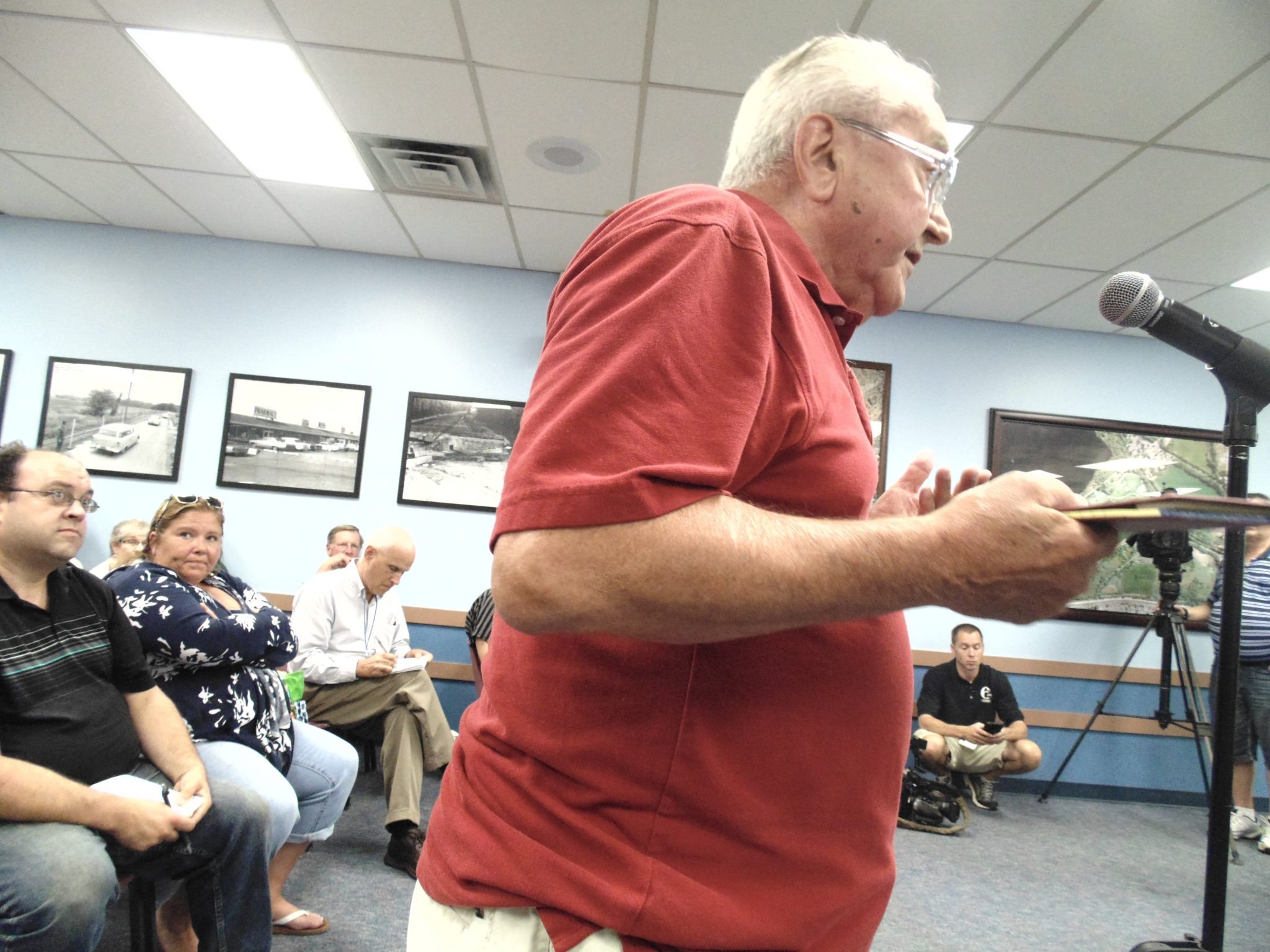
Resident Colin Henderson called on the supervisors to hold off an EIT for this year and look at curbing spending and setting plan before implementing an EIT.
Advertisements
“It’s not a hard decision. It’s a big decision,” Dence said. “To wait until the landfill’s full and start taxing people then would be foolish.”

Credit: Tom Sofield/LevittownNow.com
Resident Mike Falkevitz told the supervisors he felt an increase in property taxes would be better than an EIT, citing that corporate land owners would have to pay more and not just residents.
Toni Battiste, a Falls Township resident, called on the supervisors to make sure they are saving money offset from EIT revenue as savings.
Advertisements
Palmer, the lone no vote against the EIT, said he believed the EIT should have started at half a percent.
“It was coming,” Palmer said of the EIT. “But we could have done it differently.”
The supervisors mentioned the late Guido Mariani, a former Falls Township resident, and his years-long campaign to get the township to implement an EIT.
“We got your message,” Galloway said of Mariani’s activism. “We understand it’s good for seniors. I’m sure he’s proud of us.”
Credit: Amanda Kuehnle/LevittownNow.com
Advertisements
Report a correction via email | Editorial standards and policies