By Stephen Caruso | Pennsylvania Capital-Star
Credit: Mika Baumeister
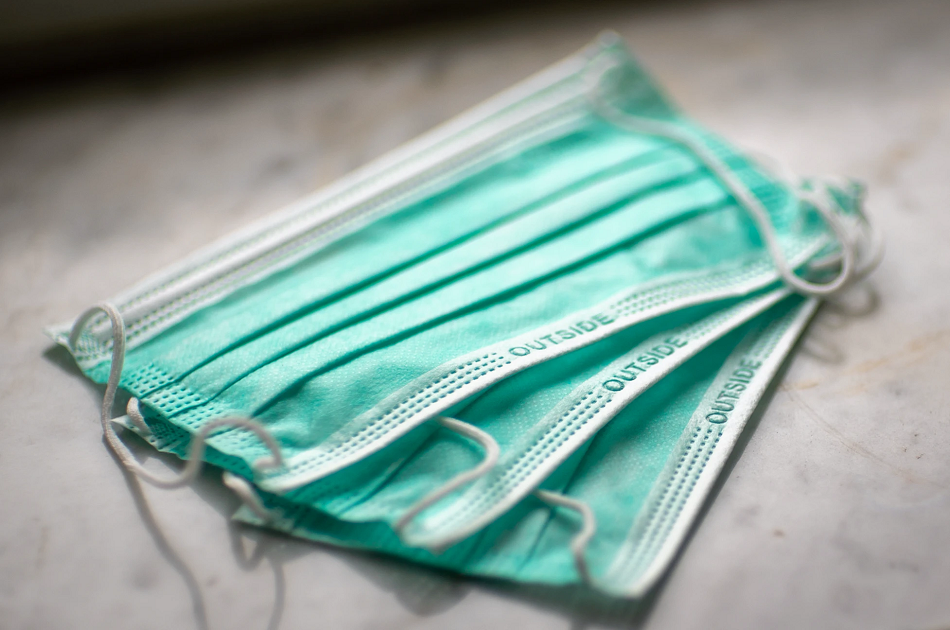
Pennsylvanians may have voted to restrict Gov. Tom Wolf’s emergency powers last week, but it will not impact the single most visible sign of the COVID-19 pandemic on citizens’ lives: masks.
Advertisements
Under current state health orders, unvaccinated individuals should wear masks when they’re indoors, and outdoors if they’re unable to maintain social distance.
Matching updated federal guidelines, the state recently lifted these rules for vaccinated individuals. Under the new orders, vaccinated individuals should only wear masks in some crowded settings.
While anger fixated on the emergency declaration, the Pennsylvania Department of Health still has the power to “carry out the appropriate control measures” of infectious diseases under the state’s 1955 Disease Control and Prevention Act.
Advertisements
The department has combined this statute with its mandate to “protect the health of the people of this Commonwealth” with “the most efficient and practical means for the prevention and suppression of disease,” as written in the 1929 law establishing the agency.
These powers are unaffected by the amendment, according to Kevin Levy, an attorney at the Philadelphia firm of Saul Ewing, who has followed the administration’s response to the virus.
Advertisements
And Wolf has said his administration won’t lift the requirement until 70 percent of Pennsylvanians are fully vaccinated. As of this week, half the state has been fully vaccinated.
None of that accounts for private businesses setting their own rules to enter, either. No shirt, no shoes, no service could turn into no shirt, no shoes, no mask, no service, Levy added.
“We’re not done with COVID-19 rules in Pennsylvania even though these amendments have passed,” he said.
Advertisements
With federal masking guidance changing to adapt to rising vaccination rates, some businesses are changing their policies as well.
Giant Eagle, a western Pennsylvania grocery store chain, will allow vaccinated shoppers and employees in without a mask starting Monday. Those not yet vaccinated will be expected to wear a mask.
Advertisements
“We trust Giant Eagle guests will act in accordance with the CDC’s guidance,” Giant Eagle spokesperson Richard Roberts said in an email.
Central Pennsylvania grocery chain Giant also starting allowing vaccinated customers in without a mask on May 19.
Advertisements
In a statement, Gene Barr, president and CEO of the Pennsylvania Chamber of Business and Industry, said that the dropping case counts and rising vaccination rates were “positive step toward returning to a sense of normalcy.”
But accompanying changes to health order put employers “in an undeniably confusing situation when it comes to enforcing the state’s standing masking requirement for unvaccinated individuals.”
Advertisements
Barr argued for the state to implement temporary COVID-19 liability protections for businesses following those guidances, to reduce businesses risk. Wolf vetoed just such a liability shield late last year., But the General Assembly has again picked up the measure in this year’s legislative session.
Since last March, Wolf has made broad use of his executive powers to slow the spread of COVID-19, such as shutting down all but “life-sustaining” businesses.
Such tactics sparked a conservative backlash across the country, fueled by a mix of grassroots and right wing advocacy groups, against Democratic and Republican governors alike.
Advertisements
It’s unclear how well constituents of Republicans who have opposed Wolf will take the wait. State Rep. Russ Diamond, R-Lebanon, who rejected mask mandates and vaccines, told his constituents to be patient.
“Adopting the amendments was akin to peeling the first layer off the onion,” Diamond wrote in a Facebook post. “We have more work to do, and I pledge to keep doing that work until things are back to normal.”
Advertisements
Report a correction via email | Editorial standards and policies