Provided by the Pennsylvania Department of Environmental Protection and Pennsylvania Department of Health:
Three students who won a poster contest are helping the Pennsylvania Department of Environmental Protection (DEP) and Pennsylvania Department of Health encourage Pennsylvanians to test their home for radon in January, National Radon Action Month. Radon is a naturally occurring radioactive gas that enters homes from the ground and is the second leading cause of lung cancer.
Advertisements
“Because of our geology, Pennsylvania has some of the highest radon gas levels in the country,” said DEP Secretary Patrick McDonnell. “Nearly all homes have radon, and 40 percent of Pennsylvania homes have more radon than the federally recommended guideline. Since you can’t see or smell this gas, doing a simple radon test is one of the practical actions Pennsylvanians can take to keep their home a healthy place.”
“As Pennsylvanians spend more time at home due to the ongoing COVID-19 pandemic, a radon test is yet another effort that individuals can take to keep their homes healthy,” Secretary of Health Dr. Rachel Levine said. “Actions like sanitizing frequently touched surfaces, installing a smoke detector, and purchasing a radon test kit are simple steps to take to protect your home and family’s health.”
DEP coordinated a school poster contest in the fall, inviting students to submit artwork that educates the public about radon. Jocie Wert, a student at Sacred Heart School in Lewistown, Mifflin County, earned first place. Her poster will be entered into a national radon poster contest.
Advertisements
Mohd Iftakhar Murshaed Tarunno, a student at Beverly Hills Middle School in Upper Darby, Delaware County, earned second place. Kylee Jo Ware, a student at North Star Middle School in Stoystown, Somerset County, earned third place. See the three winning posters on the DEP radon website.
Radon gas results from the breakdown of uranium in the ground and enters homes through cracks in the foundation or other openings. A map from the U.S. Environmental Protection Agency (EPA) shows radon levels by county.
Advertisements
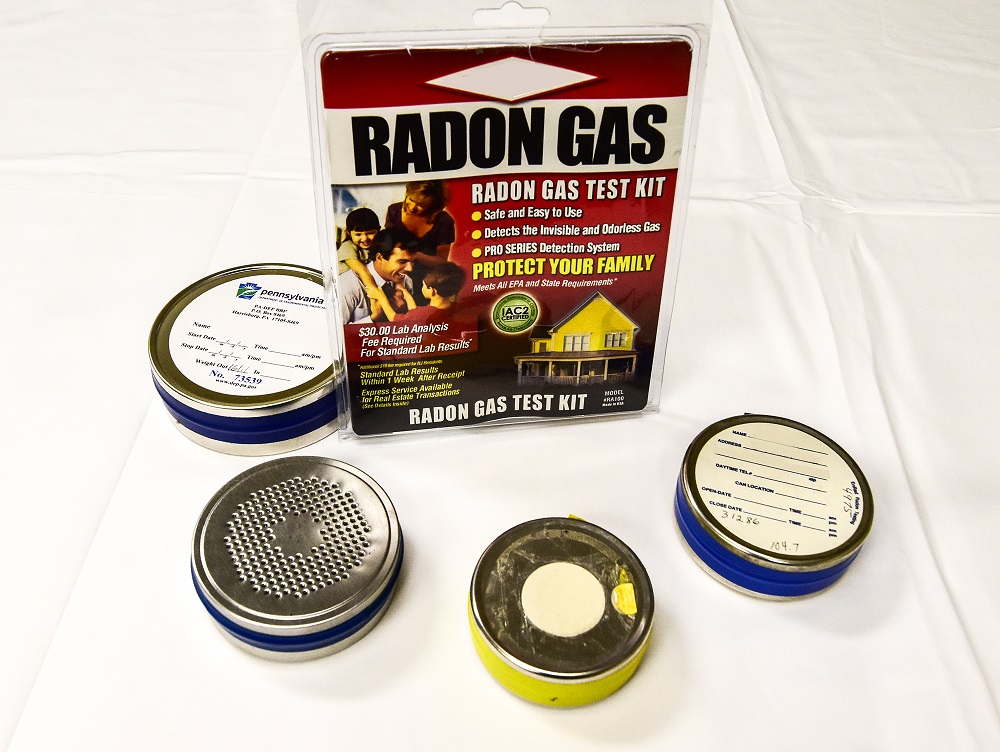
Radon tests are available at hardware stores for about $20 and are simple to use, requiring only that the cannister be opened and placed in the basement for a few days, and then mailed to a lab. Alternatively, you can hire a certified radon tester. Although a radon test can be done any time of year, winter is ideal because doors and windows are closed, providing more accurate results. A video on the DEP website provides radon testing instructions.
EPA identifies 4 picocuries of radon per liter of air as a guideline. If a home’s radon level is higher than this, EPA and the U.S. Surgeon General recommend having a radon reduction system, with a pipe and exhaust fan, professionally installed to vent the gas outside. The cost is generally in line with that of other home improvements, such as replacing a water heater.
See the DEP website for list of DEP-certified professional radon testers, mitigators, and laboratories.
Advertisements
Having a radon reduction system installed also makes the sale of a home easier. Pennsylvania law requires anyone selling a home to disclose the results of any known radon testing. The DEP website lists radon testing options for real estate transactions.
For more information, contact the DEP Radon Division:
- Radon hotline: 800-237-2366
- Phone: 717-783-3594
- Email: ra-epbrpenvprt@pa.gov
Advertisements
Report a correction via email | Editorial standards and policies