



With the peak of tax season fast approaching, the last thing Middletown accountant Nicole Hinkel needed was to get sick.
The mother, wife, and small business owner had already taken precautions due to COVID-19 and was complying with the governor’s stay-at-home order. She had moved her office to home and was still working on behalf of her clients without having physical contact.
Advertisements
While still accepting no-contact client drop offs last month, Hinkel, who is at higher risk for serious COVID-19 symptoms due to asthma, said she was making sure to sanitize and following all the guidance.
Then it hit her. A stomach bug like no other. It continued for a few days.
“I was certain it wasn’t COVID-19 related because I had no upper respiratory symptoms. I didn’t have a fever, or so I thought, but I wanted to die,” said Hinkel, whose business Nicole’s Tax Service performs accounting work for this news organization.
Advertisements
A few days in, her stomach started to feel better but her throat hurt and tightness began to set in her chest. A cough started right when she got up.
A telephone consult with medical professionals led her to a COVID-19 testing site in Bensalem.
At the testing site, Hinkel was recorded to have a fever along with the respiratory symptoms.
Advertisements
Last week, Hinkel said she got her COVID-19 results back and she tested negative. The news came as her symptoms became worse.
Her doctor gave her different regimens to try, but her symptoms continued. That’s when Hinkel learned her COVID-19 test returning negative doesn’t mean she does not have it.
Medical experts and doctors have acknowledged that no test is 100 percent accurate.
Advertisements
A Chinese study, which was limited and not peer-reviewed, showed the rate of false negatives among the type of test being commonly used in America could be as high as 30 percent.
“False-negative test results — tests that indicate you are not infected, when you are — seem to be uncomfortably common. Increasingly, and disturbingly, I hear a growing number of anecdotal stories from my fellow doctors of patients testing negative for coronavirus and then testing positive — or people who are almost certainly infected who are testing negative,” Dr. Harlan Krumholz, a professor of medicine at Yale and director of the Yale New Haven Hospital Center for Outcomes Research and Evaluation, wrote in a New York Times piece.
The Centers for Disease Control and Prevention notes in guidance that false-negative results are possible and states that health care providers should “consider the test result together with your symptoms, possible exposures, and geographical location of places you have recently traveled in deciding how to care for you.”
Advertisements
“It depends on how much virus the person is shedding (through sneezing, coughing and other bodily functions), how the test was collected and whether it was done appropriately by someone used to collecting these swabs, and then how long it sat in transport,” Priya Sampathkumar, an infectious diseases specialist at Mayo Clinic in Minnesota, told newswire AFP.
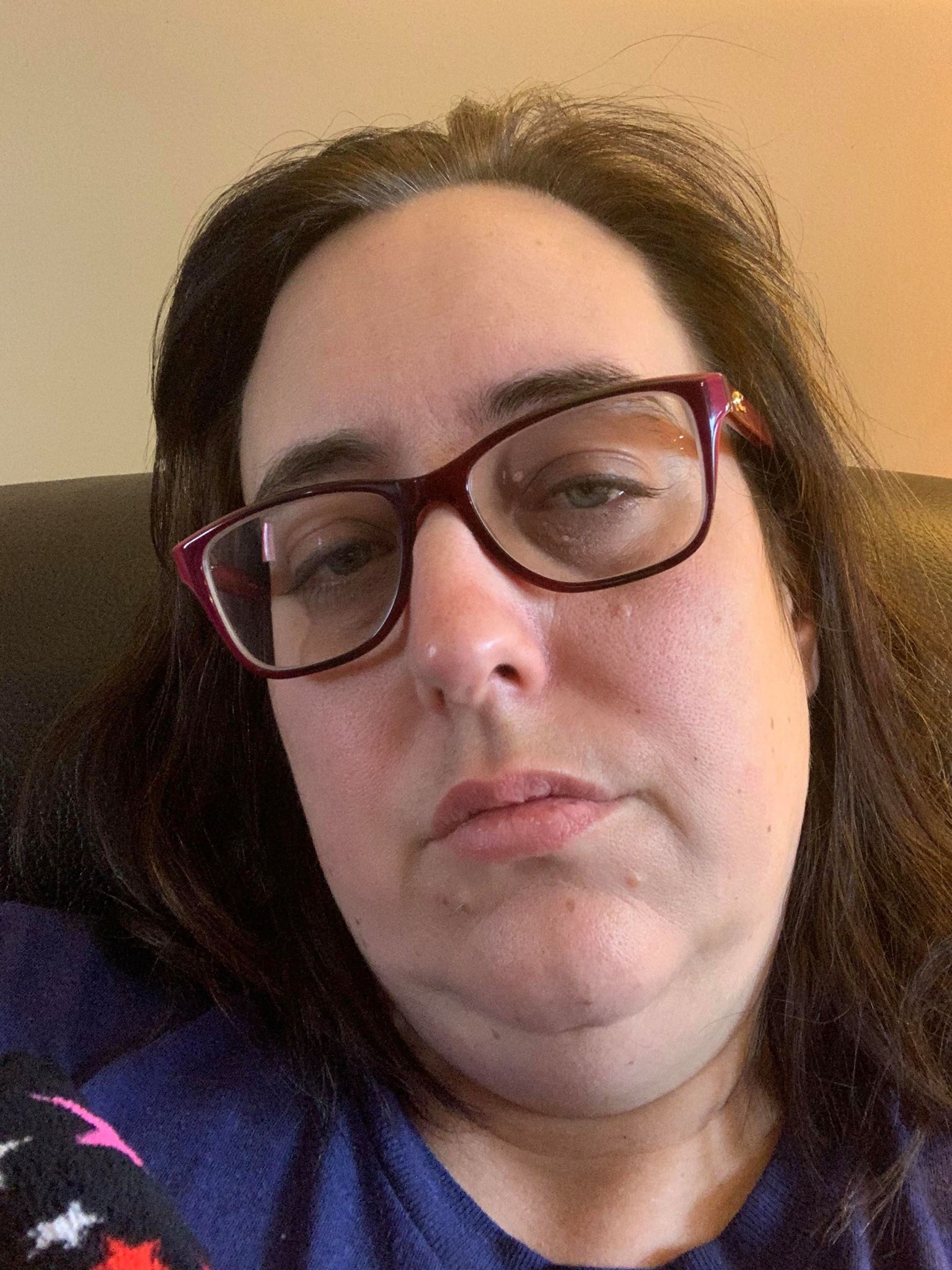
Credit: Submitted
Hinkel said that despite the false negative, several health care professionals told her they believe she has COVID-19 based on her symptoms.
Her deviated septum, Hinkel was told, may have also made it harder to get an accurate sample using a nasal swab for testing.
Advertisements
The good news is that there appears to be far fewer false positives than false negatives, according to experts.
Dr. David Damsker, the Bucks County Health Department director, has previously stated that the number of positive COVID-19 cases in the county is likely “underreported” without factoring false-negative results.
Advertisements
“If you’re at home and you’re doing well and having mild, manageable symptoms, the doctors are correct – whether you have coronavirus or something else – there’s no need to rush out and get tested because we’re all quarantined at home,” he said.
For the accountant, she has been told that getting another COVID-19 test would not change the course of treatment at this time.
Advertisements
Scrutiny has been placed on the federal government for using a different type of COVID-19 test instead of the World Health Organization-approved test in the early days of the outbreak.
Numerous Bucks Countians who have had symptoms were turned away from being tested early on due to the limited number of tests that were available.
Advertisements
Hinkel has ended up visiting the hospital and has since been at home recovering with some slight improvement on Sunday.
The accountant still isn’t certain where she picked up the virus, but noted that she has had numerous clients who she has learned since have tested positive over the past month. One has even passed away.
Advertisements
For Hinkel, she hopes recovery is just around the bend and said she has been doing everything in her power to keep the rest of her family healthy and complete her work.
“I just have to wait,” she said.
Advertisements
Report a correction via email | Editorial standards and policies


