


By Dave Fidlin |
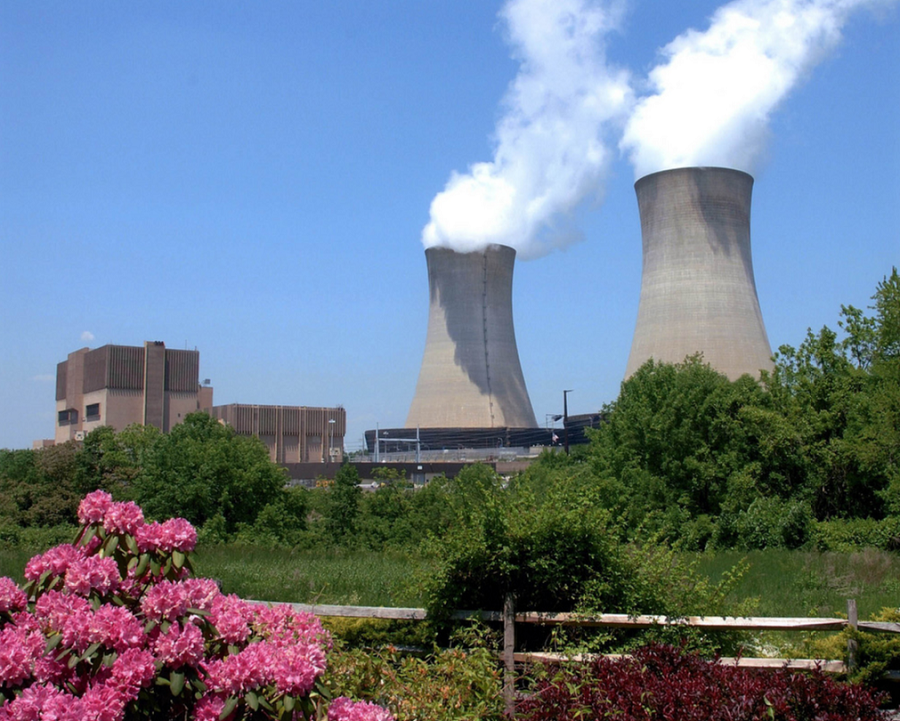
Credit: Nuclear Regulatory Commission
A Pennsylvania House panel is continuing to hear feedback on a controversial bill that could provide an annual $500 million taxpayer-funded subsidy to the commonwealth’s nuclear power industry.
Advertisements
If passed as drafted, House Bill 11 could prevent two of Pennsylvania’s power plants – Three Mile Island and Beaver Valley – from closure. Both currently have sunset dates on the horizon.
The House Consumer Affairs Committee held another hearing this week and gathered testimony from five professionals within the energy industry. Two of the speakers favored HB11, two opposed it and one took a neutral stance.
Rep. Brad Roae, R-Meadville, who chairs the committee, said the goal of gathering the testimony is to listen to as many viewpoints as possible. A similar hearing was held last week.
Advertisements
“I think it’s one of the most complex topics I’ve seen since I’ve been in the Legislature,” Roae said of HB11. “There’s a lot of complex moving parts here.”
Opponents of HB11 at Monday’s hearing included David Spigelmyer, president of the trade association Marcellus Shale Coalition, and Rachel Gleason, president of the Pennsylvania Coal Alliance.
Advertisements
Spigelmyer said he believed the nuclear power industry in Pennsylvania is “profitable and healthy” and advocated against providing subsidies to the sector.
“I strongly urge this committee, and the General Assembly, to stay the course … with the environment they’ve created,” Spigelmyer said. “Disregarding the markets … would risk significant jobs and private capital investment.”
In addition to advocating on behalf of the coal power industry and its legacy in Pennsylvania, Gleason said the arguments in favor of HB11 are “at best, speculative.”
Advertisements
Gleason also took jabs at speakers last week who said HB11 would level the playing field for all energy providers across the commonwealth.
“That most certainly would not be the case,” she said.
Advertisements
Speaking in favor of HB11 at this week’s meeting were Maria Korsnick, president and CEO of Nuclear Energy Institute, and Kathleen Barron, senior vice president of government and regulatory affairs with energy provider Exelon Corporation.
From her vantage point, Korsnick said she thinks HB11 would fortify the nuclear power plants across Pennsylvania.
Advertisements
“This legislation has a real opportunity to preserve these assets,” Korsnick said. “Pennsylvania’s nuclear power plants are economic engines. Pennsylvania needs to act before it’s too late.”
Barron spoke of 16 different clean technologies across Pennsylvania that already receive state credits. If the policy continues, Barron said, the nuclear power industry should be able to receive the same benefit.
Advertisements
The neutral voice was from Mark Szybist, senior attorney for climate and clean energy at the Natural Resources Defense Council.
Speaking in broad terms about subsidies for power industries, Szybist said, “We don’t have an absolutist position; we have conditions in what we call best practices.”
Szybist said the council would not be opposed to providing the nuclear power industry with state subsidies if they were narrowly tailored.
Advertisements
“But we don’t like House Bill 11,” Szybist said. “It doesn’t have anything significant for renewable energy. It’s very broad.”
Rep. Robert Matzie, D-Ambridge, serves as minority chair of the House Consumer Affairs Committee. Matzie said he believes he and his elected colleagues need to carefully, thoroughly review the components of HB11.
Advertisements
“We are going through this process in a much more transparent way,” Matzie said. “This is a complex issue for people to understand. There are a variety of issues that we as policymakers are going to be faced with.”


