


Provided by Gov. Tom Wolf’s Office:
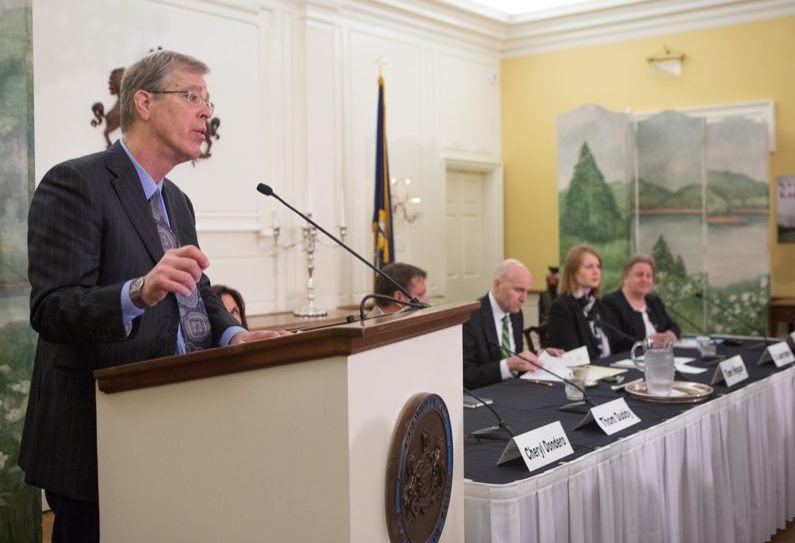
Governor Tom Wolf joined members of his cabinet, local officials, law enforcement, health care professionals, emergency responders and stakeholders at a panel earlier this week to discuss local and statewide efforts to lead the nation in combating the opioid abuse and heroin use epidemic in Pennsylvania.
Advertisements
In an effort to confront this epidemic collaboratively, Governor Wolf is conducting events statewide to discuss the initiatives of his administration, the state legislature, county agencies, treatment centers, hospitals, and medical schools. The Wolf Administration is eager to engage in these conversations in order to hear more about the challenges these officials are facing, as well as the strategies they have built to address this crisis.
“Fighting Pennsylvania’s opioid and heroin epidemic is a top priority for my administration,” said Governor Wolf. “The community leaders here today work diligently every day to ensure that Pennsylvania leads the nation in the fight to combat the opioid abuse and heroin use crisis. This panel is an opportunity to discuss how we can work more collaboratively with the folks on the ground of this crisis.”
In attendance at the Governor’s Residence were Department of Drug and Alcohol Programs Secretary Gary Tennis, Physician General Dr. Rachel Levine, Department of Health Secretary Dr. Karen Murphy, Department of Human Services Secretary Ted Dallas, Department of State Secretary Pedro Cortes, Pennsylvania State Police Commissioner Col. Tyree Blocker.
Advertisements
After speaking about administration efforts to combat the opioid abuse and heroin use epidemic, Secretary Tennis moderated a panel of issue area experts to discuss their insights and strategies for fighting back against this public health crisis. Panelists included Deputy Secretary of Health Innovation for the PA Department of Health Dr. Lauren Hughes, Chester County District Attorney Tom Hogan, President of the Drug and Alcohol Service Providers Organization of Pennsylvania Deb Beck, Director of Dauphin County Drug and Alcohol Services Cheryl Dondero, and Director of Community Health Solutions for Adapt Pharma Stephanie Galica.
Chester County District Attorney Tom Hogan stated, “Law enforcement is fighting the scourge of opioids every day, in every county, and on every street across the Commonwealth of Pennsylvania. This problem starts with prescription drugs and then rapidly converts into heroin addiction. We have become a society that is reckless, promiscuous, and careless when it comes to prescribing opioids. Until we address this problem, our children remain at risk.”
President of the Drug and Alcohol Service Providers Organization of Pennsylvania Deb Beck added, “With nearly 3,000 Pennsylvanians dying annually of drug overdoses, we are grateful to the Administration for helping bring focus to the issue.”
Advertisements
Director of Dauphin County Drug and Alcohol Services Cheryl Dondero said, “As a woman in recovery, a mother and a professional with experience fighting this epidemic at both the state and county level, I am extremely honored to be a part of this panel. The effectiveness and positive impact of any federal or state initiative to combat the heroin and opioid epidemic is dependent on counties’ ability to adapt it to meet the unique needs of their local communities. County drug and alcohol agencies, with leadership and advocacy from DDAP Secretary Gary Tennis, are uniquely positioned to ensure that happens at the local level. In Dauphin County, we are realigning most everything we do and how we do it as we move toward being an initial and continuing resource for all residents in our county, regardless of funding source or insurance coverage, for information, education and assistance in accessing drug and alcohol treatment, prevention, intervention and recovery support services.”
“The Department of Health is committed to being part of the solution to the statewide crisis that is opioid addiction,” said Dr. Lauren Hughes. “The fight against heroin and prescription drug abuse is a top priority for the Wolf Administration and finding solutions to this devastating addiction will take a comprehensive, collaborative effort from both the government and private sector.”
“Pennsylvania is among the most impacted states facing the opioid epidemic, but we are also a leader in how we have chosen to respond to and tackle this issue,” said Thom Duddy, Executive Director, Adapt Pharma. “As a Philadelphia-area-based company, we are grateful for the work Governor Wolf, Physician General Dr. Levine, and Secretary Tennis have done to improve access to immediate-acting tools, such as NARCAN® Nasal Spray. Over the past six months, we have had the opportunity to partner with community leaders, such as the police and school systems, in order to educate, increase naloxone access, and offer support to on-the-ground harm reduction efforts to help Pennsylvanians in their battle with addiction. It is through these efforts and the legislative initiatives of leaders like Governor Wolf that we are hopeful for the wellbeing and future of the Commonwealth.”
Advertisements
The Wolf Administration hopes that these discussions are just the beginning of a larger conversation with both Republicans and Democrats in the House and Senate as well as local officials, law enforcement, emergency responders, and health care professionals.
“I look forward to continue working collaboratively with the General Assembly and community leaders to ensure Pennsylvania leads the nation in the fight to combat the opioid abuse and heroin use epidemic,” said Governor Wolf. “The magnitude of the addiction and overdose death epidemic in Pennsylvania is shocking: at least seven Pennsylvanians die every day from a drug overdose. With nearly 2,500 overdose deaths in Pennsylvania in 2014 and estimates that the 2015 total will be higher, a collaborative effort on the federal, state, and local levels is crucial in combating this crisis.”
Some of the administration’s initiatives in the fight against heroin include: signing a statewide standing order for naloxone, making it possible for all Pennsylvanians to access this life-saving drug; equipping the Pennsylvania State Police with naloxone so that those troopers who are first on the scene of an overdose can have another tool on-hand during these emergencies; partnering with Adapt Pharma to make Narcan available to public high schools across the state at no cost; developing the ABC-MAP prescription drug monitoring program to detect and prevent prescription fraud and abuse, which contribute to addiction; and appointing adirector for the state’s Prescription Drug Monitoring Program (PDMP) Office, who will work to ensure that the PDMP meets its goal of assisting healthcare professionals in identifying patients that would benefit from treatment.
Advertisements
In an effort to curtail drug addiction and curb the supply of excess drugs that can be used illicitly, the Department of Health is leading an effort to build upon the opioid prescribing guidelines already created, including specialty specific guidelines for emergency department providers, dentists, obstetricians and gynecologists, and pharmacists. These guidelines give healthcare providers direction for safe and effective pain relief practices, with greater emphasis on non-opioid therapies and greater caution to prevent addiction and diversion. In addition, the DOH recently joined dozens of healthcare organizations, medical experts, and consumer advocacy groups in signing petitions requesting changes to federal pain management requirements that are believed to foster dangerous prescribing practices.
The Department of Drug and Alcohol Programs is developing the “warm hand-off” process “warm hand-off” process, whereby overdose survivors would be taken directly from the emergency department to a licensed drug treatment provider, as well as Pennsylvania’s Prescription Drug Take-Back Program. This program helps communities properly dispose of unused prescriptions at any of the 400+ police station locations across Pennsylvania. To date, approximately 40,000 pounds of prescription drugs have been taken back and destroyed.

