




Developers and utility companies that cut into roads in Middletown Township may be required to make much more extensive repairs in the future.
Advertisements
At the Oct. 5 supervisors’ meeting, the issue resurfaced after a resident questioned why recently paved roads can be dug up and patched shortly afterward.
Resident Sheldon Post asked whether the township requires developers to fully repair roads they disturb while installing utilities or completing construction projects. Post pointed to roadwork he has seen in the area, including streets that had recently received new pavement only to be cut into again.
Post questioned whether trench repairs will deteriorate over time as traffic and Pennsylvania’s freeze-and-thaw cycles take their toll.
Advertisements
Township officials told Post that Middletown does have requirements governing restoration after roads are opened, but acknowledged that the existing ordinance limits how extensively the township can require a developer or utility to repave beyond the immediate area disturbed.
That could change under an ordinance already being developed by the township.
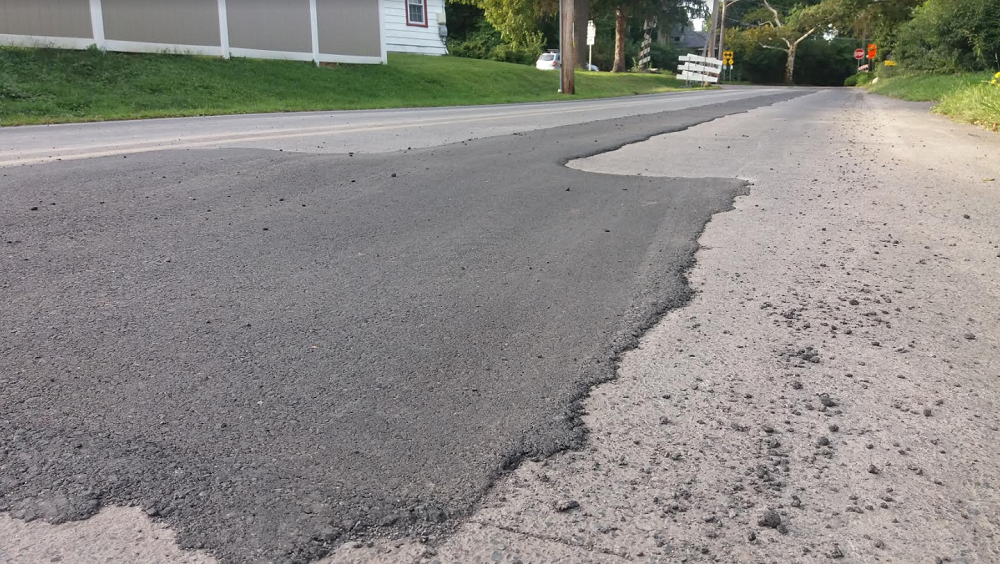
The proposal would give Middletown greater authority to require pavement restoration extending beyond the limits of a trench, potentially requiring resurfacing across half the width of a road or, under some circumstances, the full width.
Township engineer Dominic Cundari explained that the intent is to avoid leaving a narrow patch as the only repair after a road is opened.
Advertisements
Under the proposed approach, the amount of required restoration could depend on where and how the pavement was disturbed. Rather than allowing a contractor to simply repair the immediate trench, Middletown could require resurfacing from the disturbed area to the centerline or across the entire roadway.
The regulations would not be limited to private land developers.
Officials said utility companies opening township roads could also fall under the expanded restoration requirements.
The distinction becomes more complicated on state-owned highways.
Middletown cannot impose its own pavement-restoration standards on PennDOT roads in the same way it can on township streets. Work on state highways remains subject to PennDOT permitting and restoration requirements, officials said.
Credit: Tom Sofield/LevittownNow.com
That distinction was relevant to several of the roads discussed by Post, who cited examples of heavily traveled roads that have been paved and subsequently disturbed by construction or utility work.
Advertisements
Still, supervisors indicated they shared the broader concern about protecting public investment in newly improved roads.
The issue was not new to the board.
Officials said a proposed road-opening and restoration ordinance had already been discussed at two previous public meetings, prompting supervisors to ask where the measure stood and when it could return for action.
Township staff said the ordinance remained in draft form and would likely require review by the Bucks County Planning Commission before adoption. The board asked staff to follow up on the proposal and move it toward an upcoming agenda.
The discussion comes as Middletown continues making substantial investments in its road network and other infrastructure. The township has been increasing its paving work, making the question of what happens after fresh pavement is disturbed more significant.
Advertisements
A road opening is sometimes unavoidable. New development can require water, sewer, electric, gas or other utility connections, while existing utilities routinely need maintenance and replacement.
The problem, as Post noted, comes when the projects happen shortly after taxpayers have paid to improve the road.
Post questioned whether a properly filled trench creates joints between the existing pavement and the repaired section can eventually settle or deteriorate, leaving residents with an inferior road after the township has already paid to pave it.
Advertisements
No ordinance was adopted Oct. 5, and supervisors did not establish a final timetable for a vote.

