


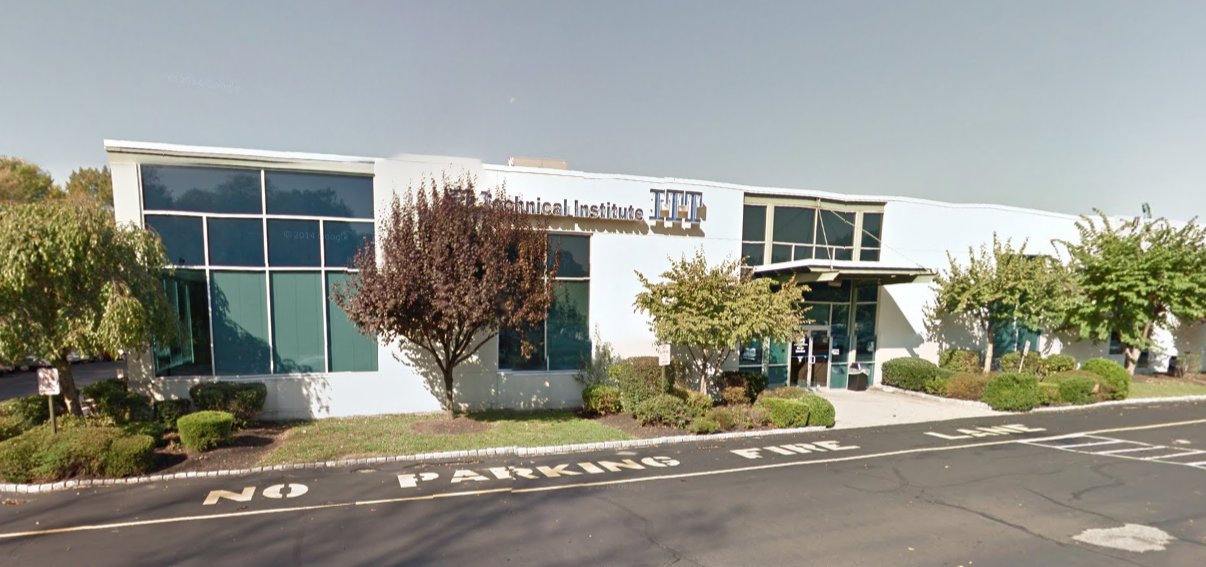
Credit: Google Maps
The company that loaned tuition funds to students at the ITT Technical Institute in Levittown has reached a settlement with 570 former students in Pennsylvania.
The Pennsylvania Attorney General’s Office announced Monday that a coalition of 44 attorneys general has reached a settlement with Student CU Connect CUSO LLC. The settlement involves $168 million in debt relief for more than 18,000 former students of ITT Tech schools nationwide. The 570 former Keystone State students are eligible for $5.3 million in debt relief.
Advertisements
“The settlement holds CUSO accountable for its participation with now-defunct ITT Tech in subjecting students to deceptive and abusive lending practices,” the attorney’s general office said.
The ITT Technical Institute campus on Veterans Highway (Route 413) in Middletown’s Levittown section closed in September 2016 along with more than 100 other locations.
The company that operated ITT Technical Institute filed for bankruptcy in 2016.
Advertisements
The closure of the school followed the U.S. Department of Education ceasing federal financial aid to students enrolling with the for-profit school.
“With the private student loan program that ITT and CUSO established, ITT Tech was able to take advantage of thousands of hardworking students who were simply trying to complete their education,” said Pennsylvania Attorney General Shapiro. “ITT aggressively pressured student to take predatory loan options and deceived them about the conditions of their loans. As a result, hundreds of Pennsylvania students were burdened with student loan debt and struggled to find jobs.”
From Shapiro’s office:
The Attorneys General alleged that ITT, with CUSO’s knowledge, offered students Temporary Credit (TC) upon enrollment to cover the gap in tuition between federal student aid and the full cost of the education. Students were supposed to pay the TC before the next academic year; although, ITT and CUSO knew or should have known that most students would not be able to do so. Many students complained that they thought the TC was similar to a federal loan and would not be due until six months after they graduated.
When the TC became due, ITT pressured and coerced students into accepting loans from CUSO. For many students, these loans carried high interest rates that were far above rates for federal loans. ITT resorted to pressure tactics, such as pulling students out of class and threatening to expel them if they did not accept the loan terms. Since ITT’s credits would not transfer to most other schools, most students enrolled in the CUSO loans.
Neither ITT nor CUSO made students aware of what the true cost of repayment for the TC would be until after the credit was converted to a loan. Not surprisingly, the default rate on the CUSO loans was extremely high (projected to exceed 90%) due to both the high cost of the loans as well as the lack of success ITT graduates had getting jobs that earned enough to make repayment feasible. The defaulted loans continue to affect students’ credit ratings and are usually not dischargeable in bankruptcy.
Representatives of Attorney General Shapiro’s team served on the Executive Committee of this effort, which was led by Kentucky. Under the terms of the settlement, CUSO has agreed that it will forego collection of the outstanding loans. Under the Redress Plan, CUSO’s loan servicer will send notices to borrowers about the cancelled debt and ensure that automatic payments are cancelled. The settlement also requires CUSO to supply Credit Reporting Agencies with information to update credit information for affected borrowers.
Advertisements
Pennsylvania has been reported to have the second-highest student debt load in the county, which averages $36,854 in debt per graduate.
Students or former ITT Technical Institute students with questions can contact the attorney general’s Bureau of Consumer Protection at 1-800-441-2555 or at scams@attorneygeneral.gov.
Correction: The Pennsylvania Attorney General’s Office said the initial statement to the media incorrectly identified the $168 million in debt relief as $168 billion. The story has been corrected.
Advertisements


