


By Kim Jarrett |
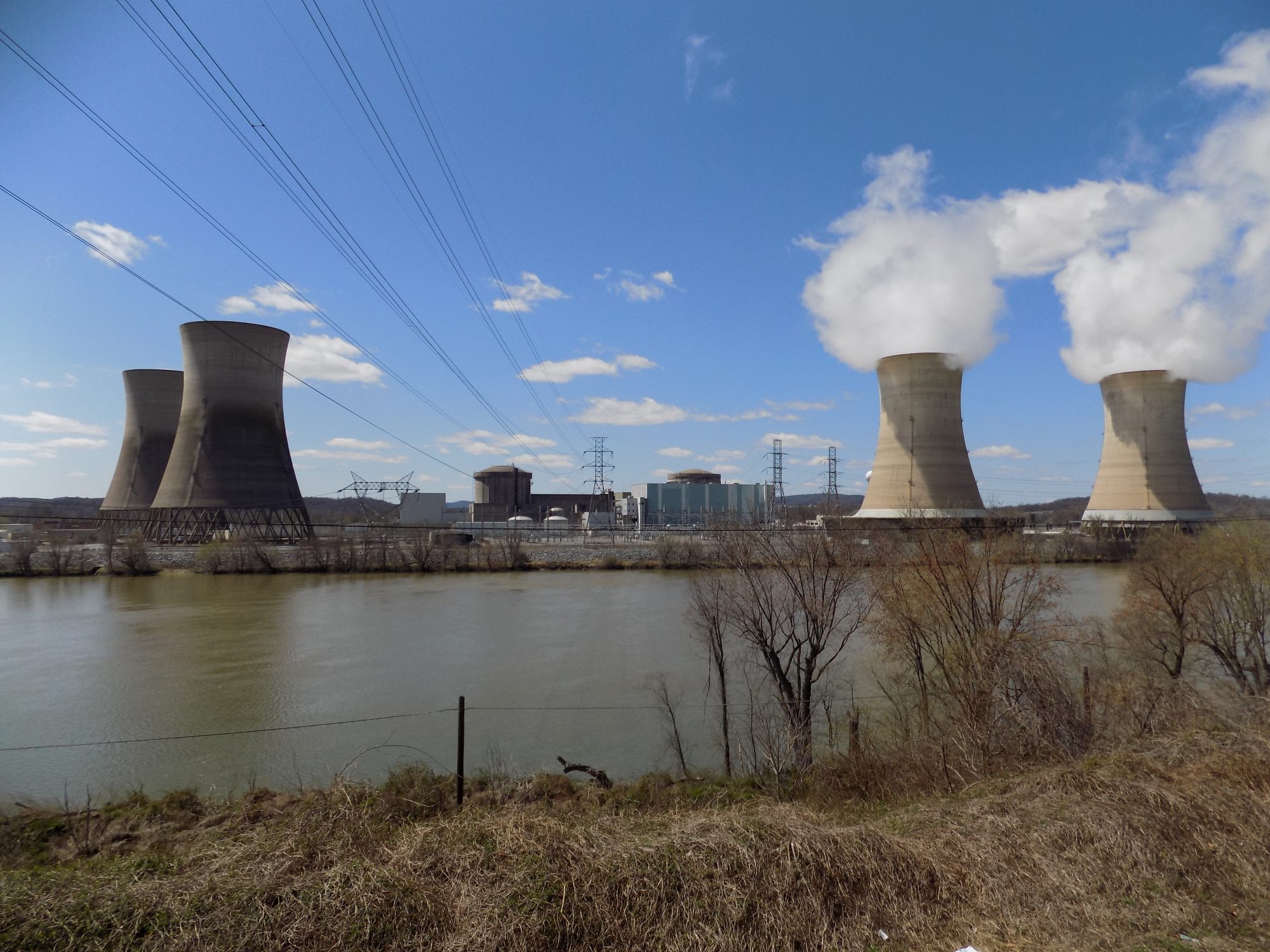
Credit: Wikimedia
Forty years after the Three Mile Island accident, Pennsylvania lawmakers are focusing on how to store spent fuel from decommissioned nuclear power plants and the costs.
Advertisements
Unit 1 at Three Mile Island is scheduled to shut down in September, and the owners of four other nuclear power plants have threatened that the plants will close unless the Legislature agrees to a $500 million taxpayer-funded bailout plan that will increase power bills for utility customers. Unit 2 has not been used since the meltdown in 1979.
Critics of the proposed bailout have argued that the nuclear companies are falsely crying poverty in order to extract greater profits.
Members of the Pennsylvania House Environmental Resources and Energy Committee this week asked nine experts what happens to the waste once a plant is decommissioned and how much it will cost.
Advertisements
Exelon, which owns Unit 1, will use an onsite dry cask storage method, according to documents filed with the Nuclear Regulatory Commission. The cooling towers will stand until 2074 so that radioactive decay can naturally occur. Many decommissioned nuclear power plants have turned to dry cask storage after a plan to build a nuclear waste storage facility at Yucca Mountain, Nevada, was stalled.
Nuclear energy companies are required to maintain decommissioning funds to pay for costs once their power plants shut down. Unit 1 at Three Mile Island has $467 million in its decommissioning fund and $625 million in its external trust fund. Unit 2 has $486 million in its decommissioning fund and $834 million in its external trust fund.
Advertisements
Committee Chairman Daryl Metcalfe, R-Cranberry Township, asked the panel if that would be enough money to cover the costs of dealing with the nuclear waste.
“So, there are costs associated with all this nuclear waste beyond what’s been collected by the federal government for the permanent Yucca Mountain site or wherever it ends up being,” Metcalfe asked. “They have spent money to develop [funds to deal with waste] but they have a surplus left over now, and we’re told it is generating about a billion and a half interest a year. But there’s more needed beyond that to deal with all this additional waste?”
“Exactly,” answered David J. Allard, CHP, acting deputy secretary for Waste, Air, Radiation & Remediation for the Department of Environmental Protection.
Advertisements
The NRC’s funding model is fatally flawed, said Eric Epstein, Coordinator for the EFMR Monitoring Group, a nonprofit organization that monitors the nuclear power industry.
“When you look at the NRC model, it doesn’t factor inflation,” Epstein said. “It doesn’t factor recession. It doesn’t factor volatility in the market place. It assumes a rate of return at 2 percent. During the recessions of 2008, 2009, almost all of these funds went belly-up.”
Advertisements
Decommissioning a nuclear power plant is “a funeral where the pallbearers have to stand in place for a very long time” Epstein said.
Hearings related to the proposed nuclear bailout bills are ongoing in the House and Senate, and it remains unclear how they will if they make it to lawmakers for a vote.
Advertisements


